
Vandaag of morgen in huis

Kwaliteit gegarandeerd

Welkomstaanbiedingen ontgrendelen: GRATIS bezorging | Tot 80% korting | Gratis 30 dagen JoyPlus-proefperiode
Download de app
A soft dog bed should offer more than a fluffy exterior. In UK households, a dog bed has to cope with muddy paws, fur, moisture and sometimes a dog that likes chewing the edge. If you focus only on colour or appearance, you could quickly end up with a bed that is difficult to clean, slides across the floor or does not provide enough space.
The following three pitfalls are common:
Measure your dog from nose to the base of the tail and add some extra room. For a dog that sleeps curled up, a 60 or 70 cm donut dog bed may be sufficient. A dog that stretches out will often need a larger rectangular or round model.
Also consider the height of the raised edge. A dog bed with neck support can be comfortable for pets that like to rest their head, but a high edge is less suitable if your dog has difficulty getting in. Check the external dimensions too: a 120 or 140 cm dog bed requires a considerable amount of floor space.
An orthopaedic dog bed often uses foam or firm fibre filling. The FUNNYFUZZY product description, for example, mentions egg-crate foam. According to the product description, this is intended to provide support and an even sleeping surface. This is a product specification, not a medical claim or a substitute for advice from a vet.
Plush, sherpa and faux fur feel soft, but check how the cover should be cleaned. A comfortable outer layer is more practical when combined with a sturdy base and shape-retaining filling.
A dog bed with a washable cover is generally easier to use every day. Check carefully what can actually go in the washing machine: sometimes only the cover is machine washable, while the inner filling must be spot-cleaned. Look for a zip that closes fully and always follow the care label.
A dog bed with an anti-slip base is particularly useful on smooth floors such as laminate or tiles. The anti-slip base reduces movement, but it does not eliminate every risk. Do not place the bed on stairs, an elevated surface or any other unstable location.
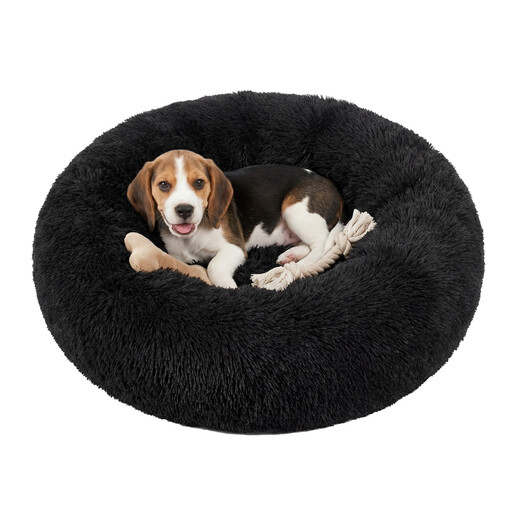
Why it suits this profile: The 70 cm round size is designed for small to medium-sized dogs that like to curl up. It can also be used as a cat bed for a cat that enjoys a soft edge.
The product information lists a removable centre section, a zip and rubber anti-slip points. This makes cleaning and positioning clearer than with a completely enclosed cushion.
70 cm diameter, PP filling, removable centre section and anti-slip rubber. The bed is vacuum-packed and should be shaken out before use.

Why it suits this profile: This sofa-style model combines a soft faux-fur and sherpa finish with egg-crate foam and a raised headrest. According to the product description, it is intended for dogs and cats of all life stages.
The specifications mention a removable machine-washable cover and an anti-slip base. However, check beforehand that size M is suitable for your dog’s sleeping length.
Egg-crate foam, raised headrest, removable machine-washable cover and anti-slip fabric.
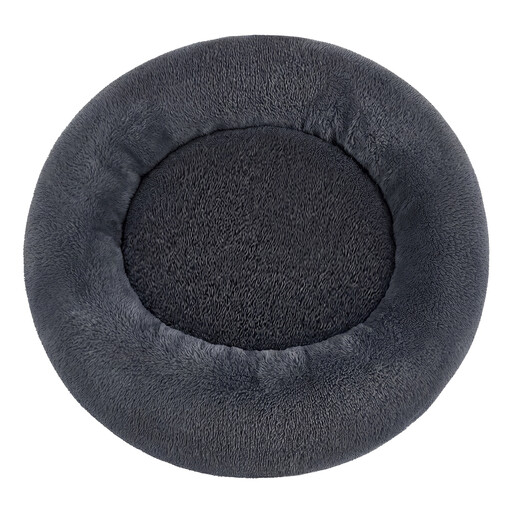
Why it suits this profile: The 120 cm diameter is designed for large dogs or households with several small pets. The spacious surface provides room to turn around and lie fully stretched out.
The product details mention a removable centre section and a machine-washable cover. According to the description, the inner filling is not machine washable and must be spot-cleaned.
120 cm diameter, PP filling, removable cover and rubber anti-slip points. Suitable for indoor use.

Why it suits this profile: The compact 60 cm diameter is intended for cats and small dogs. The raised edge suits pets that like to sleep in a nest-like shape.
According to the product information, the cover or central cushion can be removed for cleaning. Check the care label, as the filling and outer edge may not have the same washing instructions.
60 cm diameter, soft plush fabric, PP filling, removable centre section and anti-slip base.
Place the bed in a dry, flat spot where your dog or cat likes to rest. Shake out a vacuum-packed model thoroughly and give it enough time to regain its shape. You can also place a familiar blanket or toy in the bed.
Wash the cover according to the care label and do not use bleach or harsh cleaning products. Allow all parts to dry completely before putting them back. Regularly check the seams, zips, anti-slip material and any exposed filling. If there are tears or loose parts, replacing the bed is safer, especially for pets that chew fabric.
We have put together a complete, up-to-date list of products that fully meet these strict selection criteria and the applicable European safety regulations.
Measure your dog when fully stretched out and add enough space for them to turn around comfortably. Check the internal dimensions as well as the overall external dimensions, because raised edges reduce the available sleeping space.
This depends on use, coat and dirt. Wash a removable cover as soon as it becomes visibly dirty or starts to smell. In between washes, vacuuming, removing fur and airing the bed can help. Always check whether only the cover or the cushion can go in the washing machine.
The lifespan depends on the material, use and chewing behaviour. A bed will generally last longer if it is not put under excessive strain, the filling is fluffed up regularly and damage is checked for at an early stage. There is no fixed lifespan that applies to every pet.
