
Vandaag of morgen in huis

Kwaliteit gegarandeerd

Welkomstaanbiedingen ontgrendelen: GRATIS bezorging | Tot 80% korting | Gratis 30 dagen JoyPlus-proefperiode
Download de app
A good socket set is the cornerstone of any toolbox. Whether you're working on your car, maintaining your bike, or assembling furniture, the right set helps you get the job done efficiently. But the market is flooded with options, and not every shiny tool set is worth the money. As a Product Recommendation Officer at Joybuy, I see the common pitfalls buyers face every day. Let's go over the most frequent mistakes so you can make a purchase that will last for years to come.
Many sets look great at first glance, but problems often reveal themselves after just a few months of use. Watch out for these three common blunders:
socket wrench set. A weak mechanism can fail on the very first stubborn bolt, rendering the entire set useless.You don't need to be a mechanic to avoid the problems above. By paying attention to a few technical details, you can separate the wheat from the chaff.
Check the product page or specifications for the term Cr-V or Chrome Vanadium Steel. This type of steel is an alloy that is far more resistant to corrosion (rust) and can withstand higher forces than standard carbon steel. It is the de facto standard for quality mechanic tools and DIY tools.
The drive is the square connector where the socket clicks on. Each size has its own application:
bike tools, electronics, or small engine parts.automotive tools.A complete wrench set often includes ratchets and sockets in multiple drive sizes.
The number of teeth in the ratchet determines how small of an arc swing you need to make to tighten a bolt. A 72-tooth ratchet only needs a 5-degree swing to make the next 'click'. This is indispensable when working in tight spaces, like under a car's hood or behind an appliance. Ratchets with fewer teeth (e.g., 48 or 24) require a larger movement and are frustrating in such situations.
Based on these criteria, we have selected a few popular choices that suit different users.
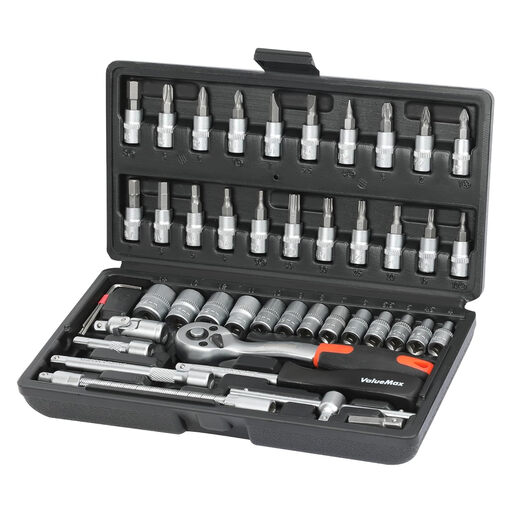
Why This Fits Their Persona: Ideal for those starting with DIY projects around the house. This set provides a solid foundation for assembling furniture, bike repairs, and other general maintenance without a major investment.
Tackles the 'incomplete set' pitfall. With 46 pieces, including the most common metric sockets and various bits, you'll rarely find yourself missing a tool for most standard jobs.
The 72-tooth ratchet with an offset handle makes working in confined spaces easier. The set is made of Cr-V steel for better durability.
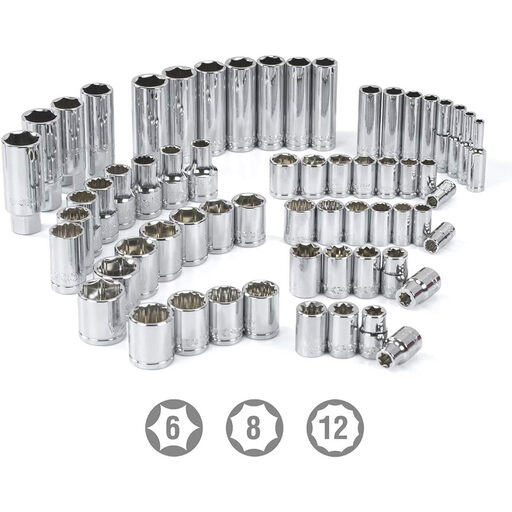
Why This Fits Their Persona: For the mechanic who regularly works on cars, motorcycles, or other machinery and never wants to come up short on a tool again. This case is designed to be a complete workshop solution.
This set tackles all three pitfalls: it's an extremely comprehensive 450-piece set, the parts are made of heat-treated and chrome-plated steel for corrosion resistance according to WORKPRO, and the ratchets are designed for heavy use.
Includes ratchets and sockets in all three common drive sizes (1/4", 3/8", and 1/2"). The four-drawer case keeps all the tools organised.
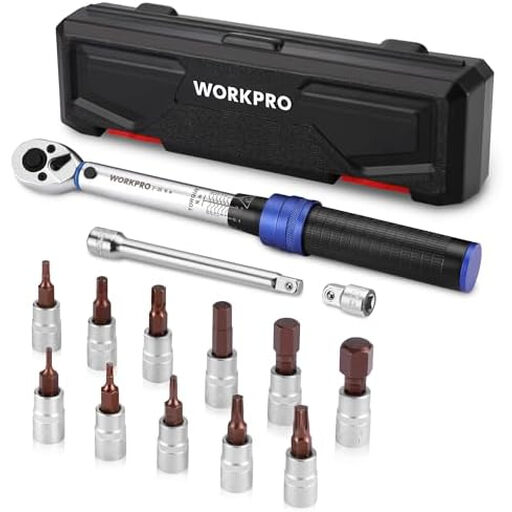
Why This Fits Their Persona: Specifically for the cyclist or mechanic working with delicate (carbon) components. Here, the correct torque isn't a suggestion, it's a requirement to prevent damage.
This is not a standard `ratchet set`, but a specialised torque wrench. It prevents the costly mistake of over-tightening bolts. The 'click' the wrench makes lets you know when the set torque has been reached.
Precisely adjustable torque (2-26 N.m) with a specified accuracy of ± 3%. The set includes the most commonly used hex and Torx bits for modern `bike tools`.
We have compiled a complete, up-to-date list of products that fully meet these strict selection criteria and user requirements.
A 6-point socket has six internal corners and provides the best grip on standard hexagonal bolts and nuts. This reduces the chance of 'rounding off' the corners when applying high torque. A 12-point socket has twelve corners, making it easier to place the socket on the bolt head in tight spaces. The disadvantage is that it can slip more easily under high torque. For most jobs, a 6-point socket is the safer choice.
It's simple. Clean the tools with a dry cloth after use to remove moisture and dirt. If you store the set in a shed or garage that can get damp, occasionally spray a thin layer of multi-purpose oil (like WD-40) on the metal parts and wipe it down. This creates a protective barrier against rust.
Not for assembling an IKEA cabinet. But for maintenance on your car or (modern) bicycle, a torque wrench is a wise investment. Manufacturers specify torque settings (measured in Newton-metres, N.m) for crucial components like lug nuts, brake calipers, and parts of a carbon bike frame. Too loose is dangerous, and too tight can cause irreparable damage. A torque wrench eliminates this guesswork.
