Choose your camera and lens based on the photos you want to take. For whole bars of soap and packaging, a suitable zoom lens may be enough, while pronounced texture details require sufficient magnification and precise focusing. Compare the complete set-up too, and consider whether you have room for a permanent lighting and camera set-up. Changing the camera body won’t, by itself, solve problems caused by an unsuitable lens or inconsistent lighting.
Who these cameras may suit
Soap maker with an online shop
Wants to photograph whole bars of soap and packaging consistently, using a similar frame and controlled lighting across a product range. Canon Netherlands explains how product photos can show a product’s design and texture.
Maker who wants to show texture
Wants to capture relief, stamps or ingredients up close. Pay particular attention to the lens’s magnification and minimum focusing distance. Canon Netherlands notes that precise focusing is important for macro photography.
Beginner with a small home studio
Wants to weigh up the cost of a camera, lens and studio set-up before spending more on the body. Consider what you need for the photos you want to take, and which equipment you already have.
What should you look for?
First decide whether you mainly want to photograph whole products, small details or a consistent series. Your choice will affect the lens, lighting set-up and cost of the complete kit.
| What to consider |
What to look for when buying |
Who this matters to |
| Capturing small details sharply |
Check the exact lens’s maximum magnification and minimum focusing distance, as well as its compatibility with the camera body. |
If you want to photograph stamps, relief or ingredients up close, you’ll want to know whether the lens can capture the details sharply at your preferred distance. Around 33% of consumers say that capturing small soap details is their top priority. |
| Reproducing colours consistently |
Check whether you can use the same lighting set-up and camera settings each time. Check for RAW support if you need it for editing. |
If you want different soaps to look consistent across a product range, lighting and a repeatable process matter just as much as the camera. Around 27% of consumers prioritise colour consistency. |
| Keeping the framing consistent across a series |
Consider whether you can position the camera securely and keep the background and lighting in the same place. |
When photographing several products, you won’t want to work out the framing from scratch each time. Around 20% of consumers say a repeatable studio set-up is their top priority. |
| Cost of the complete kit |
Check which lens is included and, if needed, factor a tripod and lighting into your comparison too. |
If you’re starting with a limited overall budget, you’ll want to know whether the complete kit can take the photos you need. Around 20% of consumers prioritise the cost of a usable set-up. |
Common buying mistakes
-
Assuming a camera kit is automatically suitable for macro photography
A kit zoom lens may give you a suitable frame for whole bars of soap, but it won’t necessarily capture small texture details at high magnification.
Compare the included lens’s magnification and minimum focusing distance with the detail you want to photograph. If you need a separate compatible macro lens, factor in its cost too.
-
Blaming all product photography problems on the camera body
A new body won’t automatically give you consistent framing or even lighting. The lens, lighting and set-up all play a part too.
Take test shots of a whole bar of soap and a detail using your planned home studio set-up. This will help you work out which part isn’t meeting your needs before you expand your kit.
-
Assuming consumer rules automatically apply to a business purchase
Consumer rules don’t necessarily apply in the same way when you buy equipment for your business.
Before ordering, check whether you’re buying as a consumer or a business, and review the seller’s terms. The Dutch government explains statutory guarantees and cooling-off periods for consumer purchases.
Camera brands to compare
Canon
EOS R cameras with RF and RF-S lenses may be worth considering if you want to compare a kit zoom lens with a separate macro lens.
- Canon specifies a maximum magnification of 0.14–0.16× for the RF-S 18-45mm with autofocus, depending on the focal length.
- For the separate RF 100mm F2.8L Macro IS USM, Canon specifies a maximum magnification of 1.4×. These are lens specifications, not a quality assessment of all Canon cameras.
Sony
Sony E-mount cameras can be paired with the FE 50mm F2.8 Macro for close-up work.
- Sony Netherlands specifies a maximum magnification of 1× for this lens, and compatibility with full-frame and APS-C E-mount cameras.
- The complete set-up also depends on your choice of body and other equipment, so check that the lens and camera are compatible.
Nikon
Nikon Z cameras and NIKKOR Z macro lenses offer a lens option to compare if close-ups matter to you.
- Nikon describes the NIKKOR Z MC 105mm f/2.8 VR S as optimised for macro and close-up work.
- Check that the lens and body suit your available working space and preferred framing. The product description doesn’t prove that this lens will be an advantage for every soap photo.
Fujifilm
The Fujifilm X-S20 may be worth comparing if RAW shooting is part of your workflow.
- Fujifilm’s specifications list an X mount and RAW shooting for the X-S20.
- You’ll also need a suitable lens for small details. The body’s specifications alone don’t tell you whether those details can be captured sharply.
OM SYSTEM
A compact camera system with M.Zuiko macro lenses could be included in a comparison of close-ups and the size of your kit.
- OM SYSTEM lists focus stacking for the M.Zuiko Digital ED 30mm F3.5 Macro when used with compatible cameras.
- Check camera compatibility and what the stated equivalent magnification means before comparing it with figures from other systems.
Cameras at Joybuy
These cameras at Joybuy suit different approaches to product photography. For each model, check that the lens and features listed suit your preferred framing, close-ups and home studio set-up.
 No image available
Komery W6 12× Optical Zoom 4K Digital Camera, 64 MP
The stated 12× optical zoom may be useful if you want to adjust the framing between product photos.
The product name lists 64 MP and 4K.
View at Joybuy
 No image available
DJI Osmo Pocket 3
This pocket camera may be worth comparing if you’re looking for a compact camera model. Check that it suits your preferred product framing and close-ups.
The product name lists a 1-inch CMOS, 4K/120fps video, 3-axis stabilisation and a 2-inch rotating touchscreen.
View at Joybuy
 No image available
Sony ZV-E10 + 16-50mm Zoom Black
The included zoom lens may be useful if you want to try different framings for whole bars of soap.
The product name lists a 16-50mm zoom lens.
View at Joybuy
 No image available
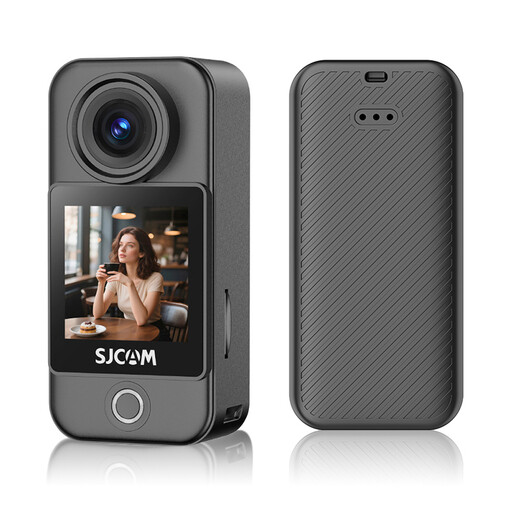
SJCAM C400 Pocket Action Camera
This action camera may be worth including in a comparison if you’re also considering a compact model for taking photos. Check that the lens and preferred framing suit your soap photography.
The product name lists 4K video, 16 MP photos and a 154° wide-angle lens.
View at Joybuy
 No image available
Sony Alpha A6100 + 16-50mm f/3.5-5.6 OSS II
The included zoom lens may be useful if you want different framings for whole products.
The product name lists a 16-50mm f/3.5-5.6 OSS II lens.
View at Joybuy
Frequently asked questions
Do I need a macro lens for every bar of soap?
No. A suitable standard or zoom lens may be enough for whole bars of soap. For highly magnified texture details, check the exact lens’s maximum magnification and minimum focusing distance. Canon Netherlands specifies different maximum magnifications for the RF-S 18-45mm and the separate RF 100mm F2.8L Macro IS USM.
How can I keep the framing consistent across a series of soap photos?
Mount the camera on a tripod and keep the camera, background and lighting in the same positions as far as possible. This lets you swap products without having to work out the composition again for every shot.
What can I do if my camera develops a problem after I buy it?
For a consumer purchase in the Netherlands, the seller is your point of contact for the statutory guarantee. The Dutch government says there is no fixed statutory guarantee period; if a problem occurs, the seller must provide a solution. If you’re buying equipment for your business, check separately whether consumer rules apply to your situation.
Do I always have 14 days to change my mind when buying online in the Netherlands?
No, this doesn’t apply in every situation. The Dutch government says that for distance purchases from a business, a 14-day cooling-off period applies in many cases, with some exceptions. According to the Dutch government, this rule doesn’t apply to online purchases from a private individual. If you’re buying for your business, don’t assume that consumer cooling-off rules apply without checking.


