
Walker travelling light
Wants to photograph a shell as soon as they find it, without changing lenses along the way, and is looking for a built-in close-up function and protection in wet conditions.


For spontaneous close-ups on a walk, a rugged compact camera is a good choice if you want to carry just one device. If you want to capture tiny ridges in greater detail, or already own a compatible camera body, consider a mirrorless camera with a macro lens. OM Digital Solutions and Ricoh Imaging state that the OM SYSTEM Tough TG-7 and PENTAX WG-90 can focus from 1 cm, respectively, but this distance alone does not indicate 1:1 magnification. So compare the magnification of the complete set-up, the space available for light around the shell, and the protection offered for the exact equipment you plan to use.
Wants to photograph a shell as soon as they find it, without changing lenses along the way, and is looking for a built-in close-up function and protection in wet conditions.
Wants to make tiny ridges fill the frame and compares a lens’s maximum magnification with the space left to light the subject.
Wants to check whether a compatible macro lens will do the job, rather than buying a second camera.
A good choice if: you want to take just one device on a walk. OM Digital Solutions says the TG-7 can focus as close as 1 cm; Ricoh Imaging lists a microscope mode for the WG-90 from 1 cm.
The trade-off: the lens is fixed, and the stated focusing distance is not the same as 1:1 magnification.
A good choice if: you want to choose the magnification to suit your needs, or already have a compatible camera body. Canon states a maximum magnification of 0.5× for the RF 85mm F2; Nikon lists 1:1 for the NIKKOR Z MC 50mm f/2.8.
The trade-off: check that the lens is compatible with the body and included in the purchase bundle. Nikon notes that when shooting very close up with its 50mm macro lens, there are only a few centimetres of space in front of the lens.
| What to consider | What to look for | Who is this important for? |
|---|---|---|
| Magnifying small details | Compare the maximum magnification of the exact lens or the close-up function of the complete camera. Focusing distance is not a measure of magnification. | If I want to capture tiny ridges clearly, I compare the magnification of the complete set-up. Around 33% of consumers prioritise magnification. |
| Light and carrying weight | Compare the complete set-up and what’s included, not just the camera body’s weight or features. | If you want to grab your camera quickly on a walk and carry as little as possible, focus on the complete set-up. Around 27% of consumers prioritise lightweight equipment that’s ready to use. |
| Lighting and focus | Check whether there is room to direct light onto the shell from the side at your desired shooting distance. Also check that the camera offers your preferred focusing method. | If I’m photographing a shell low down among leaves, I want to light it without blocking it with my camera or hand. Around 20% of consumers prioritise lighting and focus. |
| Wet conditions | Read the protection conditions for the exact device and, with a mirrorless camera, for the lens too. | If you often take photos on damp woodland paths, you’ll want to know what protection applies to your complete set-up. Around 20% of consumers prioritise protection in wet conditions. |
Focusing distance tells you how close you can get to focus; maximum magnification tells you how large the subject appears on the sensor.
Compare the stated maximum magnification of the exact lens, or the close-up capabilities of the complete camera, with the framing you want.
A camera body or standard lens won’t automatically give you the macro function you’re looking for.
Before buying, check exactly what’s included, the lens mount and the lens’s magnification.
The stated protection applies to the models and conditions specified by the manufacturer. With a mirrorless camera, the lens may have different conditions.
Check the protection information for every component you plan to take on a damp woodland path.
The Tough TG-7 is a compact camera with a built-in lens and close-up function.
The WG-90 is a rugged compact camera with a digital microscope function.
The EOS R50 offers an RF-system option, with various macro lenses available separately.
The Z50II paired with a separate NIKKOR Z MC 50mm f/2.8 is a system-camera option for anyone looking for 1:1 magnification.
A selection of Joybuy cameras for taking on the go. For close-ups of snail shells, check that the camera can focus close enough.
 No image available
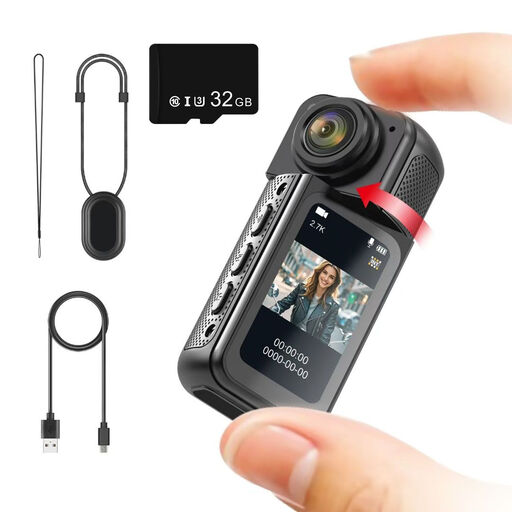
This action camera could suit a walk when you’re looking for a compact camera. The product name alone doesn’t confirm whether it’s suitable for macro shots of small snail shells.
The product name lists a 180° rotating lens, magnetic mount, 1.47-inch IPS screen and an included 32GB memory card. Check whether its close-up capabilities suit the shots you want to take.
No. Canon lists a maximum of 0.5× for the RF 85mm F2, while Nikon lists 1:1 for the NIKKOR Z MC 50mm f/2.8. Check the maximum magnification of the exact lens.
Not necessarily. Check whether a suitable macro lens is included and compatible with the body. Canon lists RF and RF-S support for the EOS R50; Nikon’s 50mm macro lens mentioned above is part of the Z system.
First, check the framing you want and the space in front of the lens, so you don’t block the shell with your camera or hand. Canon lists focus bracketing for the EOS R50, which lets the camera take a series of shots at different focus positions. Consider separately whether you want to combine those shots.
In the Netherlands, you’re entitled to a product that works properly, and there is no fixed statutory warranty period, according to the Dutch Government. If a product is faulty, contact the seller; a manufacturer’s warranty does not replace your statutory rights. Damage caused by incorrect use is not automatically covered.
Don’t assume you’re generally allowed to leave the paths. Staatsbosbeheer advises visitors to follow the access signs at the entrance to the area, and provincial authorities also determine what is permitted in the local natural environment. Check the rules for the area before leaving the path or moving a snail shell.