
Vandaag of morgen in huis

Kwaliteit gegarandeerd

Welkomstaanbiedingen ontgrendelen: GRATIS bezorging | Tot 80% korting | Gratis 30 dagen JoyPlus-proefperiode
Download de app
A smoothie maker seems like a simple purchase, until you get lost in a jungle of wattages, promises, and models. Many devices end up in the back of a cupboard after just a few weeks because they fail to deliver. They leak in your bag, can't crush frozen fruit, or are a nightmare to clean. As a Joybuy Product Recommendation Officer, I'll help you see through the marketing jargon and choose a model that truly fits your lifestyle.
Before you pull out your wallet, watch out for these common pitfalls:
To avoid a bad purchase, focus on the specifications that truly matter. These are the three most important factors that determine if a smoothie maker is right for you.
Don't get fixated on wattage alone. Power (in watts) indicates how much energy the motor uses, but the speed (RPM, or rotations per minute) determines how fast the blades spin and how smooth the result will be.
The choice between a rechargeable blender and a corded model depends entirely on where you plan to use it.
The cup is just as important as the motor. Always choose cups made from BPA-free material, such as Tritan. This is a durable, lightweight, and safe plastic that doesn't retain odours or flavours. Also, look at the included accessories. Useful extras include:
Below is a selection of models that are well-suited for different user profiles, based on their specifications.

Why This Fits Their Persona: Perfect for those who want to make a fresh smoothie on the go. Lightweight, rechargeable via USB-C, and compact enough to fit in a bag for work or the gym.
This model bypasses the 'portability illusion.' The battery is good for over 15 blends, and the secure, well-sealing lid prevents leaks.
Battery Life: According to Nutribullet, a one-hour charge is enough for 15+ blends. Convenience: Lightweight (approx. 700g) and easy to rinse clean.
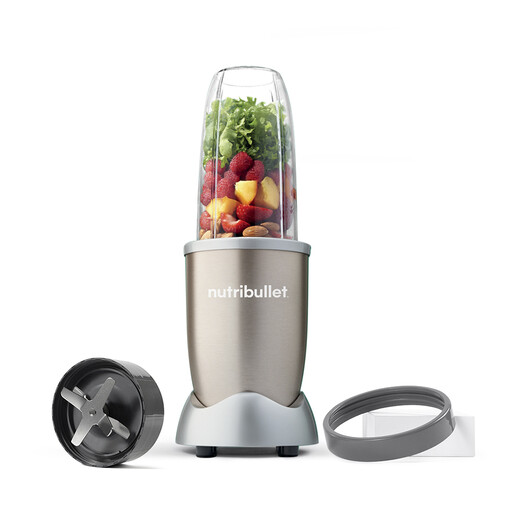
Why This Fits Their Persona: Ideal for those who make smoothies at home daily and also want to blend frozen fruit, nuts, or ice. Powerful, yet compact enough for the countertop.
This model avoids the wattage trap. The 900W motor isn't overkill but is precisely powerful enough for tough ingredients, resulting in a smooth blend without excessive noise.
Power: The 900W motor and 22,000 RPM can handle ice, seeds, and skins. Maintenance: The cup and lip ring are dishwasher-safe.
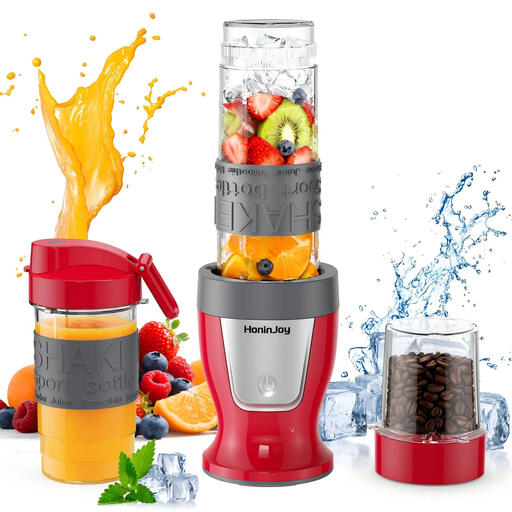
Why This Fits Their Persona: For those who want more than just smoothies. This model comes with a separate grinding blade for coffee beans or spices and two different-sized cups.
This isn't a 'jack-of-all-trades, master of none.' The separate grinding blade is specifically designed for dry ingredients, making it a truly multifunctional appliance.
Multifunctional: Includes a grinding blade and two BPA-free sport cups (590ml + 410ml). Safety: Only operates when the cup is correctly locked in place.
A good smoothie maker is an investment in your convenience and health. If the models above aren't exactly what you're looking for, browse our full collection.
That depends on your usage. For soft fruits and vegetables, 300 to 600 watts is sufficient. If you regularly want to blend frozen fruit, ice cubes, or hard nuts, a model with 600 to 900 watts is a better choice for a smooth result.
Some more powerful, rechargeable models can handle small ice cubes or frozen fruit, but corded blenders are generally better at this. Always check the product description of the specific rechargeable blender to see if the manufacturer recommends it. The Nutribullet Flex, for example, is designed by the manufacturer to process ice and frozen ingredients.
The golden rule is: rinse it immediately after use. Fill the cup with warm water and a drop of dish soap, blend for a few seconds, and then rinse. Also, check if the cup and lid are dishwasher-safe. This prevents residue from caking on and makes maintenance much simpler.
