
Vandaag of morgen in huis

Kwaliteit gegarandeerd

Welkomstaanbiedingen ontgrendelen: GRATIS bezorging | Tot 80% korting | Gratis 30 dagen JoyPlus-proefperiode
Download de app
A smoothie maker seems like a straightforward purchase. You want a quick and easy way to make a healthy smoothie or shake, whether for at home or on the go. Yet, the market is filled with models that promise more than they can deliver. Many people buy a blender that ends up gathering dust in a cupboard after a few months because it isn't powerful enough, is difficult to clean, or simply doesn't fit their lifestyle. Before you make a choice, it's crucial to know where the pitfalls lie.
Manufacturers use clever marketing, but some highly-praised features are disappointing in practice. These are the three main areas where things often go wrong.
1. The Wattage Myth: Higher Isn't Always Better A high wattage (e.g., 1000W or more) is often presented as the primary indicator of a powerful blender. While power is important, it doesn't tell the whole story. A poorly designed blade or a low rotational speed (RPM) can make even a high-wattage motor inefficient. You end up paying for power that doesn't translate into a smooth smoothie, especially with hard ingredients like frozen fruit or nuts.
2. The "Easy to Clean" Promise Nearly every blender is marketed this way, but the reality is often different. Fixed blades, narrow jars, and crevices where residue gets trapped can turn cleaning into a tedious chore. A blender that isn't dishwasher-safe or can't be easily disassembled quickly becomes a source of frustration and ends up unused in the back of the cupboard.
3. Portable Blenders That Underperform A portable blender sounds ideal for a busy lifestyle. Unfortunately, many cheap, cordless blender models are too weak for anything beyond soft fruits and powders. They struggle with ice cubes, frozen bananas, or a handful of spinach, leaving you with a lumpy drink. Such a rechargeable blender then becomes a useless gadget instead of a helpful tool.
To avoid buyer's remorse, it's wise to look beyond the marketing buzzwords. These three technical aspects determine whether a smoothie maker is truly right for you.
For a smooth result, especially if you're looking for a blender for ice or frozen fruit, a good balance between power and RPM is crucial.
personal blender with 250-300 watts is often sufficient.Your lifestyle determines which type of blender will suit you best.
cordless blender.The material of the jar and the ease of cleaning are decisive for the overall user experience.
Based on the criteria above, we have selected a few models that suit different user profiles.

Why This Fits Their Persona: This is the definition of convenience. A compact, rechargeable blender for those always on the move. Ideal for taking to the gym, office, or class. You can make your shake whenever and wherever you want, no outlet needed.
It sidesteps the 'weak portable blender' pitfall. With 17,000 RPM, it's powerful enough for most smoothies and shakes. The detachable parts are easy to rinse, fulfilling the 'easy to clean' promise.
Cordless and USB-C rechargeable: Over 15 blends on a single charge. Lightweight and leak-proof: Designed to be carried safely in your bag.
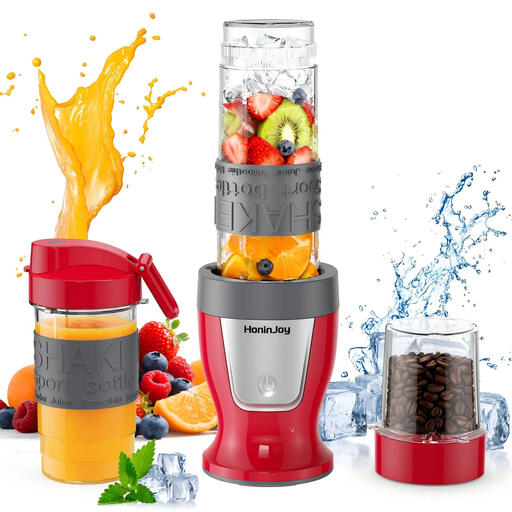
Why This Fits Their Persona: For those who want more than just a smoothie maker but don't have space for multiple appliances. This compact set combines a powerful blender with a separate grinding cup for coffee beans or spices.
This model doesn't just focus on wattage; it combines a solid 650W motor with a pulse function for control. The dishwasher-safe cups and lids make good on the cleaning promise. The extra grinding cup offers real, not hyped, versatility.
2-in-1 functionality: Includes a separate grinding cup for dry ingredients. Complete set: Comes with two BPA-free travel cups (20 oz + 14 oz).
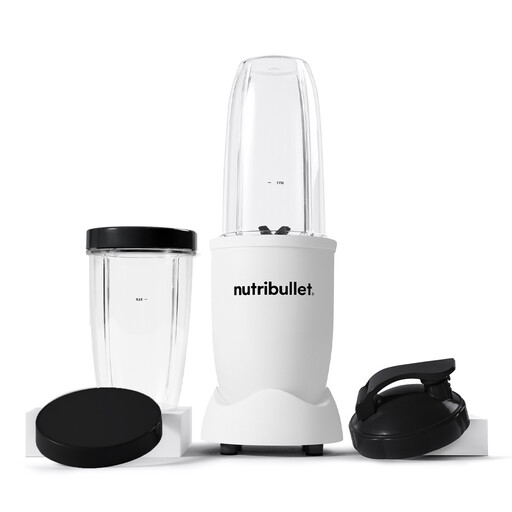
Why This Fits Their Persona: For those who make smoothies daily and refuse to compromise on power. This Nutribullet is a workhorse that effortlessly pulverises frozen fruit, ice, nuts, and fibrous vegetables into a smooth consistency. Ideal for protein shakes or smoothies for the whole family.
This blender delivers what the wattage myth promises: its 900W motor is genuinely effective. Operation is simple (no buttons, just twist and lock), and the dishwasher-safe parts make cleanup easy, ensuring it won't disappear into a cupboard.
Powerful 900W motor: Grinds even the toughest ingredients. Large capacity: Includes two 32 oz (900 ml) cups, ideal for larger servings.
We have compiled a complete, up-to-date list of products that fully meet these strict selection criteria and safety standards.
It depends on your usage. For soft ingredients and powders, 250-300 watts is sufficient. If you plan to regularly blend frozen fruit, ice cubes, nuts, or hard vegetables like carrots, opt for a powerful blender with at least 500-600 watts to guarantee a smooth result.
Some can, but many cheaper models cannot. A rechargeable blender is primarily designed for convenience and portability. If you frequently use hard or frozen ingredients, specifically check if the model has a high RPM and sufficient power. Models like the Nutribullet Portable are a good middle ground, but for real heavy-duty tasks, a corded blender with more power is often a better choice.
The quickest method is right after use. Fill the cup halfway with warm water and a drop of dish soap, place it back on the base, and run it for 10-20 seconds. Then, rinse it out. For a deep clean, choose a model with dishwasher-safe parts and a detachable blade assembly. This prevents caked-on residue and keeps your blender hygienic.
