What should you look for when choosing?
First, choose a capacity and cup type that suit your portions. Then compare blending results, cleaning requirements and noise levels for the exact model.
| What to consider |
What should you check? |
Who is this important for? |
| Blending results |
Look for a relevant test using fruit and vegetable smoothies. Also check whether the cup capacity suits your usual portion. |
If you mainly want a smooth spinach smoothie without chunks, blending results should be your top priority. Around 31% of consumers put this first. |
| Cleaning |
For each model, check whether the cup, lid and blade unit are dishwasher-safe, and which parts need to be washed by hand. |
If you want to clear the shared kitchen quickly after use, check how all the removable parts need to be cleaned. Around 25% of consumers prioritise cleaning. |
| Noise |
Only compare noise measurements taken under similar conditions. Also check whether there are any house rules about when you can use the blender. |
If your housemates are at home when you blend, noise may be the deciding factor. Around 25% of consumers put noise levels first. |
| Space and portion size |
Measure the space available and compare it with the dimensions and usable capacity of the exact model. |
If you have little cupboard or worktop space and need to make portions for several housemates, the blender needs to fit and have enough capacity. Around 19% of consumers start by considering space and portion size. |
Joybuy products
Explore smoothie blenders, from compact models with a drinking cup to jug blenders for larger batches.
 No image available
3-in-1 multifunction blender, 800 W
The set includes a travel bottle for smoothies on the go and a blending jug for larger portions.
The set includes a 600 ml travel bottle, a 1500 ml blending jug and a 300 ml chopper cup. The title specifies six blades.
View at Joybuy
 No image available
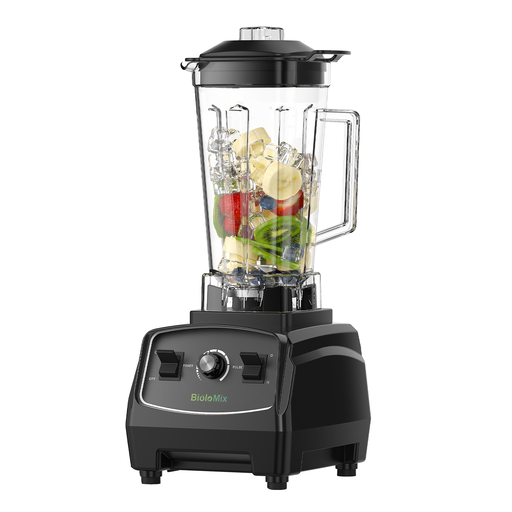
BioloMix 010 blender, 2 l, 2200 W
The 2 l jug is suited to making larger batches in a shared kitchen.
The product title specifies six stainless steel blades. The product information also mentions an automatic cleaning function that uses water and washing-up liquid.
View at Joybuy
 No image available
Philips 3000 Series Mini Blender HR2510/90
This compact mini blender is an option to compare if you usually make smaller portions.
The product title specifies 0,6 l and 350 W. The product information says the removable parts are dishwasher-safe.
View at Joybuy
 No image available
Philips 3000 Series Blender HR2041/00
The jug makes this model an option to compare if you need to make larger portions.
The product title specifies 450 W and a maximum jug capacity of 1,9 l; the stated usable capacity is 1,0 l. Don’t use the appliance for more than 2 minutes at a time or blend ingredients hotter than 60 °C.
View at Joybuy
 No image available
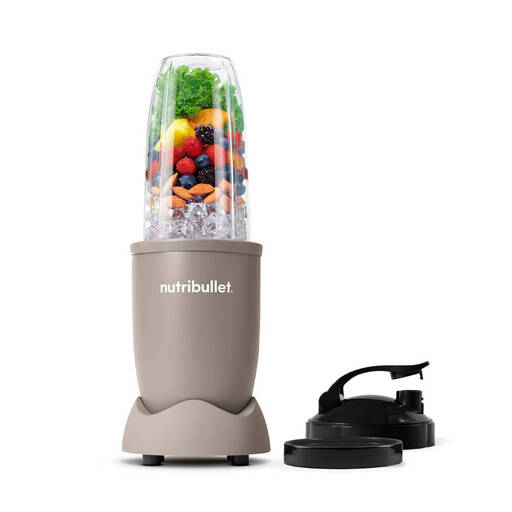
nutribullet Exclusive Blender, 700 ml, 900 W
The cup comes with a to-go lid, so you can take your smoothie with you.
The product information lists leafy greens as an ingredient and says the cup is dishwasher-safe; the blades can be cleaned with water and washing-up liquid. Don’t use the blender for more than 1 minute at a time or blend hot liquids.
View at Joybuy
Frequently asked questions
Can I use raw spinach in a smoothie?
Yes. The Voedingscentrum has a recipe that uses raw spinach and recommends washing the spinach first. It also gives general advice to eat fruit and vegetables rather than drink them where possible; a smoothie isn’t automatically healthier.
Can I put the whole blender in the dishwasher?
Follow the cleaning instructions for each part of the exact model. For the nutribullet Pro 900 NB904S, the manufacturer says to rinse the blades with water and washing-up liquid, and to put the cups on the top rack of the dishwasher.
What if the blender doesn’t work properly during normal use?
If you buy as a consumer in the Netherlands, you’re entitled to a product that meets the terms of the sale. According to the Dutch Government, there’s no fixed statutory warranty period; if a product is faulty, the seller must provide a solution. A manufacturer’s warranty is in addition to this.
Which product safety rules apply when buying in the Netherlands?
Electrical kitchen appliances must meet the legal requirements that apply to them, according to the Netherlands Food and Consumer Product Safety Authority. The European Commission says that materials that come into contact with food must comply with the relevant EU rules on food contact materials. CE marking is only required where applicable EU product rules say it is; on its own, a CE mark isn’t an independent test of smoothie-making performance.


