Who are these blenders for?

Making smoothies for one

You want to make one kiwi smoothie in a small holiday kitchen, and perhaps drink it straight from the same cup. The Consumers’ Association explains that a smoothie blender with a small blending cup can let you prepare a drink and take it with you; check which lid comes with each version.

Holidaymakers without a handy socket

You want to blend without plugging the appliance into a socket while you use it, and you can recharge the blender between uses. Tefal and nutribullet describe rechargeable models; check the charging cable and connection for the version you choose.

Cooking with limited washing-up space

You want as few separate parts as possible to wash after making a smoothie. Philips and Tefal list dishwasher-safe parts for specific models; check the cleaning instructions for each part.

What should you look for when choosing?

Compact mains-powered blender

A good fit if: you have a suitable socket and mainly want to make one smoothie at a time.

Trade-off: you’ll need mains power while blending; the stated wattage doesn’t prove how smooth a kiwi smoothie will be.

Rechargeable blender with a small cup

A good fit if: you want to blend without a socket and a small serving is enough; Tefal lists a 300 ml capacity for the Lightmix BL1C0430.

Trade-off: the ingredients and liquid need to fit in the cup together, and you’ll need to charge the blender.

Rechargeable blender with a larger cup

A good fit if: you want to blend without a socket and need more cup space; nutribullet lists a 475 ml capacity for the Portable NBP003W.

Trade-off: you’ll still need to charge it; nutribullet’s stated ice-crushing capability applies to a small quantity.

What to consider What should you check? Who is this important for?
Smoothie texture Check which ingredients the exact model can handle. The Consumers’ Association assesses smoothness and leftover pieces, but this isn’t a test of this kiwi recipe. If I mainly want a smooth kiwi smoothie, I look at the ingredients I’ll actually use and at a relevant test. Around 31% of consumers say smoothie texture is their main concern when choosing.
Cup and size Compare the cup capacity and the included lid with your recipe; also allow room for the liquid. If I have limited luggage and worktop space, I want a compact cup that’s still large enough for my serving. Around 31% of consumers prioritise being able to take a compact blender with them.
Cleaning Check which parts are removable and dishwasher-safe for each model; follow the manual for the motor unit. If I have limited washing-up space in a temporary kitchen, I want to know in advance which parts I’ll need to clean separately after use. Around 23% of consumers put minimising washing-up first.
Blending without a socket Check the charging cable, connection and the manufacturer’s stated use per charge. If there’s no socket nearby while I’m blending, I want to know how to charge the blender ready for later use. Around 15% of consumers say blending without a socket is their main priority.

Pitfalls to avoid when choosing

  • Confusing cup capacity with the space needed for your whole recipe

    The ingredients and added liquid need to fit in the cup together. Tefal lists a 300 ml capacity for the Lightmix BL1C0430, while nutribullet lists 475 ml for the Portable NBP003W.

    First decide how large a serving you want, then compare it with the capacity of the exact version.

  • Assuming wireless means you’ll never need to recharge

    Rechargeable models can blend without a socket, but they need to be recharged between uses. Tefal and nutribullet list different charging methods for their models.

    Before you leave, check which cable and connection your version uses and whether you have a suitable power source.

  • Assuming higher wattage guarantees the smoothest kiwi smoothie

    A stated motor power isn’t the same as a measured result. When testing smoothies, the Consumers’ Association assesses factors including smoothness and leftover pieces; the mixtures used in the described test aren’t kiwi smoothies.

    Don’t use wattage as your only selection criterion, and check whether a test covers ingredients similar to those in your recipe.

Brands to consider

Philips

The Blend & Go HR2670/01 is a compact mains-powered blender with a travel cup.

  • Philips specifies 350 W, two speeds and dishwasher-safe parts for this model.
  • These specifications aren’t a separate measured result for a kiwi smoothie; wireless blending isn’t listed for this model.

Tefal

The Lightmix BL1C0430 is a rechargeable blender for a small serving, so you don’t need a socket while blending.

  • Tefal lists a 300 ml cup, removable blades and a dishwasher-safe cup.
  • The cup may be too small for a larger serving. Any use cycles per charge are figures provided by the manufacturer.

nutribullet

The Portable NBP003W is a rechargeable option with a cup that nutribullet says has a capacity of 475 ml.

  • nutribullet lists USB-C charging and a drinking lid.
  • The manufacturer limits its ice-crushing capability to a small quantity; this doesn’t tell you how every recipe with frozen ingredients will turn out.

Braun

The PowerBlend 1 JB1000WH is a jug blender for anyone who finds a larger jug more useful than a personal drinking cup.

  • Braun specifies a working capacity of 1,25 litres and a 600 W motor for this model.
  • A jug takes up more space than a small smoothie or drinking cup. Braun’s stated blending performance is a manufacturer claim.

Blenders on Joybuy for smoothies in a holiday cottage

This selection includes compact blenders with a travel cup, including mains-powered and rechargeable models. For parts that come into contact with the smoothie, check the relevant requirements for food-contact materials and the information provided for the exact model.
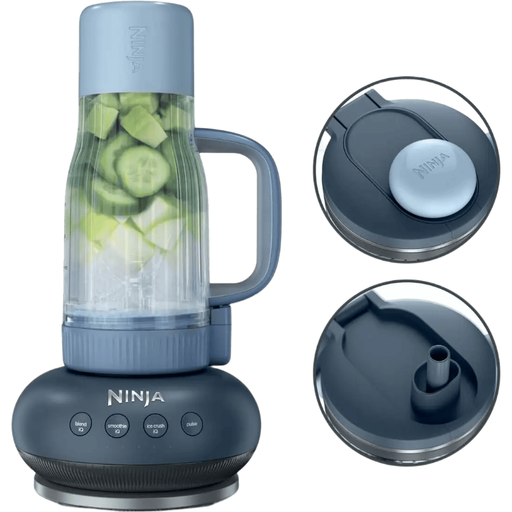
Ninja BlendBoss Portable Blender with travel cup, 710 ml, Cyberspace

Ninja BlendBoss Portable Blender, 710 ml, Cyberspace

A compact travel cup could be a good fit if you want to make a smoothie and take it with you.

The product name lists a capacity of 710 ml, three automatic settings and dishwasher-safe parts.

View at Joybuy

Aigostar Marden BL-250 blender with glass jug, 500 ml

Aigostar Marden BL-250, 500 ml

A mains-powered model could be a good fit if there’s a socket available in your holiday cottage.

The product details list 250 W, a 500 ml glass jug and operation at 230 V. The description lists removable, dishwasher-safe parts.

View at Joybuy

nutribullet Portable personal blender, 475 ml, white and beige

nutribullet Portable, 475 ml, white and beige

A rechargeable model could be a good fit if you don’t want to use a socket while blending.

The product name lists a capacity of 475 ml and USB-C charging; the product details mention a drinking lid.

View at Joybuy
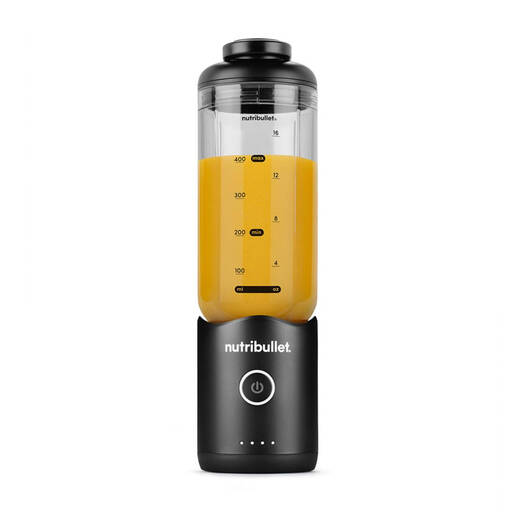
nutribullet Flex portable blender, 590 ml, black

nutribullet Flex, 590 ml, black

This rechargeable model could be a good fit if you’re looking for a travel cup with a larger capacity.

The product name lists a capacity of 590 ml and USB-C charging; the description mentions a removable blade.

View at Joybuy
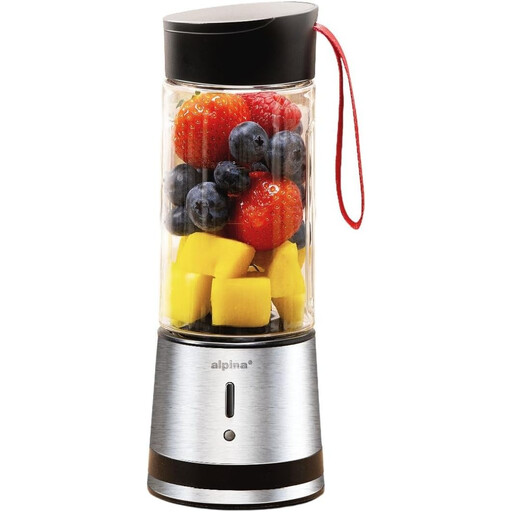
Alpina smoothie maker, 300 ml

Alpina Smoothie Maker, 300 ml

A small rechargeable cup could be a good fit if you want to make one serving without using a socket while blending.

The product details list 125 W, a capacity of 300 ml, a 1500 mAh battery and a stainless steel cup.

View at Joybuy

Frequently asked questions

Do I need a blender that can crush ice for fresh kiwi?

Not just for fresh kiwi. Choose based on the ingredients you actually want to use, and check the exact model’s guidance for ice or frozen fruit. The Consumers’ Association distinguishes between making smoothies and crushing ice cubes in its test method.

Can I put the whole blender in the dishwasher?

Don’t assume so. Philips lists dishwasher-safe parts for the HR2670/01, while Tefal specifically lists the cup of the BL1C0430. Check the manual for each model and part before cleaning a blade unit or motor base.

How should I store leftover fruit smoothie?

The Netherlands Nutrition Centre recommends keeping an opened fruit smoothie in the fridge for 1–2 days. A drinking lid doesn’t replace refrigeration.

What are my rights if a blender I bought online develops a fault early or I change my mind?

If a product doesn’t meet what you could reasonably expect under normal use, you’re covered by statutory consumer rights in the Netherlands, through the seller; a manufacturer’s warranty doesn’t replace these rights. ACM Consumer Information (ConsuWijzer) says online purchases generally come with a 14-day cooling-off period from delivery, subject to legal exceptions.

What should I look for in terms of product safety in the Netherlands?

Parts that come into contact with food must meet the relevant requirements for food-contact materials in the Netherlands; the Netherlands Food and Consumer Product Safety Authority describes these rules. The requirements for electrical parts depend on the product and the relevant regulations. Check the information for the exact version; this alone says nothing about how smooth a kiwi smoothie will be.
