
Vandaag of morgen in huis

Kwaliteit gegarandeerd

Welkomstaanbiedingen ontgrendelen: GRATIS bezorging | Tot 80% korting | Gratis 30 dagen JoyPlus-proefperiode
Download de app
A smoothie blender seems simple: add the ingredients, press a button and you’re done. Yet many people buy a model that proves less practical after just a few weeks. The jug is too small, frozen fruit gets stuck at the bottom or cleaning takes longer than expected.
So don’t just look at wattage or an attractive colour. As a Joybuy Product Recommendation Officer, I mainly filter products by verifiable features: power, capacity, materials, ease of use and how you intend to use the blender.
Higher wattage does not tell you everything about the end result. The blade design, jug shape and amount of liquid also play a part. A compact blender for one portion has a different job from a powerful blender for a family.
So always check:
A 300 to 400-watt blender may be suitable for soft fruit, yoghurt and liquids. For frozen fruit, nuts or ice, a model with more power and an appropriate blade design is a more logical choice. That does not mean every product with a high wattage will automatically be the best fit for your kitchen.
A 700 ml cup usually cannot hold 700 ml of ingredients. You need to leave room for liquid circulation and expansion during blending. For a smoothie blender, a usable capacity of around 500 to 700 ml is often convenient for one or two portions.
A larger jug is more practical for families. According to the product details, the Tefal BL91HD has a 1.75-litre Tritan jug and a separate 600 ml cup. This allows you to prepare a larger quantity and take a portion with you.
A cordless blender is handy in the office, at the gym or when you’re out and about. However, the battery needs to be charged and the capacity is usually limited. A portable blender is therefore not automatically suitable for large quantities, hard ingredients or extended use.
When choosing a blender to go, look at:
Wattage is the motor’s power consumption, not a direct guarantee of a smooth smoothie. Rotational speed indicates how quickly the blades can turn, but this should also be assessed alongside the blade design.
For soft fruit, leafy greens and shakes, a personal blender of 300 to 600 watts is often sufficient. If you regularly want to process frozen fruit or ice, look for models with a higher motor capacity, pulse function and an explicit ice-crush setting. For example, the Fritel BL 3890 lists Ice Crush, Smoothie and Interval programmes, while the WMF Smoothie To Go has an ice-crush function and 300 watts according to the product information.
Always use enough liquid and do not fill the jug above the indicated maximum line. Consult the manual before processing hard or frozen ingredients.
Tritan is lightweight and is often used for a blender with a drinking cup. Check whether the cup is stated to be BPA-free and whether the material is suitable for your intended use. Glass is more heat-resistant than many plastic alternatives, but it is also heavier and more fragile. According to the specifications, the Tefal BL16GE30 has a heat-resistant glass jug suitable for temperatures up to 70 °C and a 0.81-litre Tritan travel cup.
Do not process hot liquids in a sealed smoothie maker unless the manufacturer expressly permits this. Pressure can build up in sealed cups. Allow soup to cool first and follow the product’s safety instructions.
A removable blade, dishwasher-safe cups and a simple lid can save time. However, check exactly which parts are dishwasher-safe. The motor base is not one of them and must not be immersed in water.
Also check whether a replacement cup or blade is available. A product that is used every day is more practical when important parts can be replaced separately.
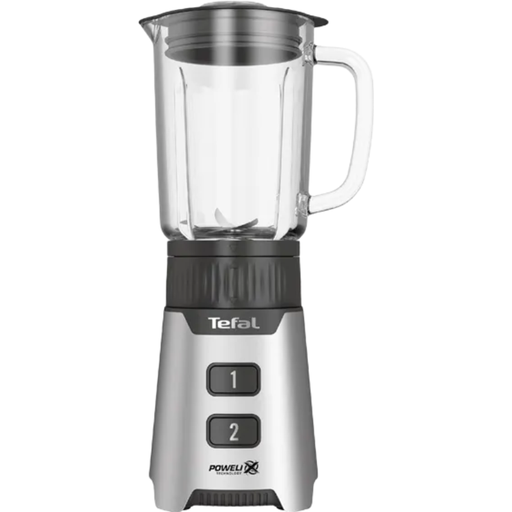
Why it suits this profile: A straightforward model for everyday smoothies, with two speeds and a drinking cup for taking your smoothie with you.
The product information states both the usable capacity of 0.7 litres and the supplied 0.81-litre travel cup. This makes it clearer how much you can prepare and take with you.
400 watts, two speeds, non-slip base and dishwasher-safe removable parts.
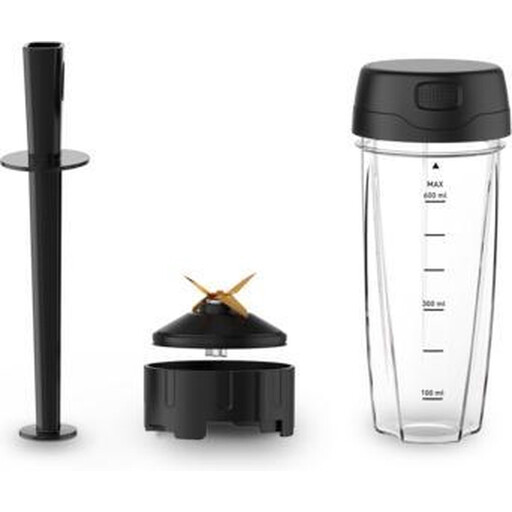
Why it suits this profile: Suitable for households that want to prepare several portions of smoothies, sauces, dips or other cold recipes at once.
The capacity, five automatic programmes, manual controls and supplied stirring accessory are listed separately. You therefore do not have to rely solely on a marketing term such as high speed.
1600 watts, 35,000 rpm, 1.75-litre jug, five programmes and a 600 ml Tritan cup.
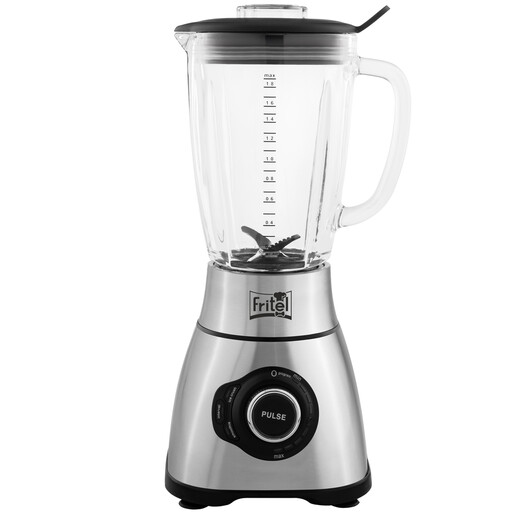
Why it suits this profile: A logical choice for anyone who wants to prepare ice, pesto, dips and larger quantities as well as smoothies.
The product details specifically mention a 1.8-litre glass jug, pulse function and an Ice Crush programme. This makes its suitability for specific uses verifiable.
Large glass jug, pulse function, smoothie and ice programmes, plus dishwasher-safe parts according to the product description.
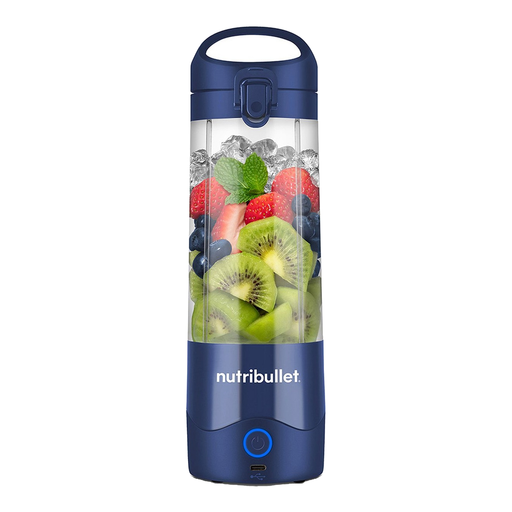
Why it suits this profile: A cordless mini blender with a handle for making a single smoothie at the office, on the go or after exercising.
The limited 475 ml capacity and battery details are clearly stated. According to the product information, charging takes around one hour and the blender provides more than 15 blends per charge.
USB-C charging, 17,000 rpm, portable design, leakproof drinking lid and removable parts.
We’ve put together a complete, up-to-date list of products that fully meet these strict selection criteria and the applicable European safety regulations.
That depends on the model. Check whether the manufacturer explicitly mentions frozen ingredients or ice crush. Add enough liquid and, if necessary, use small pieces of fruit. A model with a pulse function can help, but always follow the manual.
Its lifespan depends on usage, cleaning and load. Do not run the motor for longer than instructed, avoid overloading it and do not use a damaged cup or blades. For models with a battery, charging correctly is important. A statutory minimum two-year guarantee applies to many of the products mentioned, but guarantee conditions may vary by product.
Consumption depends on the wattage and how long the blender is used. A 900-watt blender running for one minute theoretically uses around 0.015 kWh. In practice, start-up power, programmes and pauses all have an effect. As a smoothie is usually ready quickly, consumption per preparation generally remains limited.
