
Vandaag of morgen in huis

Kwaliteit gegarandeerd

Welkomstaanbiedingen ontgrendelen: GRATIS bezorging | Tot 80% korting | Gratis 30 dagen JoyPlus-proefperiode
Download de app
Buying a smoke alarm seems straightforward. Yet many households focus mainly on price and appearance, when it’s certification, placement and battery life that determine whether a device remains practical to use. And the same type of detector isn’t always suitable for a flat, rented property, family home, garage or business premises.
In this buying guide, you’ll learn what to look for in a smoke alarm, wireless smoke alarm or carbon monoxide alarm. The recommendations are based on verifiable product specifications from the product information, such as EN14604, EN50291, alarm volume, power source and interconnectivity.
A smoke alarm with a 10-year battery sounds low-maintenance, but first check what that actually means. It may be a built-in battery that lasts the entire service life of the device, or a battery with a different replacement procedure. With some models, you must replace the whole alarm after the service period.
So pay attention to the following:
A designation such as smoke alarm EN14604 is relevant, but check that the standard is actually named in the product information. EN14604 relates to smoke alarms for residential use. For carbon monoxide alarms, EN50291 is the relevant standard for domestic use.
Certification doesn’t mean every situation is automatically covered. Placement, maintenance and coverage still matter. Also check local regulations and the manufacturer’s instructions.
A smart smoke alarm with Wi‑Fi can send alerts to an app, but that doesn’t automatically mean multiple alarms will wirelessly trigger each other. A radio‑interlinked smoke alarm works differently. In an interlinked system, several devices can sound at once when one detector senses smoke.
So check whether you need:
A photoelectric smoke alarm uses light measurement to detect smoke particles. This type is common in living spaces. Pay particular attention to the stated sensor type, the test function and the recommended installation location. No sensor is a substitute for taking care with heat sources, cooking and electrical equipment.
A smoke alarm with an 85 dB alarm gives a clearly audible warning at close range. The actual audible range depends on walls, doors, floors and ambient noise. So don’t simply place one alarm in the hallway and expect bedrooms on another storey to always be covered adequately.
For a domestic fire alarm, you can compare the following information side by side:
According to the product information for the Heiman models below, these standards and features are specified per product. Always check the current specifications, the supplied manual and packaging before purchase.

Why this fits the profile: A straightforward model for anyone who needs a single smoke alarm for, say, a hallway, bedroom or living room and doesn’t need an app or network.
The product information lists a photoelectric sensor, EN14604 and an 85 dB alarm volume. That makes the key comparison points visible instead of focusing only on the battery claim.
Photoelectric detection, 10‑year lithium battery, EN14604 stated and 85 dB alarm according to the product details.
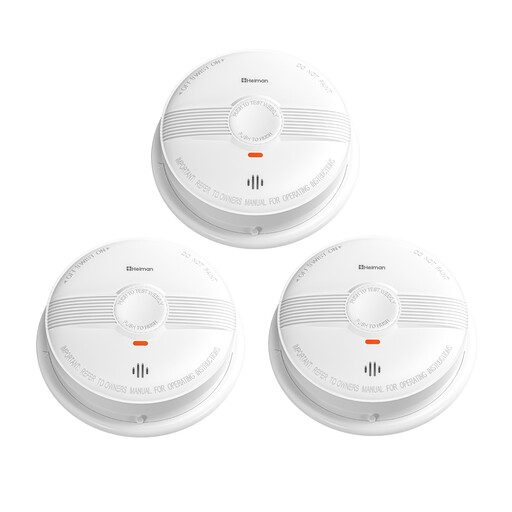
Why this fits the profile: Ideal for households with multiple storeys or rooms where occupants want to hear a simultaneous alarm signal.
The stated specifications mention radio interlinking for up to 40 alarms. That prevents you buying a Wi‑Fi app solution when what you actually need is a locally interlinked alarm system.
Set of three, up to 40 wirelessly interlinkable alarms, 85 dB alarm, 10‑year battery, EN14604 and mute switch according to the product description.
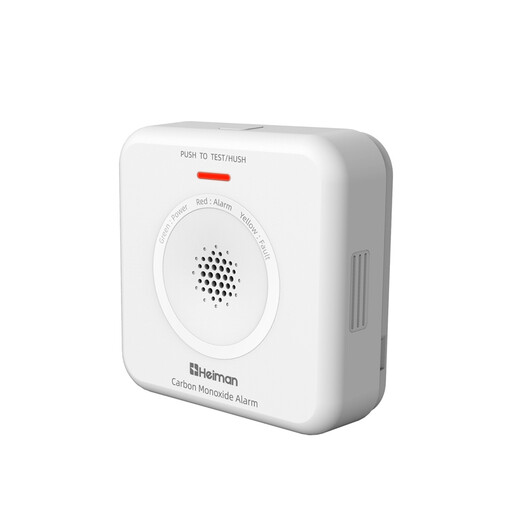
Why this fits the profile: An option for anyone who, alongside smoke detection, wants a carbon monoxide alarm with Wi‑Fi and app integration for bedrooms or living areas.
The product listing mentions Wi‑Fi, Tuya and SmartLife app support, and EN50291. Do check your Wi‑Fi network and chosen app are compatible before you order.
10‑year service life, replaceable battery, Wi‑Fi functionality, EN50291 stated and portable design according to the product information.
We’ve put together a complete, up-to-date list of products that fully meet these strict selection criteria and the applicable European safety regulations.
A smoke alarm detects smoke; a carbon monoxide alarm or CO alarm is intended for carbon monoxide. These devices do not perform the same function. In homes with a boiler, stove, fireplace or other combustion appliances, a separate CO alarm may be relevant. Fit it according to the manual and use a model whose product information states the EN50291 standard.
A CO alarm with LCD display often shows additional values or the device status. The Heiman CO 723ESY, for example, cites an LCD display, a battery life of five years and a sensor lifespan of ten years. See the Heiman CO alarm with LCD display if you prefer to read the status directly on the device.
That depends on the layout and the number of storeys. Fit at least alarms on relevant escape routes and near sleeping areas in line with current Dutch regulations. In a larger home, interlinked smoke alarms can be more practical, because multiple devices warn at the same time.
That varies by model. Some products state a built-in battery for ten years, while others have a replaceable battery. Always look at both the battery life and the total lifespan of the sensor, and replace the alarm according to the manual.
A smoke alarm and a CO alarm measure different risks. In a home with combustion appliances, a separate carbon monoxide alarm may be appropriate. Choose a CO alarm with clear product information, for example a model with EN50291, a test button and optionally an LCD display or app function.
