
Vandaag of morgen in huis

Kwaliteit gegarandeerd

Welkomstaanbiedingen ontgrendelen: GRATIS bezorging | Tot 80% korting | Gratis 30 dagen JoyPlus-proefperiode
Download de app
A smoke alarm belongs in every home, but not every model is suitable for every room. Homeowners, tenants and families often focus mainly on price, battery life or a smart app. As a result, important differences can easily be overlooked. For example, a cheap alarm may be awkward to maintain, while a wireless smoke alarm is not always immediately suitable for an existing alarm system.
When choosing, focus above all on the intended use, the stated standard and how you plan to maintain the alarm. Below, you’ll find practical points to consider and a selection for different living situations.
A smoke alarm with a 10-year battery sounds low-maintenance, but first check exactly what the manufacturer means. It could refer to a built-in battery, an expected service life or simply a long operating time under certain conditions. With a built-in battery, you usually replace the entire alarm once the battery is empty.
A model with a replaceable battery may be more economical over its service life, but it does require regular checking and replacement. So look at:
A smoke alarm with an 85 dB alarm can be clearly audible in a room, but the sound level does not automatically say anything about coverage throughout an entire home. In a house with several floors, it is often more practical to install alarms in multiple locations.
In a large house, a long hallway or a home with several bedrooms, interlinked smoke alarms can be useful. For models that communicate wirelessly with one another, the product description states that the alarm sounds on multiple units when one alarm detects smoke. Always check the maximum number of interlinked alarms and whether all units are from the same series.
A smoke alarm detects smoke particles. A carbon monoxide alarm is designed to detect carbon monoxide, a gas that can be produced by a faulty combustion appliance, such as a central heating boiler, stove or gas water heater. The two devices therefore have different functions.
A CO alarm does not replace a smoke alarm, and vice versa. In a home with gas or combustion appliances, using both types may be appropriate. Install them according to the instructions and pay attention to the recommended distance from bedrooms and living areas.
The EN14604 standard applies to smoke alarms for residential properties. Several models in this selection mention EN14604 in the product name. This is one point to check when comparing products, but also look at the documentation, product markings and installation instructions.
A photoelectric smoke alarm uses an optical sensor to detect smoke particles. Product descriptions often associate this type with general fire detection in living areas. The product listing determines exactly which features the model has, so do not present a brand’s marketing claims as a guarantee for every real-life situation.
An alarm volume of 85 dB is stated for several Heiman models. This can be a practical criterion for bedrooms or homes with several rooms. Also check whether the alarm has a test button, fault signal and pause or mute function.
A mute function can be useful for a temporary unwanted alert caused by cooking fumes, for example. Only use this function temporarily and then check that the alarm is active again.
A wireless smoke alarm with a radio connection may be suitable if you want to protect multiple floors or rooms without running signal cables. Some models state that they support up to 40 alarms. Before buying, check:
A Wi-Fi smoke alarm can send alerts to an app, but check whether a Wi-Fi network, account or separate app is required. A smart feature is less practical when installation is complicated or the connection frequently drops.

Why it suits this profile: A single alarm is a straightforward choice for a flat, bedroom or small home where you want to arrange basic protection first.
The product listing mentions a photoelectric sensor, 10-year battery life, EN14604 and an alarm volume of 85 dB. Check the current markings and instructions when the product arrives.
Single unit, photoelectric detection, stated EN14604 certification and 85 dB alarm.
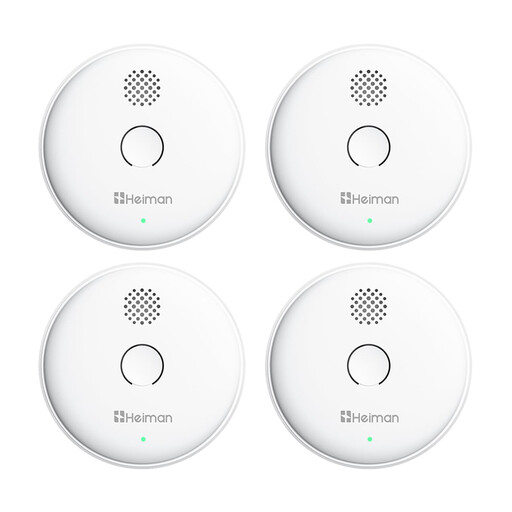
Why it suits this profile: A four-pack is suitable for a family home with several bedrooms, a hallway and possibly an attic or garage.
The product description states wireless interlinking for up to 40 units, a mute function and 10-year battery life. Test the connection on each floor after installation.
Four alarms, radio network, 85 dB alarm, 10-year battery and stated EN14604 compliance.
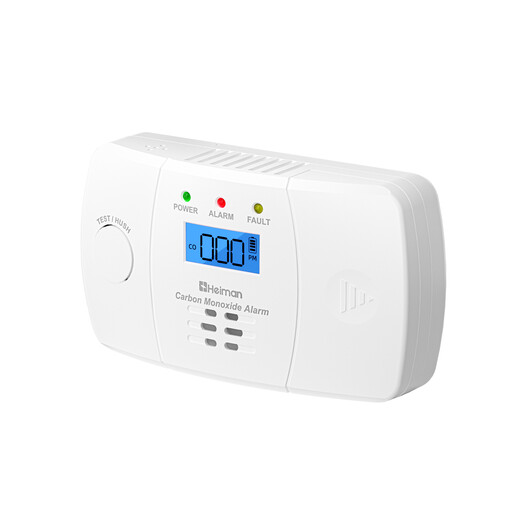
Why it suits this profile: Suitable as an additional device in a home with a central heating boiler, fireplace, stove or other combustion appliance, where a standard smoke alarm does not serve the same purpose.
This is a CO alarm, not a smoke alarm. The product listing mentions EN50291, a digital LCD display and a replaceable battery. Use it alongside smoke alarms where necessary.
LCD display, replaceable battery, stated EN50291 certification and a specified service life of 10 years.
We’ve put together a complete, up-to-date list of products that fully meet these strict selection criteria and the applicable European safety regulations.
A smoke alarm should generally be installed on the ceiling, as stated in the product instructions. Install alarms in or near bedrooms, on escape routes and on every relevant floor. Avoid areas with lots of steam, direct heat, extreme cold or heavy dust, as these can cause unwanted alerts.
Practical maintenance tips:
For a holiday home or garage, the surroundings are particularly important. Check that the chosen alarm is suitable for the temperature and humidity in that room. A mini smoke alarm can be useful when space is limited, but a small size says nothing about suitability without checking the specifications.
This depends on the layout of your home and the applicable fire safety regulations. In any case, install alarms on important escape routes and near sleeping areas. In a larger home, interlinked alarms can ensure that an alert is audible in several locations.
The product listing may state a battery life of 10 years, but the service life of the complete alarm may depend on other factors. With a built-in battery, the entire unit is often replaced once the battery is empty. Always follow the instructions and the end-of-life signal.
A carbon monoxide alarm is relevant when combustion appliances are present, while a smoke alarm detects smoke. As they identify different risks, using both may be appropriate. For each purpose, choose a device with the correct stated standard, installation requirements and maintenance instructions.
