
Vandaag of morgen in huis

Kwaliteit gegarandeerd

Welkomstaanbiedingen ontgrendelen: GRATIS bezorging | Tot 80% korting | Gratis 30 dagen JoyPlus-proefperiode
Download de app
A smoke alarm may seem like a simple product, but the differences between models matter in practice. Consider battery life, sensor type, alarm volume and whether you can connect multiple alarms. A low purchase price may be less appealing if you have to replace the batteries quickly or rely on a separate alarm on each floor.
This buying guide helps homeowners, tenants, landlords and businesses choose a suitable smoke alarm based on verifiable product specifications.
A cheap smoke alarm may seem like enough, but first check exactly what you’re getting. Some models are sold as a set, while others contain just one alarm. So check the number of units, battery type and whether fixings are included.
A smoke alarm set is often practical for a home with several bedrooms, a hallway and a living room. Compare the price per alarm, not just the total price.
A smoke alarm with a 10-year battery may need less maintenance during that time. That doesn’t automatically mean the alarm will last indefinitely. According to the product information for the models mentioned, the entire alarm should be replaced after the stated period of use.
Also check whether the battery is built in or replaceable. A built-in battery means less maintenance, but you’ll eventually need to replace the whole smoke alarm. If the battery is replaceable, make sure you fit a suitable replacement in good time.
A claim such as 85 dB tells you the stated sound level, but not how clearly you’ll hear the alarm in every home. Walls, doors and the distance between floors all affect how well the sound carries.
A Wi-Fi smoke alarm isn’t automatically the right choice either. Check that the app, Wi-Fi frequency and power supply suit your needs. For a home with multiple floors, a wireless smoke alarm that connects by radio may be more practical than a model that relies solely on a smartphone app.
The product page should clearly state whether the smoke alarm complies with EN14604, the European standard for smoke alarms in homes. The product information for the items in this selection lists EN14604 or DIN EN14604. Always check the latest information on the product page and in the documentation supplied before you buy.
An optical smoke alarm, also known as a photoelectric smoke alarm, uses a light source and sensor to detect smoke particles. This is a common type for living spaces. The product description remains the key reference: don’t present a brand’s information as an independent guarantee of performance.
Check the following:
Fit an alarm to the ceiling and avoid places with lots of steam, directly beside cooking fumes, extreme temperatures or excessive dust. Always check local regulations and the installation instructions.
With an interlinked smoke alarm, the product description states that several connected alarms sound at the same time. This can be useful in a home with multiple floors. The Heiman models in this selection can connect up to 40 alarms via radio signal.
A smoke alarm with a mute function can silence a temporary false alarm caused by steam or cooking fumes, for example. This feature is no substitute for correct placement. Don’t install the alarm directly above a hob or too close to a bathroom.
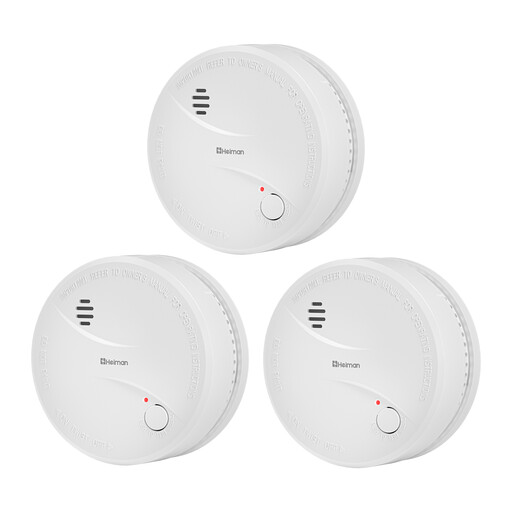
Why it suits this buyer: A pack of three alarms is a practical starting point for several rooms, such as a hallway, bedroom and living room. The product page lists an optical sensor, a 10-year lithium battery and an 85 dB alarm.
The number of alarms is clearly stated, so you won’t accidentally buy just one for several rooms. The stated battery life also means fewer planned battery changes.
Pack of 3; optical sensor; EN14604 listed in the product information; 85 dB alarm and long-life lithium battery.
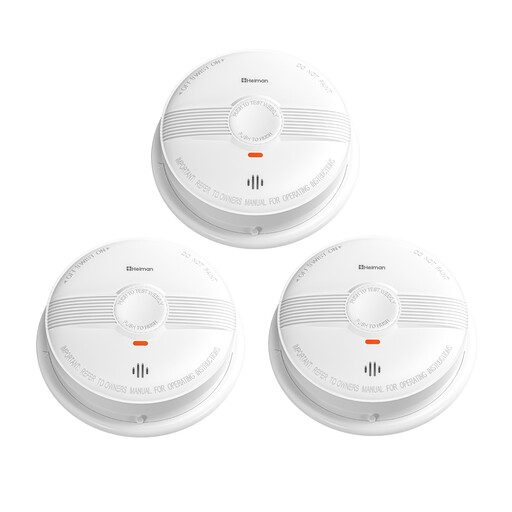
Why it suits this buyer: This model is a good fit if you want to link alarms in several rooms wirelessly, without running cables between them. According to the product description, up to 40 alarms can be connected via radio signal.
The radio link means you don’t have to rely solely on hearing one local alarm. The mute switch is designed to silence a temporary alarm.
Wireless linking for up to 40 units; 85 dB; built-in battery with a stated lifespan of 10 years; mute function; EN14604 listed in the product information.
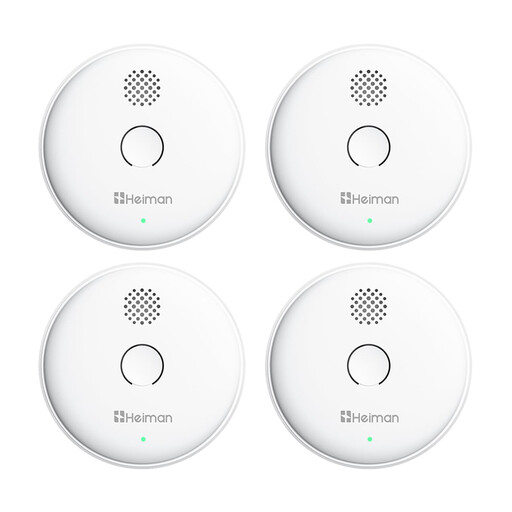
Why it suits this buyer: A four-piece set is suitable for larger homes, rental properties or small business premises where several areas need smoke alarm coverage.
You won’t need to start by combining individual alarms with different features. The product name and description state that the set includes four units, wireless linking and a mute switch.
Set of 4; up to 40 networkable alarms according to the product description; 85 dB; 10-year battery and EN14604 listing.
We’ve put together a complete, up-to-date list of products that meet these strict selection criteria and the applicable European safety regulations.
Press the test button regularly, following the instructions. The product information for several of the models mentioned recommends testing weekly. If the alarm doesn’t respond, indicates a low battery or sounds unusual, check that it’s fitted correctly, check the battery and consult the instructions.
Where possible, fit the smoke alarm to the ceiling and follow the installation instructions. In a home, several areas are worth covering, including bedrooms, hallways and rooms leading to bedrooms. Avoid steam, cooking fumes, heavy dust and places with extreme temperatures.
No. A smoke alarm detects smoke; a carbon monoxide alarm is designed to detect carbon monoxide. A combined model may offer both functions, but check separately which standards, sensors and alarm features are listed on the product page. A carbon monoxide alarm doesn’t replace a smoke alarm, and vice versa.
