
Vandaag of morgen in huis

Kwaliteit gegarandeerd

Welkomstaanbiedingen ontgrendelen: GRATIS bezorging | Tot 80% korting | Gratis 30 dagen JoyPlus-proefperiode
Download de app
Buying a smoke alarm may seem straightforward, until you have to choose between a single alarm, a multipack, wireless interlinking or a smart model with an app. Marketing copy often focuses on long battery life or a loud alarm, while other practical features get less attention.
For homes, flats, garages and business premises in the Netherlands, there are three main pitfalls to look out for:
Below, we explain which specifications to check and which models suit different needs.
A smoke alarm EN 14604 is intended to meet the requirements of this European standard for smoke alarms. Always check that the standard is listed for the specific product and version. EN 14604 is mentioned in the product information for several Heiman models.
That doesn’t mean that every version in a product range automatically has the same features. For example, a single alarm may differ from a wirelessly linked set. So check:
An optical smoke alarm uses a photoelectric sensor. This type is widely available for use in living areas. Assess how it works based on the product specifications provided; manufacturer claims about detection speed or reliability aren’t a guarantee for every real-world situation.
A smoke alarm with a 10-year battery can be convenient because you won’t need to replace the battery as often. However, be aware of the difference between:
Some Heiman models are listed with a built-in battery that lasts for 10 years. Other models, such as certain carbon monoxide alarms, have a replaceable battery. Also check whether the whole alarm needs to be replaced after a certain period of use.
According to the product information, a smoke alarm with an 85 dB alarm provides an audible warning. How clearly you hear it depends on factors such as where it’s installed, doors, floors and background noise.
So don’t just install alarms in the living room. Also consider:
A smoke alarm with test and hush buttons can be useful. Use the test button to check that the alarm responds. The hush button can be handy temporarily if cooking fumes or steam trigger a false alarm. Don’t use this feature as a substitute for correct installation.
A linked smoke alarm can be useful in a home with multiple floors. According to the product information, alarms on a wireless network can sound simultaneously if one unit detects smoke. Always check the maximum number of alarms and whether all the units in the system can link together.
The Heiman radio-linked models below are listed as supporting up to 40 connected alarms. This is particularly relevant for larger homes, rental properties or spaces where you want to be alerted quickly in several locations.
A smart Wi-Fi smoke alarm is a different type of product. It connects to a wireless network and, according to the product description, can be used with an app. Check the following in advance:
Wi-Fi functionality is an extra feature, not a reason to skip installation, testing or maintenance.
A smoke alarm detects smoke; a carbon monoxide alarm is designed to detect carbon monoxide. These products aren’t interchangeable. Carbon monoxide can be produced by fuel-burning appliances and isn’t always visible or detectable by smell.
A separate CO alarm may be useful in rooms with a central heating boiler, stove or other fuel-burning appliance. Products such as the Heiman CO Detector with LCD display list EN 50291, while other versions offer wireless linking or Wi-Fi. Follow the instructions for the correct installation location and make sure you maintain your fuel-burning appliance regularly.
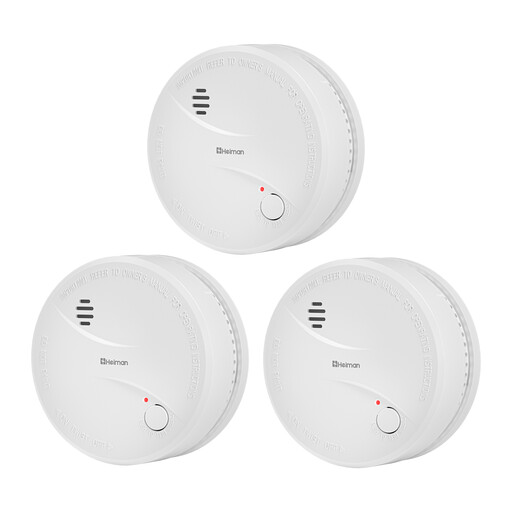
Why it suits this type of buyer: A set of three alarms helps you cover several rooms as a starting point, without having to configure a wireless network straight away.
The product information lists EN 14604, a photoelectric sensor, a 10-year lithium battery and an 85 dB alarm. When it arrives, check that these details apply to your version.
Pack of 3; EN 14604 listed; optical detection; 85 dB alarm according to the product description.
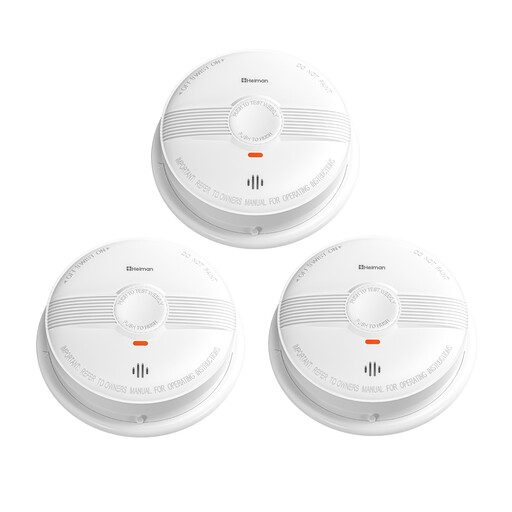
Why it suits this type of buyer: A good choice if you want to link several floors or rooms without installing cables.
The description lists radio linking for up to 40 alarms, a 10-year battery and a mute switch. Test the connection after installation, following the instructions.
Up to 40 networked units according to the product information; 85 dB alarm; EN 14604; test button and mute function.
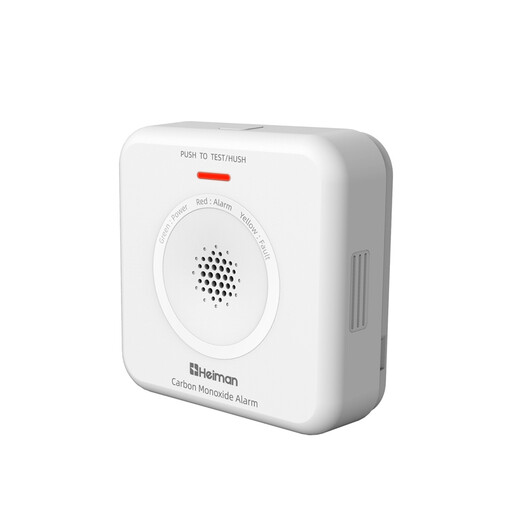
Why it suits this type of buyer: A practical choice if you want to monitor for carbon monoxide as well as smoke and value receiving alerts through an app.
The product information lists a Wi-Fi connection, app support and EN 50291. Check app compatibility and Wi-Fi requirements in advance.
CO detection; Wi-Fi functionality; 10-year lifespan according to the product name; EN 50291 listed.
We’ve put together a complete, up-to-date list of products that meet these strict selection criteria and the applicable European safety regulations.
That depends on the layout of your home and the safety regulations that apply. As a general rule, install alarms on every floor and near sleeping areas. In a larger home, a wirelessly linked set can be useful because several alarms can sound at the same time.
Press the test button regularly and follow the manufacturer’s instructions. Also check that the alarm is free of dust and hasn’t been covered or painted over. A beeping sound, damage or an expired lifespan means you should check the instructions or replace the alarm.
According to the product specifications, a model with a built-in 10-year battery needs fewer separate battery changes. However, remember that you’ll need to replace the whole alarm at the end of its stated lifespan. A Wi-Fi model may also have app, network or maintenance requirements. When buying, consider not just the price per unit, but also how many alarms you need and what type of battery they use.
