
Vandaag of morgen in huis

Kwaliteit gegarandeerd

Welkomstaanbiedingen ontgrendelen: GRATIS bezorging | Tot 80% korting | Gratis 30 dagen JoyPlus-proefperiode
Download de app
You should not choose a smoke alarm based on price alone. For a home, rented property, rental property or small business premises, installation, battery life and alarm volume are just as important. Yet many models look very similar. A low price, for example, may come with a battery that needs replacing regularly, while a smart feature is not always practical for every room.
The following pitfalls are common:
EN 14604 is the European standard for smoke alarms used in homes. It covers technical requirements, performance and marking, among other things. When buying, check that the product page explicitly mentions this standard and that the instructions are available.
An optical smoke alarm, also known as a photoelectric smoke alarm, uses an optical sensor to detect smoke particles. This type is widely used in homes and is suitable for rooms such as bedrooms, living rooms and hallways. Do not install a smoke alarm directly next to a hob, bathroom door or ventilation outlet. Steam and cooking fumes can cause false alarms.
A statement such as “TÜV certified” should always be considered alongside the specific product documentation. According to the product information provided, certain Heiman models are offered as TÜV- and EN14604-certified. Check the current packaging and documentation before making a purchase decision.
A smoke alarm with a 10-year battery generally uses a built-in lithium battery. This can be convenient for rented homes, flats and properties where regular battery maintenance is difficult. However, pay attention to the difference between:
With a built-in battery, you will usually replace the complete smoke alarm once its service life has ended. Test the device according to the instructions, for example weekly using the test button, and carefully remove dust from the casing. The product description may state a battery life, but the actual lifespan also depends on usage, storage and environmental factors.
A 85 dB smoke alarm is designed to provide a clearly audible alarm signal. However, the decibel rating is not the only criterion. Also consider the number of floors, the distance to bedrooms and the presence of thick doors.
In a larger home, an interconnectable smoke alarm can be practical. With a radio-networkable version, several devices can be connected wirelessly. According to the product information for the Heiman models mentioned, up to 40 alarms can be linked via radio signal. If one device sounds an alarm, the linked alarms should respond simultaneously according to that product description. This is a claim made in the manufacturer's product information; always follow the supplied instructions for linking and testing.
A smoke alarm with a hush function can be temporarily silenced in situations such as cooking fumes or steam. Only use this function when the cause is clear, and then check that the alarm is active again. A hush function should never be a reason to install an alarm in an unsuitable location.
The selection below links specific features to different usage profiles. Before buying, check the current product page, package contents and installation instructions.
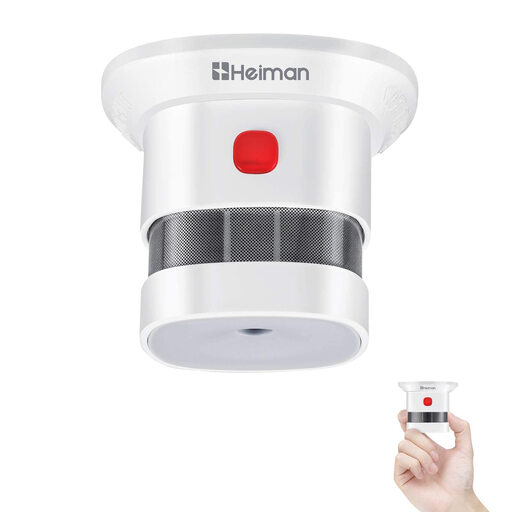
Why it suits this profile: A compact optical smoke alarm for anyone looking for a straightforward solution for a bedroom, hallway or living room.
The product listing mentions both EN14604 and a 10-year battery life, so you do not have to rely on appearance or price alone.
Photoelectric sensor, stated 85 dB alarm and stated 10-year battery life.

Why it suits this profile: Suitable for buyers who want to compare the sensor, standard, battery and alarm volume before making a purchase.
The product title specifically states that it has a photoelectric sensor, EN 14604, a lithium battery lasting 10 years and 85 dB.
Optical detection, long-life battery and reference to EN 14604.
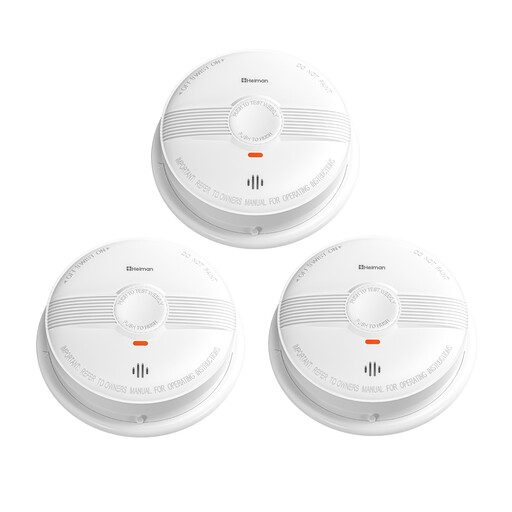
Why it suits this profile: A smoke alarm set for homes with several rooms or floors where simultaneous warnings are desirable.
The set specifies radio connectivity, a maximum of 40 interconnectable alarms and a hush function. This makes it clearer which problem the additional features are designed to solve.
Three alarms, stated 85 dB, built-in 10-year battery, EN14604 and wireless interconnection.
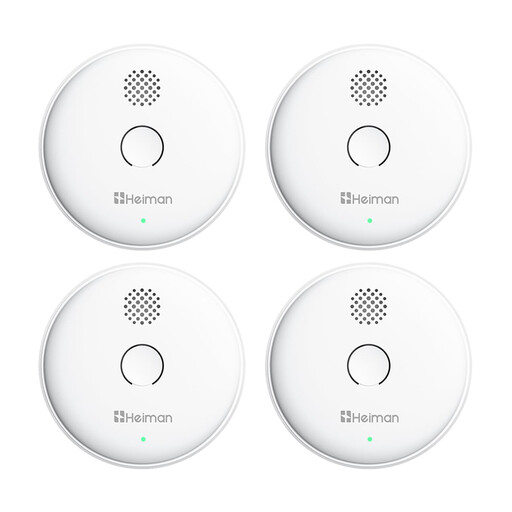
Why it suits this profile: A four-piece smoke alarm set for multiple rooms, rental units or a larger property where a fixed arrangement is required.
The product information lists the number of alarms, interconnection capability, battery life and hush function separately.
Four devices, radio networking for up to 40 alarms, 85 dB and a stated battery life of 10 years.
We have put together a complete, up-to-date list of products that fully meet these strict selection criteria and the applicable European safety requirements.
Keep the following points in mind during installation:
This depends on the layout, the number of floors and the applicable building and fire-safety regulations. In homes, alarms on designated floors and near important escape routes or living areas are often relevant. Draw up a floor plan in advance and check the current regulations before ordering a smoke alarm set.
Models with a stated 10-year battery usually also specify a limited service life for the device. A built-in battery is generally not replaced; after the stated period, you replace the complete alarm. Test it regularly in the meantime, and do not wait to replace it if the device gives a fault signal.
No. A radio-networkable smoke alarm connects alarms directly via a radio signal. A Wi-Fi smoke alarm connects to a wireless network and, according to the product description, may work with an app. Choose radio for interconnecting alarms, and Wi-Fi when app-based control or notifications are important for your situation.
