
Vandaag of morgen in huis

Kwaliteit gegarandeerd

Welkomstaanbiedingen ontgrendelen: GRATIS bezorging | Tot 80% korting | Gratis 30 dagen JoyPlus-proefperiode
Download de app
A smoke alarm may seem like a simple product, but the differences between models matter. A low price can be tempting, while a short battery life, limited coverage or lack of an interconnection feature can lead to extra costs later. Features such as Wi-Fi, an app and a “10-year battery” are also sometimes presented more prominently than the practical conditions that apply.
For homeowners, tenants, landlords and businesses, these are the main pitfalls to watch out for:
A smoke alarm for homes should refer to EN 14604, the European standard for smoke alarms. The product listing should clearly state whether the model is certified to or complies with this standard. Do not use a reference to a standard as your only selection criterion: also check the installation instructions, battery and test function.
A photoelectric smoke alarm detects smoke particles using an optical sensor. This type is widely used in homes and is listed in several product descriptions in the range. Install the alarm according to the instructions, usually on the ceiling. A smoke alarm is designed to provide early warning and is not a substitute for an escape plan, fire extinguisher or other fire-safety measures.
A smoke alarm with a 10-year battery reduces the number of times you need to replace the battery. Pay attention to the difference between:
According to the product information, several Heiman models have a battery life or service life of ten years. On some models, the battery is replaceable, such as on the Heiman carbon monoxide alarm. Other models are listed as having a built-in battery. Always check when the complete smoke alarm must be replaced and test the device regularly.
An alarm volume of 85 dB is found on several selected models. This is relevant in bedrooms, hallways and larger homes, but the actual audible volume depends on walls, doors and the installation location.
For a multi-storey home, interconnectable smoke alarms can be practical. With a radio-networkable model, the alarm sounds on several connected devices at the same time, according to the product description. Some Heiman models support up to 40 alarms. Before buying, check:
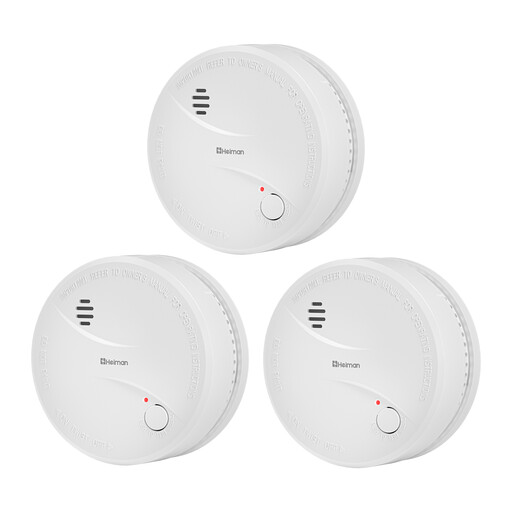
Why it suits this profile: A set of three smoke alarms is suitable for a flat, a detached house or a home with several rooms. The listing mentions a photoelectric sensor, EN 14604 and a lithium battery with a long service life.
The product information specifies the standard, sensor and battery life. This means you do not have to rely solely on a general marketing term such as “fire alarm”.
Three alarms in one pack, 85 dB alarm, photoelectric sensor and stated EN 14604 certification.
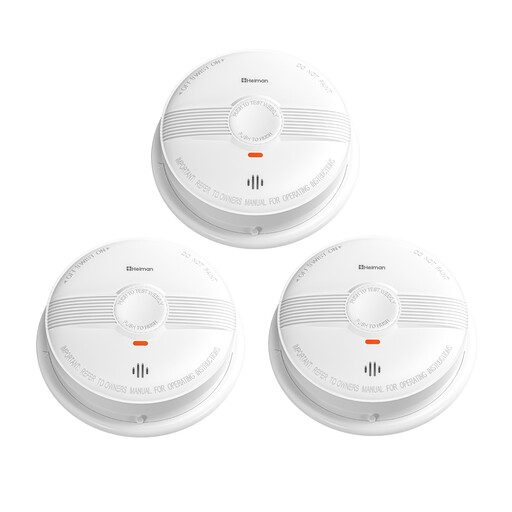
Why it suits this profile: This model is designed for anyone who wants to connect several floors or rooms. The product details mention wireless interconnection for up to 40 alarms, a mute function and a battery life of ten years.
The interconnection capability and maximum number of devices are stated clearly. This is more informative than simply using the term “wireless smoke alarm”.
Up to 40 radio-networkable alarms, 85 dB alarm, mute switch and stated EN 14604 compliance.
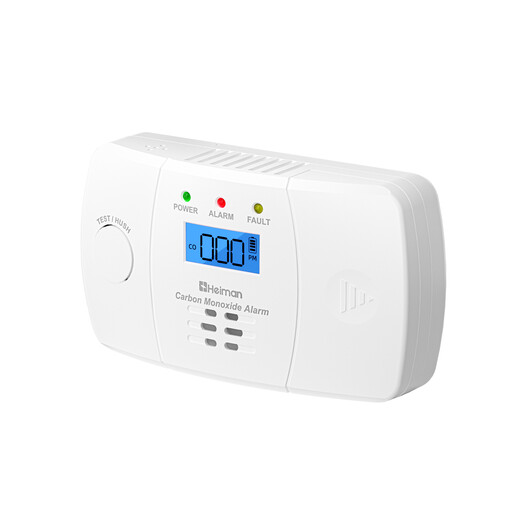
Why it suits this profile: A carbon monoxide alarm is suitable for rooms containing a combustion appliance, such as a central-heating system, stove or water heater, when it can be installed according to the instructions. This model has an LCD display and a replaceable battery, according to the product listing.
The listing distinguishes between a CO alarm and a smoke alarm and mentions EN 50291. The replaceable battery means you do not have to dispose of the entire device solely because of the battery.
Digital LCD display, replaceable battery, stated EN 50291 certification and a service life of ten years.
A smoke alarm with Wi-Fi or smoke alarm with an app can be useful for a holiday home, garage or business premises where you are not always present. Before buying, check whether the alarm works independently or requires a hub. Also consider app support, low-battery notifications and how it operates if the internet connection goes down.
An app notification is an addition to the local alarm signal. So do not choose based solely on smartphone features. Also check the standard, sound level, installation requirements and test button.
A CO alarm is not a substitute for a smoke alarm. Smoke and carbon monoxide present different risks; in many homes, both types of alarm are relevant.
We have put together a complete, up-to-date list of products that fully meet these strict selection criteria and the applicable European safety regulations.
That depends on the layout and number of floors. In any case, install alarms in accordance with the applicable Dutch regulations and the product instructions. Consider bedrooms, hallways and rooms where there is a risk of fire. A smoke alarm set can be more cost-effective and practical when several rooms need to be equipped.
For models with a stated service life of ten years, you should replace the complete alarm after that period, even if it still sounds when tested. With a model featuring a replaceable battery, replace the battery according to the instructions, but also check the maximum service life of the sensor and casing. Test the alarm regularly using the test button.
A model with a built-in ten-year battery will generally require fewer recurring battery purchases than a model with batteries that need replacing frequently. However, remember to factor in the cost of buying a new alarm once the stated service life has ended. With a wireless system, additional alarms or a central hub may increase the total cost. Therefore, consider the price per room, not just the price of one device.
