
Vandaag of morgen in huis

Kwaliteit gegarandeerd

Welkomstaanbiedingen ontgrendelen: GRATIS bezorging | Tot 80% korting | Gratis 30 dagen JoyPlus-proefperiode
Download de app
A smoke alarm with a 10-year battery saves you from having to replace separate batteries regularly. However, a long battery life alone doesn’t guarantee that a model is right for your home. The number of rooms, whether alarms can be linked wirelessly and the product information available all help determine whether your purchase will be practical.
For homeowners, tenants and landlords, three pitfalls are particularly worth bearing in mind:
An EN 14604 smoke alarm is designed for homes and must meet requirements for areas such as detection, alarms and product information. When buying, check that EN 14604 is clearly listed for the specific model.
Many models in this selection use an optical smoke detector. An optical or photoelectric sensor detects smoke particles in a sensing chamber. According to the manufacturer’s product descriptions, the Heiman models mentioned here are fitted with this type of sensor. This is a product specification, not a guarantee that every fire scenario or position will be detected equally quickly.
Install a smoke alarm according to the instructions, usually on the ceiling. Avoid areas exposed to direct steam, heavy dust or significant temperature fluctuations. Cooking fumes can trigger false alarms in the kitchen. A hush function may help temporarily, but shouldn’t be used to disable an alarm permanently.
A smoke alarm with a lithium battery and a sealed battery requires little day-to-day maintenance. However, it’s important to understand the difference between:
Test every alarm regularly using the test button. The description for the Heiman Model 633 recommends testing weekly and carefully vacuuming the outside once a year. Note the installation date on the alarm or in your home records. That way, you’ll know when it may be time to replace it.
A standard wireless smoke alarm runs on a battery, but that doesn’t automatically mean it can be linked wirelessly to other alarms. With a radio-linked smoke alarm, multiple alarms communicate by radio signal. If one alarm goes off, linked devices can sound at the same time. This can be particularly useful in:
Always check that all the alarms are part of the same system. The Heiman network models described here state that they support up to 40 linked alarms. This figure comes from the product information, so check the linking procedure and range in your own home before installation.
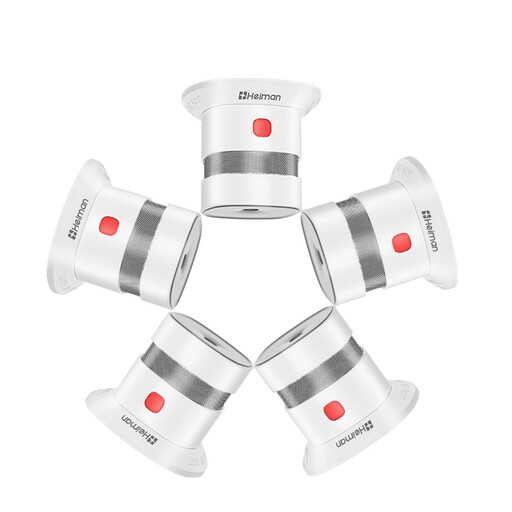
Why it suits this profile: A pack of five is ideal if you need to fit several rooms with their own alarms straight away, without requiring them to link wirelessly.
The pack makes it clear how many alarms you’ll receive. According to the product title, each one has a 10-year battery life and an optical sensor.
Pack of five, 85 dB according to the product information, and ceiling-mounted installation.
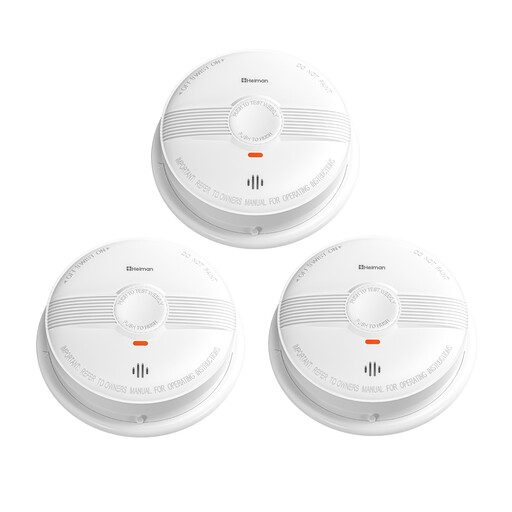
Why it suits this profile: A good choice if you’re looking for a coordinated system for several rooms and value a hush function as well as long battery life.
The product description states that up to 40 alarms can be linked by radio. This means you don’t have to rely solely on the sound from one device.
85 dB, built-in 10-year battery, hush function and stated EN 14604 conformity.
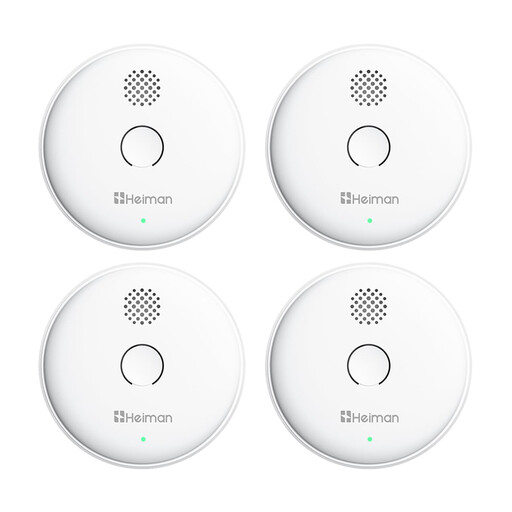
Why it suits this profile: A four-pack of linkable alarms is a good fit for larger homes, rental properties or spaces where simultaneous alerts are desirable.
The radio network feature means you’re less reliant on a single local alarm. Check the linking process and range between floors before installation.
Up to 40 networkable alarms according to the product information, 85 dB, 10-year battery and hush function.
We’ve put together a complete, up-to-date list of products that meet these strict selection criteria and current European safety requirements.
Choose a suitable position in every relevant room, following the instructions. In many homes, the hall, landing and areas near bedrooms are important locations. Don’t install an alarm behind a cupboard, close to a ventilation grille or directly above a hob.
For a wireless system, bear these points in mind:
A Wi-Fi model with an app, such as the Heiman WLAN Wi-Fi Smoke Detector, works differently from a radio-linked smoke alarm. According to the product title, this model has a replaceable battery, an 85 dB alarm and an EN 14604 listing. Choose this option only if alerts over a network connection are useful to you, and bear in mind that the battery will need maintaining.
No. According to the product information, you shouldn’t normally need to replace the built-in battery during its service life, but you still need to test the alarm, keep it free of dust and replace it at the right time. Long battery life doesn’t replace regular checks.
It depends on the layout, number of floors and regulations that apply to your home or business premises. Make a note of all sleeping areas, hallways and possible escape routes. If you need several alarms, a linkable model may be practical, but check that the devices you choose work together as one radio system.
With a sealed lithium battery, the product information states that you won’t need to buy separate batteries during the stated service life. However, remember to allow for buying a new alarm once that period is over, and for any extra units you may need in larger spaces.
