
Vandaag of morgen in huis

Kwaliteit gegarandeerd

Welkomstaanbiedingen ontgrendelen: GRATIS bezorging | Tot 80% korting | Gratis 30 dagen JoyPlus-proefperiode
Download de app
A smoke alarm with a 10-year battery saves you from having to buy and replace disposable batteries regularly. But a long battery life isn’t the only thing to consider. Some models can’t be interconnected, others are less suited to multi-storey homes, and some have a hush button that may not be available in practice.
For homeowners, tenants and landlords, three pitfalls are particularly important:
A smoke alarm compliant with EN 14604 refers to the European standard for smoke alarms in homes. Check the product page to see whether this standard is actually listed and whether clear information about the manufacturer and responsible party is available.
An optical smoke alarm, also known as a photoelectric smoke alarm, uses light detection to identify smoke particles. This type is common in models designed for bedrooms, living rooms and hallways. Don’t install an alarm directly next to a hob, shower or other source of steam. Always follow the product instructions for the exact installation location.
The Heiman models in this selection list EN 14604 in the product name or specifications. This gives you a verifiable point to check, but it doesn’t replace the installation and maintenance instructions.
A smoke alarm with a lithium battery often has a built-in battery that, according to the product information, can last up to ten years. The benefit is that you don’t need to replace a disposable battery. After that, the entire alarm will usually need to be replaced in line with its stated lifespan.
Pay attention to the wording on the product page:
Even with a long battery life, regular testing is still necessary. For example, the product information for the three-pack recommends weekly testing with the test button.
A smoke alarm with an 85 dB alarm is designed to give a clearly audible warning. How well it works in your home depends on walls, doors, floors and background noise.
A wireless smoke alarm with a radio connection may be suitable for a home with several rooms or floors. The Heiman network models mentioned here can be connected to up to 40 alarms. According to the product description, when one unit sounds, the other connected alarms can sound too.
An interconnected smoke alarm isn’t automatically the right choice for every household. One alarm or a simple set may be enough for a small flat, while a larger home may benefit from several interconnected alarms. A smoke alarm with a hush button can also be useful for silencing a temporary false alarm caused by cooking fumes or steam. Don’t use the function to leave an alarm switched off for an extended period.

Why it suits this profile: A single unit is a practical choice for a flat, student room or first installation in a smaller home. The product listing specifies a photoelectric sensor, EN 14604 and an 85 dB alarm.
The specifications give details of the battery life, sensor type and standard, so you don’t have to rely on the “10-year” marketing claim alone.
Photoelectric sensor, built-in lithium battery, EN 14604 according to the product listing, and an 85 dB alarm.
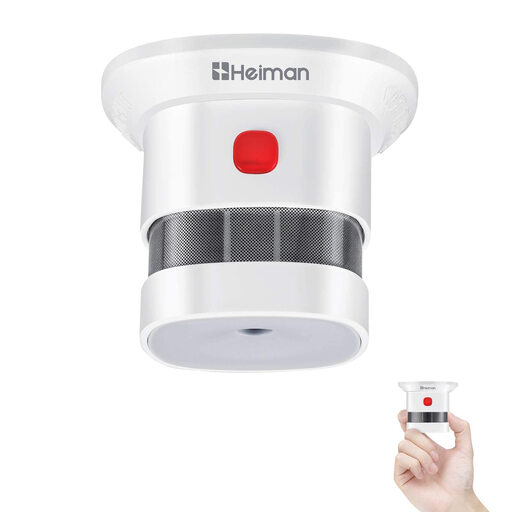
Why it suits this profile: This compact model is a good fit if you’re looking for a less conspicuous alarm for a bedroom, hallway or living room and value the certification information provided.
The product is sold on more than just its size: the listing also mentions a 10-year battery, an 85 dB alarm, a photoelectric sensor and EN 14604.
Compact design, photoelectric sensor and, according to the product name, TÜV and EN 14604 certification.
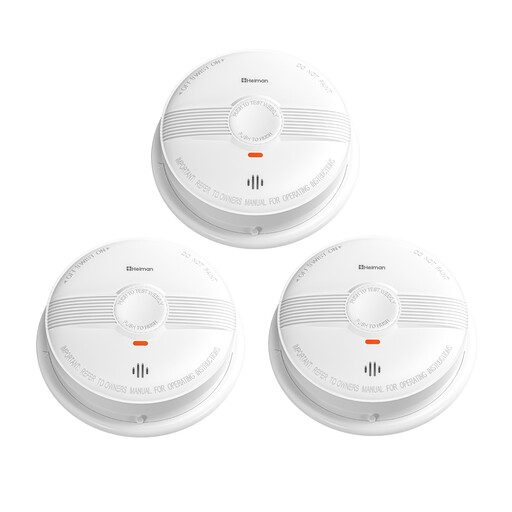
Why it suits this profile: This smoke alarm set is designed for homes with several rooms or floors. The product information specifies wireless interconnection for up to 40 alarms, a hush button and an 85 dB alarm.
This set means you won’t end up buying separate alarms without an interconnection when you need them to sound together. Be sure to check the interconnection instructions before installation.
Three alarms, wireless interconnection for up to 40 alarms according to the product description, a 10-year battery and a hush button.
We’ve put together a complete, up-to-date list of products that meet these strict selection criteria and the applicable European safety requirements.
Keep the following points in mind when buying and installing your alarms:
A larger set may cost more upfront, but it can work out cheaper than buying several individual alarms if you need to cover different rooms. So compare the price per alarm and check which installation accessories are included.
No. According to the product information, the built-in battery doesn’t need to be replaced regularly, but the alarm still needs to be tested and kept free of dust. Replace the entire device when it reaches its stated lifespan or when the instructions say to do so.
Install smoke alarms in the designated sleeping and circulation areas, following local regulations and the installation instructions. Avoid placing them close to cooking fumes, shower steam or heavy dust, as these can trigger unwanted alarms.
It depends on your home. A basic smoke alarm may be enough in a small flat. In a multi-storey home, a wireless, interconnected smoke alarm may be more practical, as several alarms can sound at the same time according to the product description. Always check the maximum number of connected devices and the installation instructions.
