
Vandaag of morgen in huis

Kwaliteit gegarandeerd

Welkomstaanbiedingen ontgrendelen: GRATIS bezorging | Tot 80% korting | Gratis 30 dagen JoyPlus-proefperiode
Download de app
A smartwatch can display notifications, track your activities and let you make calls via Bluetooth on your phone. But not every model suits every user. A large screen tells you little about battery life, a high water-resistance rating doesn’t automatically mean you can dive with it, and health readings are no substitute for medical equipment.
Use this guide to compare smartwatches for men and women based on the features that really make a difference in everyday use: compatibility, activity tracking, battery life, GPS, calling and water resistance.
Manufacturers often quote a maximum standby time. This usually doesn’t apply when GPS, Bluetooth calling, screen notifications and activity tracking are all in constant use. So check whether the stated battery life refers to standby, typical use or intensive use.
A smartwatch with long battery life can be useful for camping, long walks or if you don’t want to charge it often. A model with lots of apps and a bright AMOLED screen, on the other hand, may need charging more frequently.
When choosing a waterproof smartwatch, check the exact rating. IP67 and IP68 refer to protection against dust and water under specific laboratory conditions. They don’t automatically mean that a watch is suitable for swimming.
A rating such as 5 ATM is also determined under controlled conditions. The REDMI Watch 6 Lite product information states that the model is water-resistant up to 5 ATM, but isn’t intended for diving, saunas or hot showers. Xiaomi says that water resistance may decrease over time.
Features such as a heart-rate monitor, blood oxygen readings or sleep tracking are designed to provide general insights. Readings can be affected by factors including fit, movement, skin contact and the app being used.
According to the product information for models including the OUKITEL BT101, health features aren’t intended to replace medical equipment. Wear the watch comfortably and don’t use its data to make a medical diagnosis.
A smartwatch for Android and iOS usually works through a companion app. Before buying, check:
For example, the OUKITEL BT101 requires the Da Fit app, and the phone needs to stay within about 10 metres for a stable Bluetooth connection. So support for Android and iOS doesn’t mean the watch works completely independently.
A screen measuring 1.83 to 2.02 inches makes notifications and activity data easy to read, but a larger watch may be heavier or less suitable for a slim wrist. As well as screen size, consider:
According to the safety information from various manufacturers, a watch that’s too loose may give inaccurate heart-rate readings. Wearing it too tightly can also be uncomfortable.
A sports smartwatch with GPS is useful for running, cycling and walking if you want to record your route without your phone. Check whether GPS is built in or only works through your smartphone. Also consider the number of sports modes: “100+ modes” mainly means that lots of activities are available, not that every sport is tracked in the same level of detail.
For everyday use, notifications, a step counter, sleep tracking and music controls may also be useful. If you use your watch more intensively, physical buttons, a sturdy case and longer battery life are practical advantages.
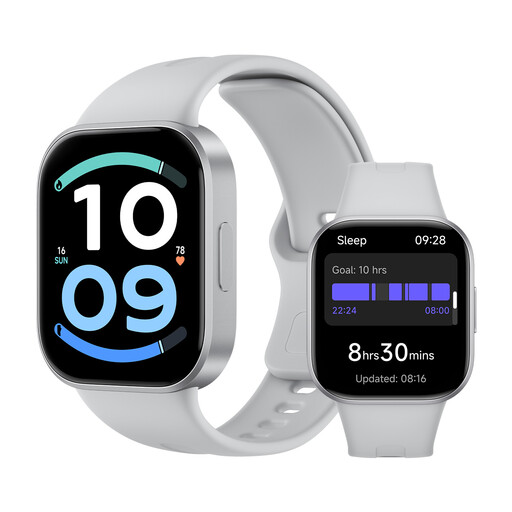
Why it suits this type of user: An easy-to-read model for notifications, everyday activity and basic features, without a large or heavy watch.
The specifications clearly state that it has a 1.85-inch screen and IP68 protection. Xiaomi says this model isn’t intended for swimming, saunas or diving.
1.85-inch AMOLED screen, 390 × 450-pixel resolution, TPU strap and, according to the stated IP68 rating, protection against everyday exposure to water and dust.
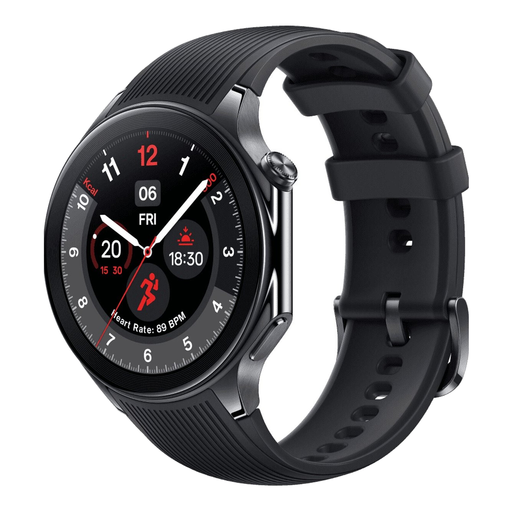
Why it suits this type of user: A good fit for users who value GPS, sleep tracking, apps and a sturdy metal case.
The product information distinguishes between up to 100 hours, around 48 hours of intensive use and up to 12 days in battery-saving mode.
Stainless steel case, GPS features, 32 GB storage, 2 GB RAM and support for Spotify, Strava and Google Wallet, among other services, according to the product description.
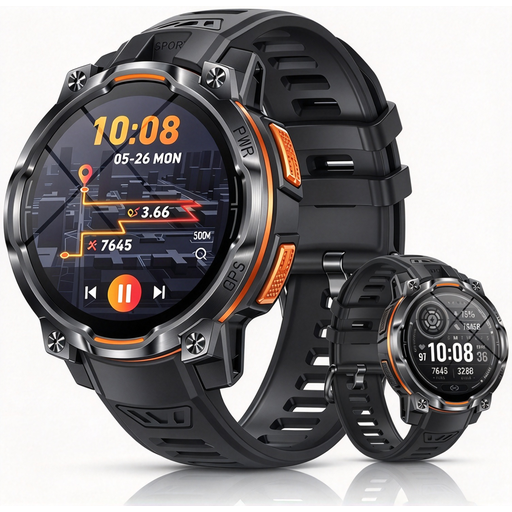
Why it suits this type of user: For walkers, cyclists and outdoor sports enthusiasts looking for a smartwatch with GPS, a compass, an altimeter and plenty of sports modes.
The product name and description mention offline maps, GPS and a 1200 mAh battery. Check which maps and navigation features are available in the app before buying.
1.46-inch screen, Bluetooth calling, more than 100 sports modes, compass, altimeter and support for Android and iOS, according to the listed product specifications.
We’ve put together a complete, up-to-date list of products that meet these strict selection criteria and the current European safety requirements.
It depends on the model. Don’t just look for the words “Android/iOS”; check the required app, Bluetooth version and supported phone versions too. For Bluetooth calling, the smartwatch usually needs to stay connected to your phone.
Battery life between charges depends on screen brightness, notifications, GPS, activity tracking and phone calls. Battery capacity gives you an indication, but compare the stated usage scenarios above all. A model with a battery-saving mode may last longer, but it may turn off some features.
Only if the manufacturer explicitly says it’s suitable for swimming with that specific model. IP67 or IP68 isn’t automatically a swimming rating. Check the manual and safety information. If in doubt, avoid swimming, diving, saunas and hot water. Also keep the watch dry while it’s charging.
