
Vandaag of morgen in huis

Kwaliteit gegarandeerd

Welkomstaanbiedingen ontgrendelen: GRATIS bezorging | Tot 80% korting | Gratis 30 dagen JoyPlus-proefperiode
Download de app
A smartphone gimbal can reduce camera shake when you’re walking, filming or livestreaming. However, not every model offers the same experience. A low price may seem appealing, but an unsuitable clamp, limited compatibility or weak tracking can quickly make a phone gimbal awkward to use.
So look beyond terms such as “AI”, “professional” or “3-axis stabilisation”. Read on to find out which features really matter and which smartphone gimbals suit different situations.
AI tracking sounds like it should work in all sorts of situations, but its performance can depend on your operating system, the app you use and your phone model. Some features are tied to a dedicated app. Other models support Apple DockKit, for example, which enables native tracking in compatible iOS apps.
Before you buy, check:
A gimbal with a tripod is handy for vlogs, video calls and group photos. However, the legs and the surface you place it on determine how stable the setup will be. A compact tripod may work perfectly well on a smooth table, while a soft surface or uneven floor may be less suitable.
A built-in selfie stick saves space, but makes the device more susceptible to movement when extended. A foldable smartphone gimbal is practical for travel; for longer recording sessions, consider the weight and handle too.
A quoted battery life doesn’t guarantee the same amount of use when tracking, lighting and charging your phone. Bluetooth, a spotlight or a multifunctional module can use extra power.
So check:
A 3-axis gimbal typically corrects movement across three axes: tilt, roll and pan. This is especially useful when you’re walking, turning or following a subject. A 2-axis stabiliser may be simpler and lighter, but offers fewer ways to correct movement.
For walking vlogs, sports footage and travel, 3-axis stabilisation is a sensible choice. A simpler model may be enough for short, static clips.
The magnetic clamp or phone holder needs to fit securely without pressing any buttons. Check that your phone will fit with its case on, too. The Verbex C16, for example, is listed as suitable for phones between 67 and 84 mm wide. Measurements like these matter more than a general claim such as “suitable for most smartphones”.
A phone gimbal for iPhone and Android may offer different features on each platform. So check whether the same tracking, gesture control and remote control features are available on your device.
An AI tracking gimbal can come in handy when you’re filming on your own. Check how many subjects it can follow and how tracking is activated. Some models use a hand gesture, while others use an app or a physical button.
Support for vertical video is useful for TikTok, Instagram Reels and Shorts. For YouTube vlogs, horizontal recording may matter more. A 360° pan feature gives you greater freedom of movement, but you’ll also need enough space around the gimbal.
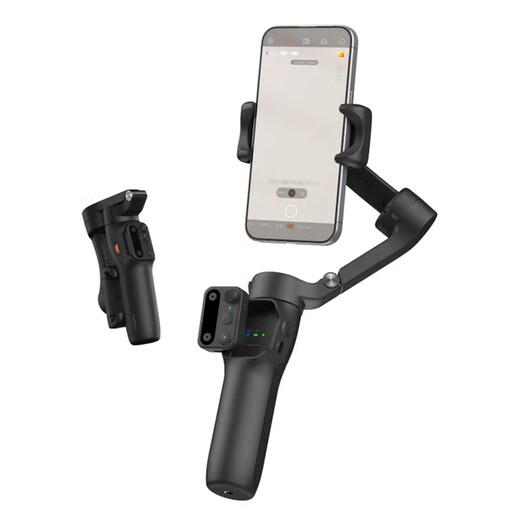
Why it suits this user: This model combines a foldable design with a remote control and modes for vertical and horizontal recording. It’s a good fit for beginners who want to make vlogs, travel videos or social media content without carrying lots of extra accessories.
The specifications list 3-axis stabilisation, a foldable design and remote control from up to 10 metres away. This means you’ll need fewer extra accessories when filming on your own.
Foldable design, quoted battery life of 11 hours, remote control and support for portrait and landscape recording.
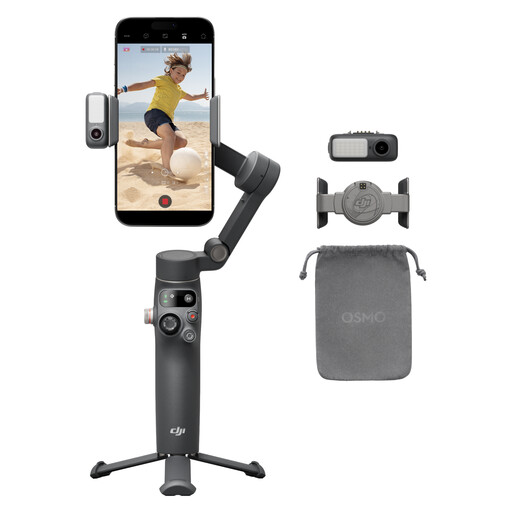
Why it suits this user: This phone gimbal is designed for creators who want to combine quick controls, tracking and accessories in one device for vlogs, travel and social media videos.
The product specifications list a built-in extension rod, tripod and multifunctional module. However, check in advance which features are available with your phone and app.
3-axis stabilisation, ActiveTrack 7.0 according to the product specifications, a built-in tripod and a quoted maximum battery life of 10 hours.
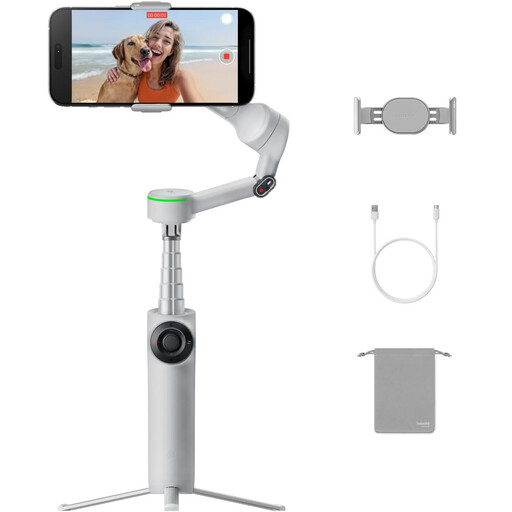
Why it suits this user: This model is aimed at content creators who want to combine multi-person tracking, tracking in compatible iOS apps and features for travel or group recording.
According to the product description, this model supports Apple DockKit and tracking in more than 200 compatible iOS apps. Check current app support before you buy.
3-axis stabilisation, built-in tripod and selfie stick, multi-person tracking, spotlight and a quoted battery life of up to 10 hours according to the product description.
We’ve put together a complete, up-to-date list of products that meet these strict selection criteria and current European safety regulations.
Use this quick checklist before ordering a smartphone stabiliser:
No. Compatibility depends on your phone’s width, weight and operating system. Tracking features can also vary between apps. So check both the physical dimensions and software support.
Yes, a 3-axis gimbal can be useful for vertical TikTok videos and horizontal YouTube vlogs. If you use both formats, choose a model that makes it easy to switch between portrait and landscape.
It varies by model and usage. The product specifications mentioned above quote battery life of around 10 to 11 hours. Tracking, lighting and charging your smartphone can reduce the actual usage time.
