
Vandaag of morgen in huis

Kwaliteit gegarandeerd

Welkomstaanbiedingen ontgrendelen: GRATIS bezorging | Tot 80% korting | Gratis 30 dagen JoyPlus-proefperiode
Download de app
Shaky, unstable videos can significantly diminish the quality of your content, whether you're capturing a precious memory or recording a vlog for your followers. A modern smartphone can shoot fantastic footage, but without the right support, the result often looks amateurish. This article is designed to help you choose the right tool. We'll explore various options, from a multifunctional selfie stick to an advanced AI tracking gimbal, so you can make an informed decision that aligns with your goals.
Before making a choice, it's helpful to know which features are important to you. Here are a few things to consider.
The most important question is how much stabilisation you need. A 3-axis gimbal uses motors to actively correct movements on three axes (tilt, roll, and pan). This produces the smoothest, most professional-looking footage, even when you're walking or running. A selfie stick with a tripod offers passive stability: it holds your phone still when placed on a surface. This is ideal for static shots or time-lapses but doesn't help with vibrations while you're moving.
Modern stabilisers are more than just holders. Features like a phone tripod with a remote are indispensable for solo vloggers, allowing you to start and stop recording without moving from in front of the camera. An AI tracking gimbal can automatically follow a subject, which is perfect for dynamic presentations or sports videos. For travellers and vloggers who are always on the go, a foldable gimbal is a practical choice due to its compact size.
No one wants to be stuck with a dead battery halfway through a shoot. Pay attention to the battery life, especially if you plan on filming for long days. Also, consider how quickly you can set up the stabiliser. A model that is quick and easy to use is one you'll carry and use more often than a complex device.
Based on specifications and functionality, we've highlighted some interesting options for you.
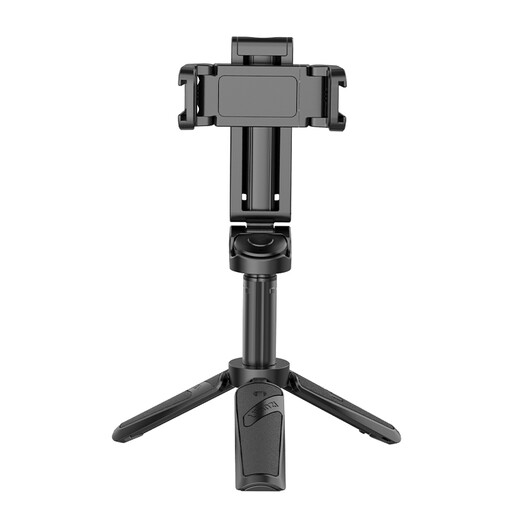
Why it stands out The Ulanzi JJ02 isn't a gimbal, but a clever 3-in-1 solution. It combines an extendable selfie stick, a mini-tripod, and a detachable Bluetooth remote. The dual cold shoe mounts are a handy addition for attaching a microphone or light.
Pros
Who is this for? This is an excellent choice for beginner content creators, travellers, and anyone looking for a simple, accessible, and versatile tool for stable static shots and selfies. It is less suitable for those who want to create smooth, moving footage.
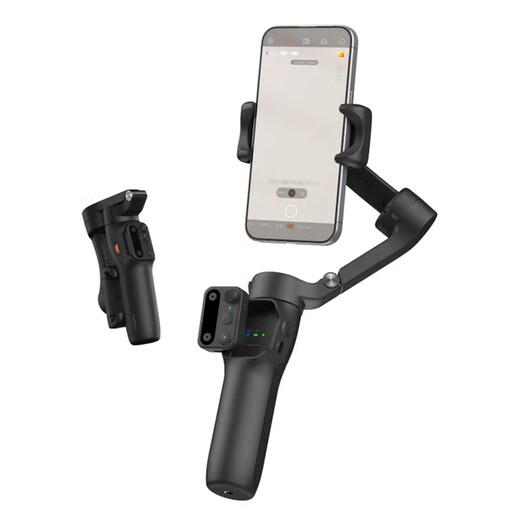
Why it stands out This foldable gimbal from hohem focuses on the core function: smooth video stabilisation. According to the manufacturer, its iSteady 8.0 system ensures professional-looking, shake-free footage. A unique feature is the detachable remote control, which allows you to operate the gimbal from up to 10 metres away.
Pros
Who is this for? This gimbal is aimed at vloggers, travellers, and social media users who want to seriously improve the quality of their videos. It's a solid mid-range option that offers advanced stabilisation in a portable and user-friendly package.
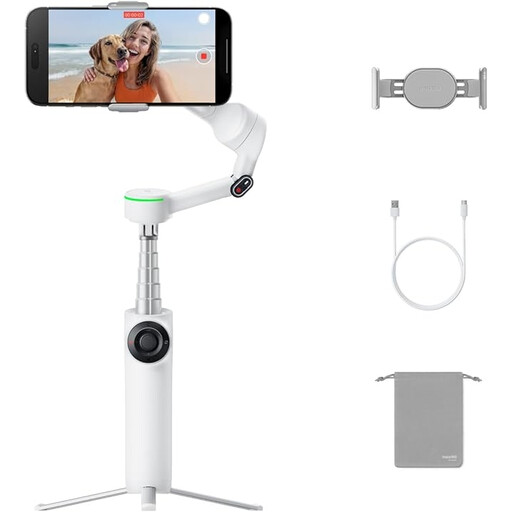
Why it stands out The Insta360 Flow 2 is an AI tracking gimbal that excels with its smart features. According to Insta360, the AI tracking can follow a subject not only within its native app but also in over 200 other apps (like TikTok and Instagram) thanks to Apple DockKit integration. The 360° pan function and the built-in selfie stick and tripod make it a very complete package.
Pros
Who is this for? This is the choice for the serious content creator, tech enthusiast, or vlogger looking for the most advanced tracking technology and an all-in-one solution. The higher price point is justified by its extensive functionality and ease of use.
These recommendations cover a range of needs, from simple and multifunctional to advanced and smart. If your ideal match isn't here or you'd like to compare more options, what next?
Explore our wider selection in the Remote Control Devices category for more choices.
The term 'phone stabiliser' is often used broadly. A 3-axis gimbal is a specific type of stabiliser that uses motors to actively compensate for movement, resulting in the smoothest footage. Other stabilisers, like a tripod or a selfie stick, provide passive stability by simply keeping the phone still.
Most gimbals work best with the manufacturer's companion app. These apps often unlock advanced features like object tracking, time-lapses, and special shooting modes. Basic stabilisation usually works without the app, but you'll miss out on much of the extra functionality.
For anyone who travels frequently or likes to keep their gear compact, a foldable gimbal is definitely worth it. The ease with which you can slip it into a bag or even a large coat pocket means you'll be more likely to take it with you and use it. For studio use or shoots close to home, it's less essential, but it remains a convenient feature.
