
Vandaag of morgen in huis

Kwaliteit gegarandeerd

Welkomstaanbiedingen ontgrendelen: GRATIS bezorging | Tot 80% korting | Gratis 30 dagen JoyPlus-proefperiode
Download de app
You've filmed a great video, but when you watch it back, all you see is shaky footage. Sound familiar? A smartphone camera is powerful, but without the right support, it's difficult to capture stable, professional-looking shots. A smartphone gimbal is the solution. This device, also known as a phone stabiliser, uses motors to keep your phone steady, even when you're moving.
Whether you're a vlogger, traveller or hobbyist, a gimbal will take your video content to the next level. In this article, we'll help you make the right choice. We'll outline the specifications and features of several popular models so you can make an informed decision.
Before we look at the products, it's helpful to know which specifications are important. Here are a few key points to consider.
The most important function of a gimbal is stabilisation. Most models on the market offer 3-axis stabilisation. This means the gimbal compensates for movement on three axes: tilt, roll and pan. This is the standard for creating smooth, shake-free footage, similar to what you see in movies. A 3-axis gimbal is essential for anyone serious about creating videos.
If you're often on the go, for vlogs or travel videos, a compact and lightweight model is a must. Many modern gimbals feature a foldable gimbal design, making them easy to slip into your bag or even your pocket. Also, pay attention to how quickly you can attach your phone. Systems with a magnetic clamp are often very user-friendly.
Modern gimbals are more than just stabilisers. They often come with a companion app that unlocks smart features. Think of AI tracking, which allows the camera to automatically follow a person or object. This is ideal for a gimbal for vlogging when you're filming yourself. Also, check for compatibility with your phone, whether you're looking for a stabiliser for iPhone or an Android device.
Below is a selection of gimbals that stand out for their specifications and features.
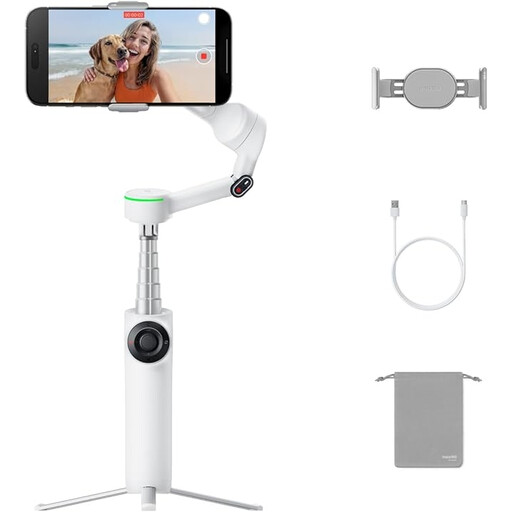
Why This Model Stands Out The Insta360 Flow is known for its advanced AI tracking. According to the manufacturer, its tracking technology works in over 200 apps, including native camera apps, thanks to Apple DockKit support. It's an all-in-one solution with a built-in tripod, selfie stick and even a spotlight in this Pro bundle.
Advantages
Who Is This For? For content creators looking for a complete and smart solution. The advanced tracking and all-in-one design make it a powerful tool for those who film frequently for social media or YouTube.
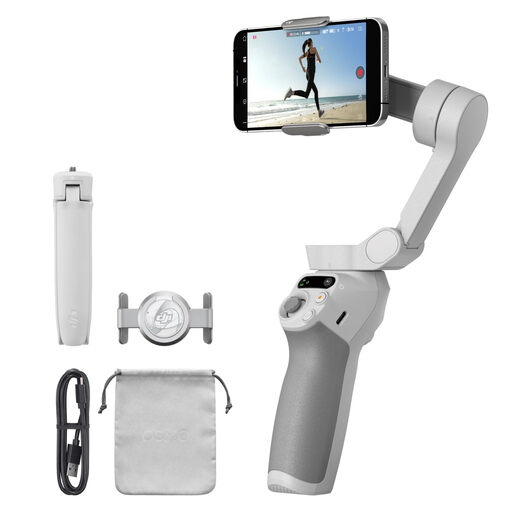
Why This Model Stands Out The DJI Osmo Mobile SE focuses on the essentials: excellent stabilisation in a portable and user-friendly package. The magnetic phone clamp makes attaching your smartphone a matter of seconds. DJI's ActiveTrack technology is renowned for its reliability.
Advantages
Who Is This For? Ideal for travellers and vloggers who want a reliable, fast and straightforward phone stabiliser. The focus is on ease of use and performance without too many extra frills.
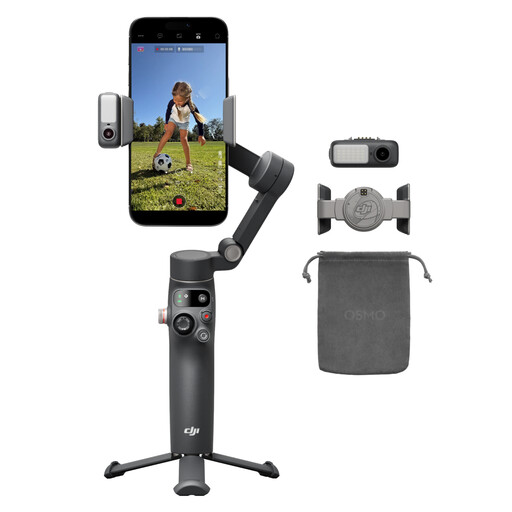
Why This Model Stands Out The DJI Osmo Mobile 8 builds on the strengths of its predecessors and adds several handy, integrated features. This model includes a built-in extension rod and a fill light, making it a highly versatile tool. The stabilisation technology and tracking have been further refined.
Advantages
Who Is This For? For the demanding content creator who wants the latest features. The combination of an extension rod, fill light and the newest tracking technology makes this a powerful and complete gimbal for vlogging and other professional projects.
This selection is based on popular specifications, but the gimbal market is broad. If you're looking for a model with different features, a different price point, or just want to compare more options, there's more to discover.
See all gimbals on Joybuy here
A gimbal, like the models above, uses motorized arms to actively correct movements on three axes. This produces the smoothest footage. A selfie stick with 'stabilisation' often has a simpler, 1-axis stabiliser or relies on electronic image stabilisation (EIS), which is less effective for larger movements like walking.
Most modern gimbals are designed to work with a wide range of smartphones. However, it's always important to check the gimbal's specifications. Pay attention to the supported dimensions (width and thickness) and the maximum weight of the phone. Models like the DJI Osmo and Insta360 Flow have broad compatibility.
For stationary shots or very slow movements, it might not be strictly necessary. But as soon as you start walking, running or want to make quick camera movements, a 3-axis gimbal is indispensable. It corrects shakes in all directions, which is the difference between an amateurish and a professional-looking video.
