
Vandaag of morgen in huis

Kwaliteit gegarandeerd

Welkomstaanbiedingen ontgrendelen: GRATIS bezorging | Tot 80% korting | Gratis 30 dagen JoyPlus-proefperiode
Download de app
A smart Type 2 EV charger for home can make charging your electric car or plug-in hybrid easier every day. However, a high charging capacity won’t necessarily suit your car or home. For example, a 22 kW EV charger may charge no faster if your car only accepts 11 kW or 7.4 kW through its onboard AC charger.
So the key question isn’t just which electric car charge point looks impressive. It’s whether the charging station suits your car, consumer unit, charging location and needs.
A 22 kW wallbox sounds appealing, but it generally requires a suitable 400 V three-phase connection and enough capacity in your home. Your car must also support 22 kW AC charging. Many models charge at a maximum of 11 kW or 7.4 kW.
So check:
A Wi-Fi EV charger or charge point with an app can start, stop and schedule charging, and sometimes adjust the charging capacity. That doesn’t automatically mean the charger measures your home’s total electricity use.
For that, you’ll need a model with dynamic load balancing. This feature shares the available capacity between appliances such as your heat pump, oven and car. Check whether it requires additional metering equipment or a specific connection.
IP65 or IP66 ratings indicate protection against dust and water under certain conditions. They don’t replace correct mounting, earthing, cable protection or a suitable consumer unit. If you’re installing a wallbox outdoors, follow the instructions and have the electrical installation checked.
According to the product descriptions from the brands mentioned, some models include features such as residual current, overheating, overvoltage and earthing protection. These are manufacturer product claims; how well they work also depends on correct installation and use in line with the instructions.
A 7.4 kW home charger usually runs on a single-phase supply and suits a vehicle that can charge at around 32 A on one phase. An 11 kW wallbox typically uses three-phase power at up to 16 A per phase. A 22 kW EV charger normally uses three-phase power at up to 32 A per phase.
The actual charging speed is determined by whichever of these limits is lowest:
So a three-phase EV charger won’t automatically charge faster if your car only supports single-phase charging.
A wallbox with a fixed Type 2 charging cable is quick to use: take the cable out of its holder and plug it in. A socket version gives you more flexibility, but you’ll usually need a separate Type 2-to-Type 2 cable.
A portable EV charger is handy if you charge at different locations. Check the plug: a Schuko model rated at up to around 3.5 kW is suitable for slow charging from a household socket, but it isn’t a substitute for a fixed 11 kW or 22 kW installation.
Look at the combination of features, rather than focusing on a single term. Useful options include:
Also check that the app is available for your phone and whether the basic functions work without an internet connection.
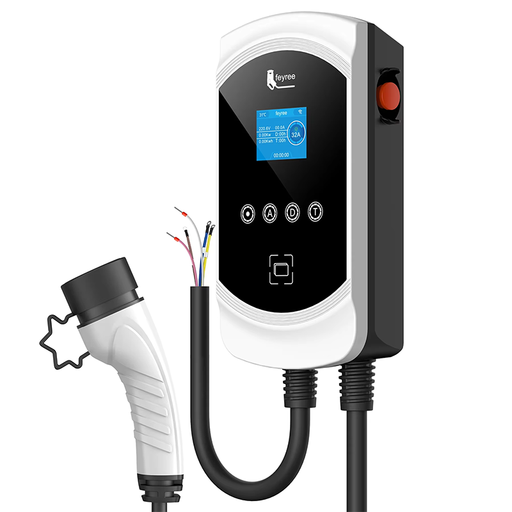
Why it suits this profile: For single-phase users, this is a straightforward home charging solution with app controls, adjustable charging current and dynamic load balancing to help coordinate charging with other appliances in your home.
The product is clearly designed for single-phase charging and highlights load balancing rather than just a high theoretical power rating.
7.6 kW according to the product name, Tuya app, adjustable charging current and stated Type B residual current protection.
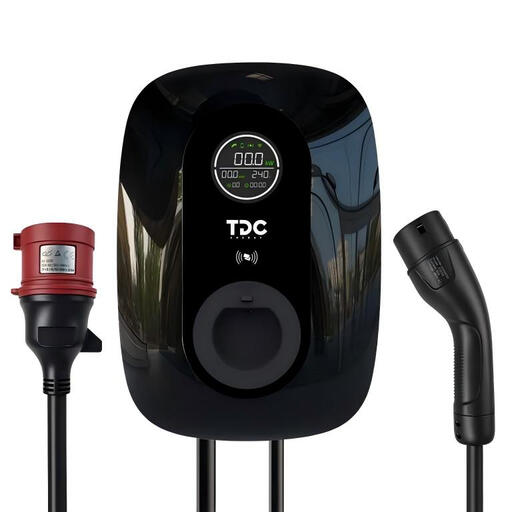
Why it suits this profile: A good fit if you want a fixed 11 kW wallbox with a display, RFID and app controls, and have a suitable 400 V three-phase connection.
The specifications explicitly state 11 kW, 16 A, 400 V and three-phase. This makes it clear in advance what kind of electrical setup you’ll need.
5-metre Type 2 cable, 3-inch display, two RFID cards and stated protection against overheating and residual current, among other risks.
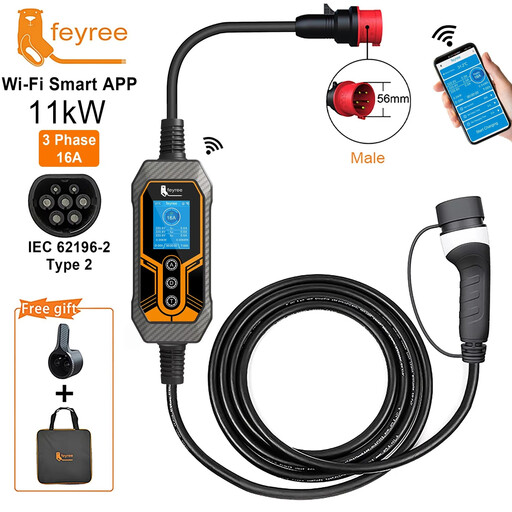
Why it suits this profile: Handy if you want to take a three-phase charging solution to several suitable locations while still having app controls.
The stated power, 16 A current setting and three-phase design make it clear that a suitable five-pin connection is needed.
Up to 11 kW according to the product description, 5-metre cable, Wi-Fi/Bluetooth, app controls and adjustable current from 8 A to 16 A.
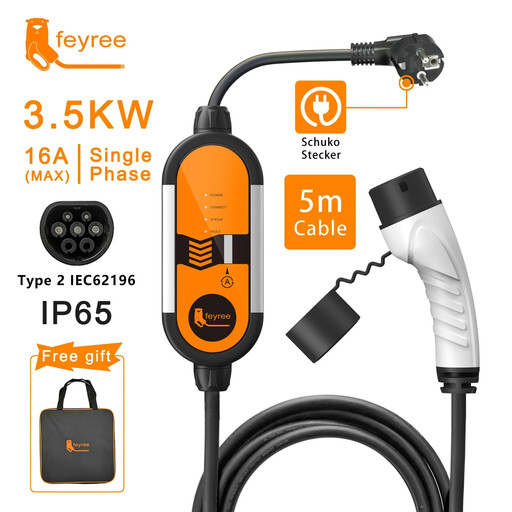
Why it suits this profile: A practical choice for slow charging from a standard 230 V socket, for example as a mobile back-up or for a plug-in hybrid.
Its maximum output of around 3.5 kW isn’t presented as a fast wallbox, so it’s easier to know what to expect.
Schuko plug, 5-metre cable, OLED display and adjustable current from 8 A to 16 A.
We’ve put together a complete, up-to-date list of products that meet these strict selection criteria and the applicable European safety requirements.
Have a fixed charge point installed on a dedicated circuit that’s suitable for the current setting. Don’t use an extension lead or adapter with a wallbox. For a 22 kW model, an electrician should check that the 400 V three-phase supply, cabling and protection are suitable. For outdoor use, install and maintain the cable, connector and housing in line with the instructions.
Before each charging session, check that the Type 2 connector is clean and undamaged. Stop immediately if it becomes hot, displays an error or shows visible damage. An RFID charge point is handy when several family members or users need access, but keep the cards safe.
No. The actual speed depends on your car and electrical installation. If your car’s onboard AC charger supports a maximum of 11 kW, a 22 kW charger won’t charge it any faster.
It depends on your electricity tariff, charging losses, battery capacity and the number of kilowatt-hours charged. An app with charging records can help you keep track of energy use and charging time. A charging schedule may be useful if your tariff varies by time of day, but check the terms and conditions from your energy supplier.
Its lifespan depends on installation, how often it’s used, moisture, temperature and maintenance. A fixed wallbox that’s installed correctly and used with undamaged cables is generally subject to less mechanical strain than a portable charger. Always follow the manufacturer’s maintenance and safety instructions.
