First, measure how much space is available behind and around the speaker, then check the instructions for the exact model. One speaker needs less room. Two compatible speakers are worth considering if you usually listen in one spot and want separate left and right channels, but you’ll also need space for a second device.
Who is this choice relevant to?
Listener with limited wall space
Wants to play blues on a shelf or cabinet close to the wall, so measures the available space for the chosen model first. Sonos recommends leaving 2.5 cm behind the Era 100 SL; Apple recommends at least 15 cm of clearance around HomePod.
Blues listener in one spot
Wants to weigh the benefits of two separately positioned channels for their recordings against the extra space and a second speaker. Sonos and WiiM document stereo pairing for specific model combinations.
Listener with existing music sources
Wants to keep using their own albums, a music service or a connected player, then choose an ecosystem and controls that suit them.
What should you consider when buying?
One compact speaker
A good fit if: space is limited or you listen from different positions. Sonos recommends leaving 2.5 cm of clearance behind the Era 100 SL when it’s next to a wall.
The trade-off: one speaker doesn’t provide the separately positioned left and right channels of a stereo pair; it’s not possible to determine how your recordings will sound in your space.
Two speakers as a stereo pair
A good fit if: you usually listen in one spot and can position two speakers separately. Sonos and WiiM document stereo pairing for certain model combinations.
The trade-off: you’ll need two devices, power sockets and enough space; check which models can be paired.
When choosing a smart speaker for listening to blues recordings close to a wall, both placement and your main listening and control needs matter.
| What to consider |
What to look for when buying |
Who should pay particular attention? |
| Positioning by the wall |
Measure the space behind and around the speaker and compare it with the instructions for the exact model. Sonos recommends 2.5 cm behind the Era 100 SL when it’s next to a wall; Apple recommends at least 15 cm of clearance around HomePod. |
If my shelf is tight on space, I want to know first whether the speaker will fit with the clearance available. Around 33% of consumers cite positioning by the wall as their main reason for buying. |
| One speaker or a stereo pair |
Check which exact models can be paired and whether both speakers can be placed in suitable positions. |
If I usually listen in one spot, I weigh having two separate channels against the space needed for a second device. Around 27% of consumers prioritise stereo channels. |
| Existing recordings and sources |
Make a note of where your albums are stored and check that the app, wireless streaming or physical connection you want is compatible with your chosen speaker. The Sonos Era 100 SL needs a separate adapter for a 3.5mm source. |
I want to play my existing albums or use my player without extra steps. For around 20% of consumers, access to existing recordings and sources is the main priority. |
| Controls, microphones and updates |
Compare voice, app and touch controls, and find out how to mute the microphones. Also look for information about software updates and any services required. |
If you want voice control but also want to be able to mute or avoid microphones, compare the available control options. For around 20% of consumers, controls and microphones are the main priority. |
Common buying mistakes
-
Assuming there’s one clearance that works for every speaker
Instructions vary by model: Sonos recommends 2.5 cm of clearance behind the Era 100 SL when it’s next to a wall, while Apple recommends at least 15 cm around HomePod.
Measure the space and follow the instructions for the exact model, rather than using the clearance specified for a different speaker.
-
Confusing a stereo pair with one speaker
A stereo pair consists of two speakers playing separate channels. It’s a different set-up from a single enclosure and needs space for a second device.
First decide whether you can position two speakers suitably, then check which model combination the manufacturer says can be paired.
-
Assuming Bluetooth or a connection means you can play music straight away
Sonos says the Era 100 SL must first be set up over Wi-Fi before you can use it as a Bluetooth speaker. A separate compatible adapter is needed for a 3.5mm source.
Work out where your blues recordings are stored and check the complete playback set-up before choosing a model.
You’ll need a separate Sonos adapter to connect a 3.5mm source to the Era 100 SL.
Brands to consider
Sonos
The Era 100 SL is for people who want to play music without built-in voice control; the Era 100 is an alternative with built-in voice control.
- According to the Sonos user guide, the Era 100 SL needs 2.5 cm of clearance behind it when placed next to a wall. Sonos also documents stereo pairing two Era 100 SL speakers.
- Sonos says the Era 100 SL has no built-in microphones and that Trueplay on this model requires an iOS device. A separate adapter is needed for line-in.
Apple
HomePod (2nd generation) is an option if you have a compatible Apple device for set-up and can leave space around the speaker.
- Apple says HomePod adjusts its sound to its position and that two units can be used as a stereo pair.
- You’ll need an iPhone or iPad for set-up. Apple recommends leaving at least 15 cm of clearance all around, which may be a drawback in a tight space.
Google
Google Home Speaker is designed for people who want to combine music and voice control within Google Home.
- Google lists three microphones, a hardware microphone mute and stereo pairing with a speaker of the same type.
- Check the positioning instructions for your chosen space; the listed specifications don’t give a minimum distance from a wall.
WiiM
WiiM Sound and Sound Lite are options for people considering app-controlled room tuning and, potentially, a documented stereo pair.
- WiiM describes RoomFit tuning for Sound and documents which combinations of Sound and Sound Lite can be paired.
- WiiM’s RoomFit information isn’t an independent assessment of how blues recordings sound by a wall.
Bluesound
PULSE M is an option for people who want music control via BluOS and may be considering two PULSE M speakers.
- Bluesound describes stereo pairing and a separate wall mount designed for the PULSE M.
- Bluesound’s claims about room-filling sound are the manufacturer’s claims; they don’t establish how blues recordings will sound in your space by the wall.
Joybuy products
This Joybuy selection is for anyone looking to start with a single speaker. For the exact model, check that its controls, playback options and space requirements suit your blues recordings and the spot you have in mind.
 No image available
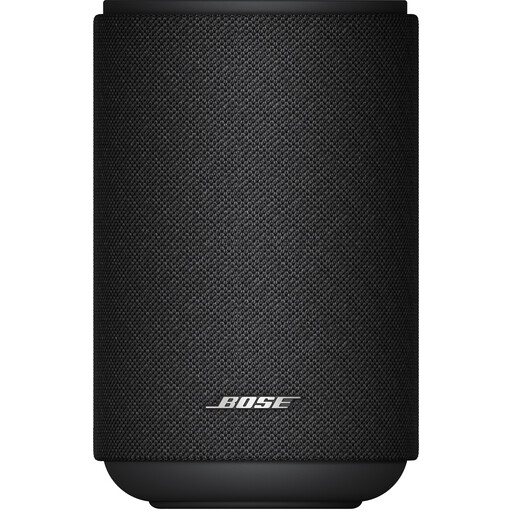
Bose Lifestyle Ultra Speaker - Black
An option to consider if you want to start with one speaker; check that its controls and playback options suit your recordings and chosen space.
View at Joybuy
Frequently asked questions
Can I place a smart speaker right against the wall?
Not without checking the instructions for the exact model. Sonos recommends leaving 2.5 cm behind the Era 100 SL; Apple recommends at least 15 cm of clearance around HomePod. Measure the space and follow the instructions for your chosen model.
Will the Sonos Era 100 SL work straight away over Bluetooth without Wi-Fi?
No. Sonos says you must first set up the Era 100 SL over Wi-Fi using the Sonos app; you can then switch to Bluetooth.
What should I check about controls and updates?
Check which controls and services you need, and how to mute the microphones. The Netherlands Authority for Consumers and Markets (ACM) says consumers should be given information about smart devices, including updates, compatibility with other devices and services they need.
What safety rules apply to a wireless speaker in the Netherlands?
Wireless radio equipment sold in the Netherlands must meet the applicable European requirements for radio equipment and carry the required CE marking. The Dutch Authority for Digital Infrastructure explains these requirements; check the marking and product version of the item you’re considering.
What cooling-off period applies to an online purchase?
According to ACM ConsuWijzer, online purchases generally come with a statutory cooling-off period of up to 14 days after the product has been delivered. Check the terms that apply to your purchase.


