
Vandaag of morgen in huis

Kwaliteit gegarandeerd

Welkomstaanbiedingen ontgrendelen: GRATIS bezorging | Tot 80% korting | Gratis 30 dagen JoyPlus-proefperiode
Download de app
Smart LED lighting makes it easy to control mood lighting, accent lighting and general lighting using an app or voice command. However, an attractive product photo is no guarantee that a light will suit your home. An LED strip might be too short, a ceiling light might only be suitable for dry rooms, and a smart bulb might not work with your existing fitting or smart home platform.
With this buying guide, you can compare the key features without being swayed by vague marketing claims.
A light with RGB or RGBIC can display different colours, but that doesn’t automatically make it suitable as your main light source. Always check the lumen output and colour temperature. You’ll need a different light level for a desk or living room than for a TV unit or bedroom.
An RGBIC LED strip is mainly intended for colour accents and mood lighting. For practical white light, adjustable white settings or a separate dimmable LED bulb are often more important.
App control may work via Bluetooth, Wi-Fi or a bridge. Bluetooth often works at close range and with a limited number of lights. A bridge or Wi-Fi connection can offer more features, but may require extra set-up or a separate device.
Pay attention to the platforms listed too. A light with voice control via Alexa won’t necessarily work with Apple HomeKit or Google Assistant. Before buying, check which app and ecosystem are supported.
An LED strip needs to be attached securely and in a straight line. Check the length, space for the cable, power supply and permitted cut points. An indoor strip shouldn’t be fitted to a damp outside wall or in a bathroom.
For an LED wall light, the fixing is just as important as the design. A battery-powered light is easy to position, while an app-controlled ceiling light usually needs to be fitted to an existing mains connection.
Lumens indicate how much light a bulb produces. Wattage mainly tells you how much energy it uses, not directly how bright it is. According to the product specifications, a Philips Hue smart bulb with a GU10 fitting produces 400 lumens per light at 4,2 watts. Its colour temperature is 2700 K, which gives a warm white light.
For a ceiling light, the beam angle is also relevant. According to the product information, the Aigostar BLE MESH Smart Ceiling Light produces 3960 lumens, uses 36 watts and has a beam angle of 120 degrees. Its adjustable colour temperature ranges from 3000 K to 6500 K.
Measure the space where you plan to install the lighting before you order. A 5-metre LED strip isn’t the same as a strip that can be extended with separate sections. For Philips Hue LED strip products, check whether cutting, reusing and extending the strip are actually listed for the specific model.
For a smart bulb, check the fitting, such as GU10 or E27, and the available space inside the light fitting. For a ceiling light, also check its size, weight and connection to the ceiling rose.
The IP rating indicates how well a product is protected against dust and moisture. IP20 is intended for dry indoor spaces. The Aigostar ceiling light has an IP20 rating and, according to the product information, isn’t intended for bathrooms or places where it could come into direct contact with water.
The M.TK Meteor Shower lighting has an IP44 rating and, according to the product description, is suitable for indoor and outdoor use as festive decoration. Use the supplied adapter and always make sure that cables, plugs and connections stay dry.
When installing a light connected to 220-240 volts, switch off the power. If you’re unsure about fixed electrical connections, it’s best to get help from a qualified installer.
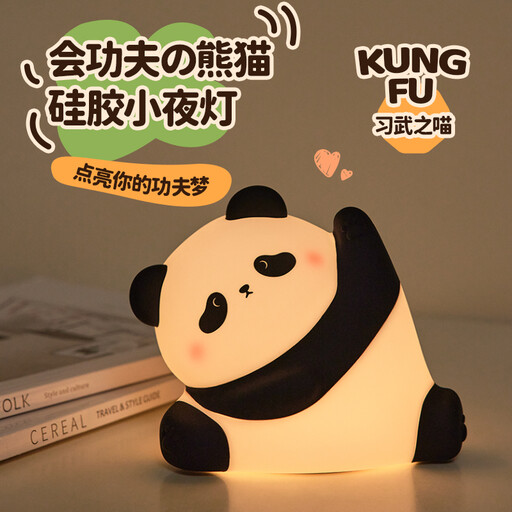
Why it suits this profile: This compact LED night light needs no permanent installation and is designed for a bedroom, nursery or bedside table.
The product information lists three dimming modes, touch control and a rechargeable battery. So you don’t need to provide a fitting or wall connection.
1200mAh rechargeable battery, three light modes and no installation required. Use indoors only and keep it away from water and heat.

Why it suits this profile: This Philips Hue LED strip is a good choice if app control, dimming and compatibility with several smart home platforms are important to you.
The description lists control via remote and app, dimming, Matter support and indoor use. Check whether a bridge is needed for all features.
5-metre length, dimming function and support for Alexa, Google Assistant, Apple HomeKit and SmartThings, among others, according to the product information.
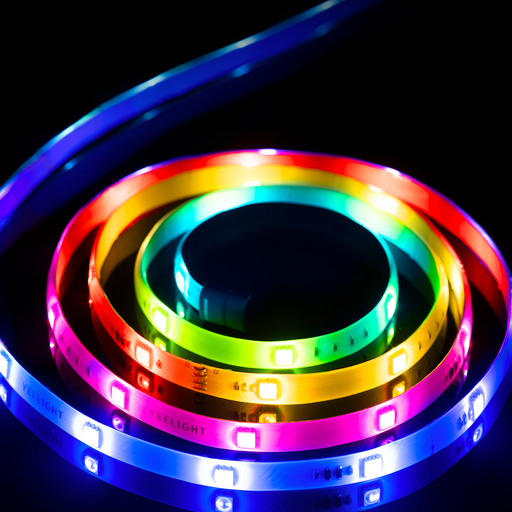
Why it suits this profile: This extendable RGBIC LED strip is designed for TV units, desks, rooms and gaming set-ups where colour accents take centre stage.
The length of this extension is clearly specified as 1 metre. Before buying, check which starter kit or connection you’ll need.
According to the product description, this extension supports app and voice control and is designed for RGBIC lighting effects.
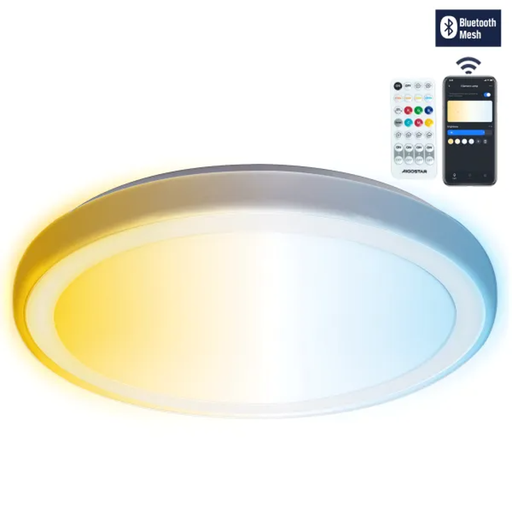
Why it suits this profile: This app-controlled ceiling light is a good choice if you’re looking for a single fitting to provide general lighting in a dry living room, hallway or bedroom.
The product information lists 3960 lumens, 3000-6500 K, IP20 and Bluetooth Mesh. This makes the light output and placement restrictions clear.
Adjustable colour temperature, a wide 120-degree spread of light and control via the AigoSmart app. It’s fitted to the ceiling, so you’ll need to switch off the mains supply first.
We’ve put together a complete, up-to-date list of products that meet these strict selection criteria and comply with the applicable European safety regulations.
Energy use depends on wattage and how long the light is on. A 36-watt light switched on for two hours a day theoretically uses 0,072 kWh per day. Multiply this by your electricity tariff to work out the cost. An LED light generally uses less power than traditional lighting, but colour settings at maximum brightness can use more than a soft warm white setting.
Switch off any automations you don’t need and use timers in rooms where the lights are often left on. For strips and bulbs, also check the power supply’s standby consumption.
It depends on the model. Some products work directly via Bluetooth or their own app. Other features, such as control when you’re away from home, advanced automations or connecting multiple lights, may require a bridge. Check this for each product before ordering.
Lifespan varies depending on the model, power supply, heat dissipation and usage. Philips lists a lifespan of 25.000 hours for various Hue products. This is a stated product specification, not a guarantee that every component will last as long. Don’t stick a strip over a heat source or cover the power supply.
Calculate it using: wattage ÷ 1000 × number of hours in use × your electricity tariff. For a 4,2-watt product, for example, use the wattage per light. For a strip or ceiling light, check the total stated wattage. This lets you compare energy use based on how you use the lights, rather than just looking at the type of LED.
