
Vandaag of morgen in huis

Kwaliteit gegarandeerd

Welkomstaanbiedingen ontgrendelen: GRATIS bezorging | Tot 80% korting | Gratis 30 dagen JoyPlus-proefperiode
Download de app
By the Joybuy Product Recommendation Officer, July 28, 2026
Dry air in your home is more than just an inconvenience. It can lead to a scratchy throat, dry skin, and even damage to wooden furniture. A smart humidifier seems like the ideal solution: automatic control, app-based operation, and the promise of optimal comfort. But in practice, the reality is often more challenging. Many models over-promise and under-deliver, leaving you with a cumbersome device that causes more frustration than comfort.
Before making a purchase, it's important to recognise the common pitfalls:
To avoid these problems, it's crucial to focus on the specifications that truly matter.
Don't be distracted by marketing jargon. Check these three objective criteria to find a model that actually performs and is user-friendly.
This is the most important specification. The capacity, expressed in millilitres per hour (ml/h), determines how much moisture the device can release into the air per hour. This is directly related to the recommended coverage in square metres (m?).
Most smart models are ultrasonic humidifiers. This technology uses high-frequency vibrations to convert water into a fine, visible mist. Their main advantage is that they are very quiet.
A device used daily must be practical.
Based on these objective criteria, we have selected several models that suit different user profiles.
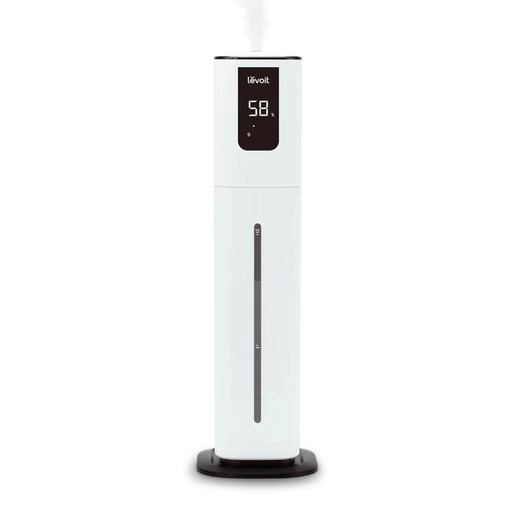
Why This Fits Their Persona: Ideal for those who want maximum performance for a large living room or open-plan space. The combination of a huge 10-litre tank, a coverage area of up to 55 m?, and full control via the VeSync app (including voice assistants) makes this a powerful and convenient choice.
This model solves the pitfall of exaggerated capacity. Its specifications are realistic for a humidifier for a large room. Levoit's VeSync app is known for being stable and user-friendly, meaning the "smart" features actually add value.
Huge 10-litre tank for up to 100 hours of use. Full control via a reliable humidifier with an app. Suitable for aromatherapy.
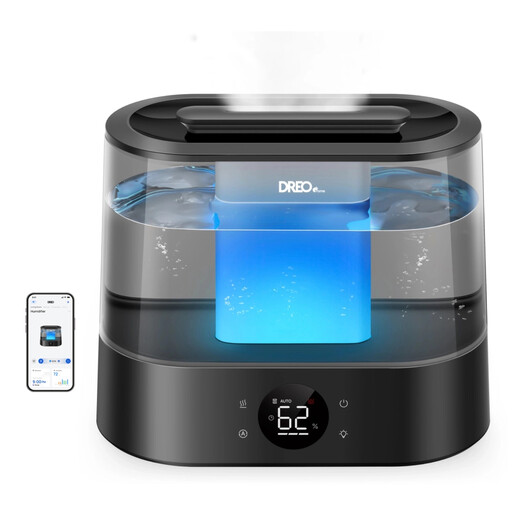
Why This Fits Their Persona: For those who want to create a healthy and peaceful sleeping environment. At 28 dB, this model is whisper-quiet, has a precise sensor for its automatic mode, and includes a built-in tray for aromatherapy. The app makes it easy to set schedules.
The DREO tackles the pitfall of unreliable "smart" features with a precise sensor that regulates humidity with ±5% accuracy. Its sleep mode is genuinely quiet, making it a perfect quiet humidifier for the bedroom.
Very quiet operation (28 dB). Accurate automatic mode and an easy-to-clean top-fill design.
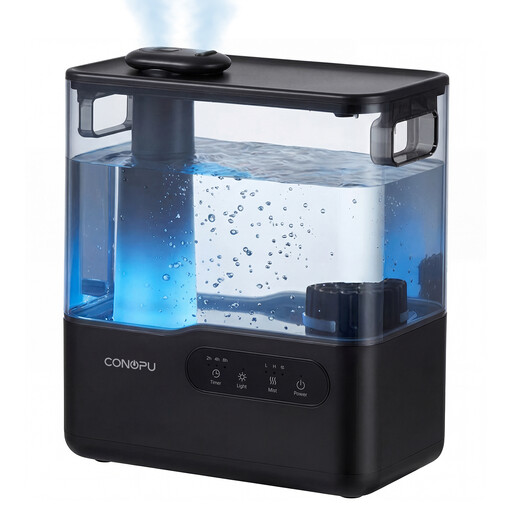
Why This Fits Their Persona: For those seeking a reliable and straightforward device that simply gets the job done. With a generous 5-litre tank, a very quiet design (25 dB), and a convenient top-fill opening, this model offers great ease of use without an excess of complex features.
This model bypasses the maintenance nightmare. The top-fill design and wide opening make filling and cleaning exceptionally simple. It focuses on core functions, minimising the risk of software issues or clunky controls.
Very easy to use and maintain. Large 5L tank for long runtimes and quiet operation.
We have compiled a complete, up-to-date list of products that fully meet these strict selection criteria and UK/EU safety regulations.
For hygienic operation, it is recommended to change the water in the reservoir every two to three days and to clean the unit thoroughly once a week. Follow the manufacturer's instructions for this. A weekly cleaning with a mild vinegar solution can help remove limescale buildup.
An ultrasonic humidifier uses vibrations to create a visible, cool mist. They are quiet and energy-efficient. An evaporative humidifier draws in air, passes it through a wet filter, and then blows out humidified air. This process is invisible and filters minerals from the water, but the fan typically makes more noise.
Yes, you can use tap water in most modern ultrasonic humidifiers. However, be aware that hard water (with a high mineral content) can lead to white dust settling on furniture. If you live in an area with very hard water, using distilled or demineralised water can prevent this. Some models also have special filters to capture minerals. Always check the manual for your specific model.
