
Vandaag of morgen in huis

Kwaliteit gegarandeerd

Welkomstaanbiedingen ontgrendelen: GRATIS bezorging | Tot 80% korting | Gratis 30 dagen JoyPlus-proefperiode
Download de app
A private charging station at home is no longer a luxury, but a smart investment for any electric car owner. The convenience of starting the day with a full battery and the lower cost per kilometre are clear advantages. But the market for charging stations is filled with technical jargon and marketing promises. The wrong choice can lead to unnecessarily high costs, slow charging sessions, or even an unsafe situation.
As a Joybuy Product Recommendation Officer, I see where things go wrong every day. Before you decide to buy a charging station, it's crucial to recognise these common pitfalls:
By understanding these points, you can make a well-informed choice that suits your car, living situation, and budget.
You don't need to be an electrician to choose the right smart EV charger. Focus on these three crucial specifications.
The speed at which your car charges is determined by the charging power, expressed in kilowatts (kW). This depends on three factors: the power of the charging station, the capacity of your car's internal charger, and the connection in your electrical panel.
11kW charger is the most popular choice in the Netherlands for fully electric cars, as it offers a good balance between charging speed and the load on your electrical grid. A 22kW charger provides the highest speed, but many cars and home connections are not equipped for this by default. Therefore, always check what your car can handle and what your electrical panel allows.A smart EV charger is more than just a plug. The intelligence is in the software.
wallbox with app gives you complete control. You can start and stop charging sessions, view the charging status, and, more importantly, schedule charging times. This allows you to automatically take advantage of lower electricity rates at night or on weekends.Think carefully about where and how you want to charge.
home EV charger that is permanently mounted on the wall. It's a robust and tidy solution for a dedicated parking spot.portable EV charger offers maximum flexibility. You can take it with you in the boot and charge via a standard Schuko socket or a high-power (CEE) industrial socket at a campsite, holiday home, or workplace. Many modern portable chargers offer the same smart features and safety as a fixed wallbox.Based on the criteria above, we have selected a few popular choices that suit different user profiles.
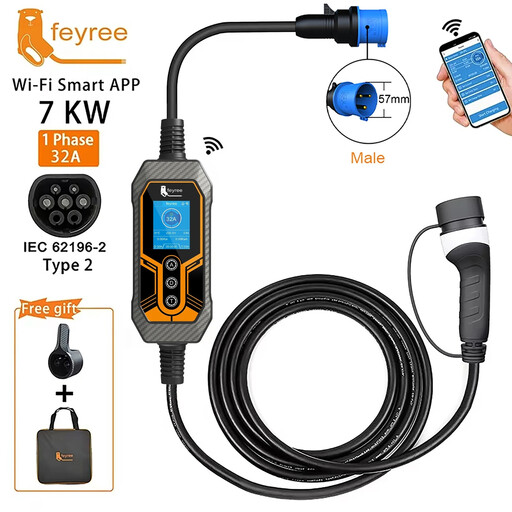
Why This Fits Their Persona: Ideal for those who want an affordable and smart start. This charger provides sufficient power (7kW) for overnight charging and is perfect for saving on electricity costs thanks to its app control.
Avoids the 'dumb charger' trap by offering full app control for scheduling charging sessions during off-peak hours. The 7kW is a realistic choice for most 1-phase households.
Wi-Fi App Control: Schedule charging times and monitor status remotely. Flexible: Can be used as a portable charger or wall-mounted with the included bracket.
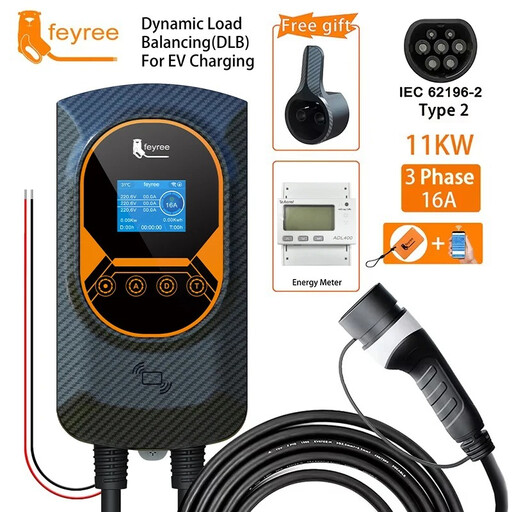
Why This Fits Their Persona: For the homeowner with a 3-phase connection who wants a safe, powerful, and smart solution. The Dynamic Load Balancing feature ensures worry-free charging without overloading the main circuit breaker.
Avoids the power trap. Instead of blindly opting for 22kW, this 11kW charger with DLB offers a more efficient and safer solution that respects the home's electrical grid.
Dynamic Load Balancing: Automatically balances power between the car and other home appliances. 3-phase 11kW power: Faster charging for compatible cars.
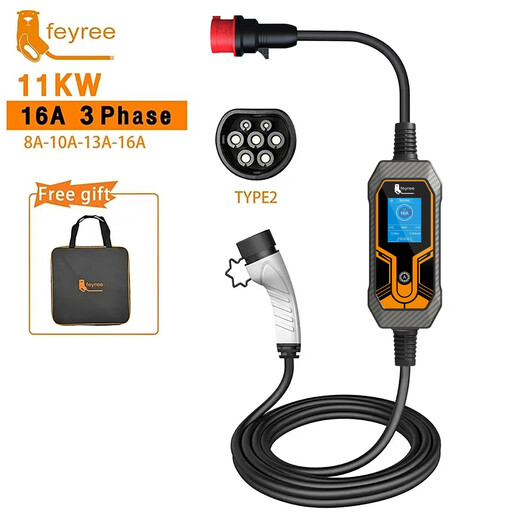
Why This Fits Their Persona: The perfect solution for those who don't want to be tied to one location. This powerful portable charger can charge quickly via a CEE industrial socket, wherever you are. Ideal for travel, at friends' houses, or at the campsite.
This is the ultimate solution to the inflexibility trap. No installation costs and the freedom to charge wherever a CEE socket is available. The LCD screen provides instant insight into the charging status.
Portability: Take your charger with you anywhere. Powerful and Fast: Delivers up to 11kW via a CEE connection, much faster than a standard socket charger.
We have compiled a complete, up-to-date list of products that fully meet these strict selection criteria and Dutch safety regulations.
This depends on two things: your car's internal charger and your electrical panel. Most electric cars in the Netherlands can charge at a maximum of 11kW (3-phase, 16A). A 22kW charger (3-phase, 32A) requires a more powerful and expensive grid connection that many households don't have by default. For most users, an 11kW charger is the most cost-effective choice for fast home charging. Always check your car's specifications before you buy a charging station.
Dynamic Load Balancing (DLB) is a feature that adjusts your car's charging speed based on the total electricity consumption in your home. It is not legally mandatory, but it is highly recommended. Without DLB, you risk tripping your main circuit breaker if you charge your car while also, for example, cooking on an induction hob. A charger with load balancing ensures safety and maximum charging convenience.
No, installing a fixed charging station (wallbox) is a job for a professional. For safe operation and for your insurance, the installation must be carried out by a certified electrician. They will check your electrical panel, install a separate circuit, and ensure everything is connected according to the applicable NEN 1010 standards. Of course, you can use a portable EV charger that you plug into an existing (high-power) socket yourself.
