
Vandaag of morgen in huis

Kwaliteit gegarandeerd

Welkomstaanbiedingen ontgrendelen: GRATIS bezorging | Tot 80% korting | Gratis 30 dagen JoyPlus-proefperiode
Download de app
Finding the right lighting is often a tricky balance. You want functional light for reading or working, but also atmospheric light for a relaxing evening. A smart ceiling light offers the flexibility to switch between bright and cozy at the touch of a button. But with so many options, the choice can be overwhelming.
This guide is designed to help you. We'll highlight some popular choices and give you practical tips so you can find a model that fits your needs and living space.
Before we look at the products, here are a few key factors to help you make your choice.
One of the biggest advantages of smart lighting is the ability to adjust the atmosphere. Pay attention to two specifications here:
How do you want to control your light? The options vary:
The light output is measured in lumens (lm). More lumens mean more light. For an average living room (20-30 m?), a lamp with 2000 to 4000 lumens is often a good guideline. Also, consider the size. A large, eye-catching lamp can make a statement, while a minimalist round ceiling light blends seamlessly into the decor.
Based on specifications and functionality, we have listed some interesting options for you.
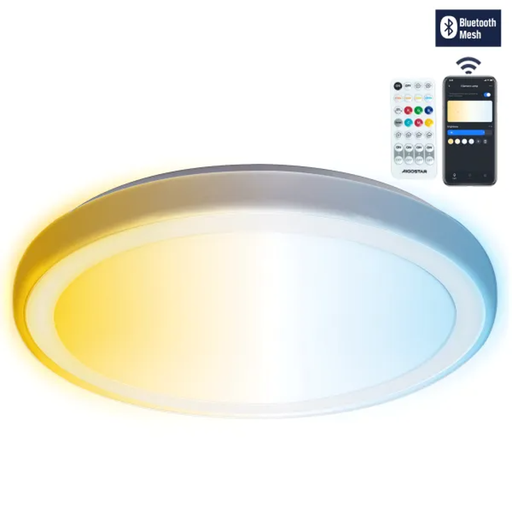
Why It Stands Out This lamp from Aigostar stands out for its high light output of 3960 lumens, making it suitable for larger spaces. Control via the AigoSmart app with Bluetooth Mesh technology ensures a stable connection without relying on your Wi-Fi network.
Pros
Who Is It For? For those looking for a powerful, smart ceiling light for a larger room like a living room or home office, and who prefer app-based control.
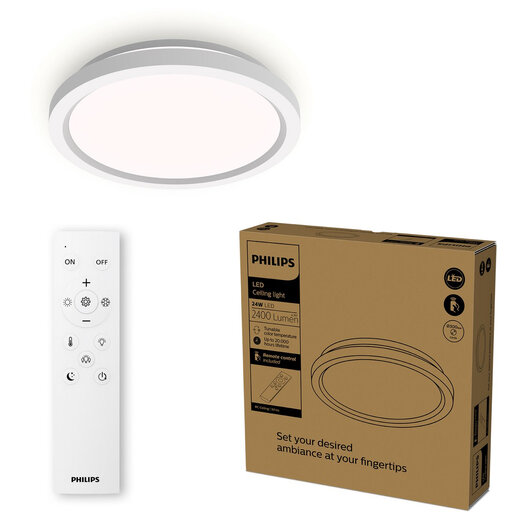
Why It Stands Out With this model, Philips focuses on ease of use. The included remote control makes it simple to dim the light or adjust the color temperature. The SceneSwitch technology, which Philips says offers three pre-programmed light settings, can also be operated with your existing wall switch.
Pros
Who Is It For? Ideal for users who want the benefits of smart lighting but don't want to depend on a smartphone app. It's a practical solution for the bedroom, hallway, or kitchen.

Why It Stands Out With the D30, Xiaomi focuses on light quality. According to the manufacturer, the full-spectrum LEDs simulate natural sunlight, resulting in a very high color rendering index (Ra97). This means colors look true-to-life under this light. The sleek, dust- and insect-proof design (IP50) is a practical bonus.
Pros
Who Is It For? A great choice for those who value high light quality and true-to-life color rendering, for example, in a walk-in closet, hobby room, or home office. Also interesting for users who already have other products within the Xiaomi ecosystem.
These three models offer a great starting point, but every space and every user is different. You might be looking for a different size, a different design, or specific features not mentioned here.
For a broader overview of different styles and specifications, you can browse our full collection.
? Explore our full range of ceiling lights
1. What is the difference between a smart lamp and a normal dimmable lamp? A normal dimmable lamp is usually controlled with a physical dimmer on the wall. A smart ceiling light offers more options: you can control it via an app, remote control, or voice assistant. In addition, you can often adjust not only the brightness but also the color temperature and set schedules.
2. Do I need a special hub or bridge for a smart ceiling light? That depends on the model. Many modern smart lights work directly via Wi-Fi or Bluetooth and do not require a separate hub. For example, the Aigostar lamp in this overview uses Bluetooth. Other systems, especially older or more extensive ecosystems, sometimes require a central bridge to connect all devices. Therefore, always read the product information.
3. How many lumens do I need for my room? A general guideline is to calculate with about 100-150 lumens per square meter (m?) for basic lighting. For a 20 m? living room, you would aim for a lamp with an output between 2000 and 3000 lumens. For tasks that require more light, such as in a kitchen or office, it's better to aim for 200-300 lumens per m?.
Written by: Joybuy Product Recommendation Officer
