
Maker with one basket
You want an overall photo against a simple background and would first like to see whether your current phone or camera will do the job. Adobe lists a smartphone as an option for product photography.


You don’t automatically need a new camera or macro lens to take an overall photo of a small woven basket. Start by taking a test shot with your current phone or camera, using soft light, a plain background and a fixed position. If you regularly photograph the same composition or want to show the weave close up, check the focusing distance, compatible lens mount and which lens is actually included in the kit. Canon UK recommends using a tripod to keep your composition consistent.
You want an overall photo against a simple background and would first like to see whether your current phone or camera will do the job. Adobe lists a smartphone as an option for product photography.
You photograph small products regularly and want a consistent composition, background and colour. Canon UK recommends using a tripod to keep your composition consistent.
You want to show the texture close up on its own. So pay particular attention to the lens, focusing distance and how much room you’ll have left to light the basket.
First decide whether you want to show the whole basket or individual fibres as well. This will help you work out whether a standard lens is enough or you need a close-up lens. Adobe lists a smartphone as an option for product photography, while Canon UK recommends a tripod for a consistent composition.
Choose this if: a test shot shows the whole basket in focus and framed as you want it.
Trade-off: to capture individual fibre details, check how close your existing lens can focus.
Choose this if: you want to take overall photos regularly and the lens can frame the whole basket from your working distance.
Trade-off: a standard zoom isn’t necessarily suitable for very small details. Check the specific lens and plan your set-up.
Choose this if: you want individual fibres to fill the frame and the lens is compatible with the camera body and the composition you want.
Trade-off: macro magnification isn’t needed for every overall photo, and working close up can leave less room for lighting.
| Buying consideration | What to look for | Who cares most about this? |
|---|---|---|
| Showing the weave sharply and at a large size | Check the lens mount, the included lens and that lens’s minimum focusing distance. | If you want individual fibres to appear large, the lens needs to focus close enough without making the composition too tight. That’s why around 33% of consumers prioritise showing the weave sharply and at a large size. |
| Consistent composition and colour | Check whether you can position the camera securely and adjust the lighting and white balance. | For a series of product photos, I want to keep the same composition and achieve a similar colour. Around 25% of consumers prioritise this consistency in composition and colour. |
| Keeping extra purchases to a minimum | Compare what you already own with the complete kit, including the lens and any memory card you may need. Take a test shot first. | For one basket, I want to try my current phone or camera first, so I don’t buy extra equipment unnecessarily. That’s why around 25% of consumers prioritise keeping extra purchases to a minimum. |
| A practical set-up in a small space | Test the working distance and composition with the intended lens in the space where you’ll be taking photos. | If my workspace is small, there needs to be enough room between the lens and the basket for lighting and camera controls. Around 17% of consumers prioritise having a practical set-up in a limited space. |
For a small basket, it also matters whether the lens can focus close enough and whether you can position the camera securely.
Take a test shot and check the specifications of the lens actually included with the version you’ve chosen.
A body without a lens isn’t a like-for-like purchase compared with a camera supplied with a lens.
Check exactly what’s included in the kit and whether you’ll need to buy a lens or, perhaps, a memory card.
If you buy a body without a lens, you may still need a compatible lens. Also check that the set-up suits the equipment you already have.
At a very short working distance, you may have little room left to light the basket or frame the whole thing.
Take the overall photo from a suitable distance and use a close-up only for the detail you want to show.
The EOS R50 is an APS-C mirrorless camera with an RF mount. Canon offers RF and RF-S lenses, so check which lens comes with the kit you’ve chosen.
The Z50II is a DX mirrorless camera with a Z mount. Nikon offers separate Z macro lenses for photographing details in the weave.
The ZV-E10 is an APS-C camera with an E mount and interchangeable lenses. You can compare a standard zoom with a separate macro lens for capturing details.
This selection includes compact digital cameras and two Sony mirrorless camera kits with standard zoom lenses for product photography. For each model, check whether the included lens can focus on the basket from your working distance and frame it in full.
 Image unavailable
The listed autofocus makes this model worth comparing for a single product photo. Take a test shot to check whether it can focus from your working distance.
Listed features: 4K, 64MP and 18× digital zoom.
 Image unavailable
This digital camera is worth comparing for product photos. Take a test shot to check whether the lens can focus on the basket from your preferred distance.
Listed features: 4K, 64MP, 12× optical zoom and Wi-Fi.
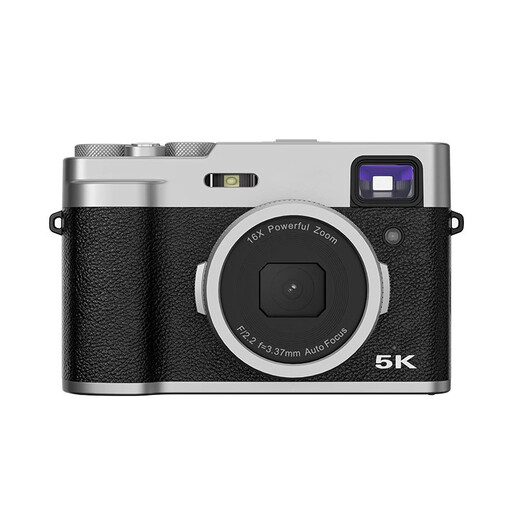 Image unavailable
The listed autofocus and optical viewfinder make this model worth comparing for still product photography. Assess the focus and composition with a test shot.
Listed features: 48MP, 5K, a 2.8-inch LCD and an optical viewfinder.
 Image unavailable
This kit combines a mirrorless camera with a standard zoom for overall photos. Take a test shot to check whether the lens can frame the whole basket from your working distance.
Sony lists around 24.2 effective megapixels for the ZV-E10. The kit includes an E PZ 16–50mm f/3.5–5.6 OSS lens.
 Image unavailable
The kit includes a standard zoom for overall photos. Take a test shot to check whether the basket is in focus and fully framed from your intended working distance.
The product information lists a 24.2MP APS-C sensor, autofocus and a tilting screen.
No. First take an overall photo with the equipment you already own and check whether the weave is clear enough at the size you’ll use the photo. Consider a compatible close-up or macro lens if you want individual details to fill the frame. Also check how much room there’ll be between the lens and the basket.
Keep the camera and basket in fixed positions, use a simple background and check the lighting. Canon UK recommends adjusting the white balance if the lighting causes a colour cast. Check the result before you photograph a whole series.
For an online purchase as a consumer, you generally have a statutory 14-day cooling-off period after delivery, subject to the exceptions listed by ACM ConsuWijzer. ACM ConsuWijzer also states that the seller must offer a solution if a product used normally doesn’t meet the expectations you were entitled to have. The same consumer rules don’t automatically apply in the same way to business purchases.