A washer-dryer is a good choice if space is limited and you regularly want to dry towels in the machine straight after washing. Check the drying capacity, the conditions for any small-load programme and the consumption for a complete cycle. If you can hang your towels up to dry, you can avoid machine drying; if you have room for two appliances and dry laundry often, compare a separate washing machine and heat pump tumble dryer too. Milieu Centraal recommends separate appliances because they use less energy than a washer-dryer.
Which solution is right for you?
If you regularly wash small loads and have limited space
You often wash a small number of towels and sometimes want to dry them straight away, but don’t have room for separate appliances. Don’t just check the washing capacity: look at the drying capacity too, and make sure a small-load programme is suitable for your towels. For example, Bosch lists a Wash & Dry programme for small loads on the WNA13400NL.
If you want to keep running costs down
You can hang your towels up to dry or combine loads, and don’t want to automatically machine-dry every small load. Milieu Centraal recommends line drying where possible; if you’re comparing machines, check the consumption for the complete wash-and-dry cycle too.
If you often use a tumble dryer
You use the drying function regularly and may have room for two appliances. Compare a washer-dryer with a separate washing machine and heat pump tumble dryer, and look at the figures for the complete drying solution. Milieu Centraal recommends separate appliances because they use less energy than a washer-dryer.
What should you look for when choosing?
First, work out how many towels you usually wash at a time and whether you really want to machine-dry them straight away. Then choose a capacity and cycle consumption that suit the way you use your machine.
| Concern |
What to look for when buying |
Who is this most relevant to? |
| Washing small loads |
Check the permitted load and programme duration for any small-load programme; compare the consumption of the cycle you’ll actually use. |
If I often wash just a few towels, I don’t want to run a large drum unnecessarily. Around 31% of consumers prioritise having a suitable way to handle small loads. |
| Space and drying straight away |
Measure the available space and check that the combined cycle is suitable for the amount you want to dry. |
With limited space, I want one appliance that can dry towels without having to transfer them partway through; around 25% of consumers prioritise space and convenience. |
| Consumption when running cycles often |
On the EU label, compare the same cycle basis, including energy per 100 cycles and water per cycle, for washing and for washing plus drying. |
If I wash and dry often, I want to take the consumption of the complete cycle into account. Around 19% of consumers prioritise ongoing energy and water consumption. |
| Drying capacity |
Check the washing and drying capacities separately, and find out the maximum load for the programme you want to use. |
I want to know whether my usual number of towels will dry in the cycle I want, rather than assuming the higher washing capacity applies to drying too. Around 13% of consumers focus mainly on drying capacity and results. |
| Fabric care and maintenance |
Check the temperature and fabric programmes, and follow the appliance’s dosing and maintenance instructions. |
I want to choose a programme and detergent dose that suit my towels and the load. Around 12% of consumers prioritise fabric care and maintenance. |
Common buying mistakes
-
Looking only at the maximum washing capacity
The washing and drying capacities of a washer-dryer are different. So a load you can wash won’t necessarily fit into a single drying cycle.
Check both capacities and the limit for the programme you actually want to use.
If the load is larger than the permitted drying capacity, you may need to split it across extra drying cycles.
-
Assuming a short programme is economical or suitable for all towels
A programme name or short duration doesn’t prove that it’s suitable for every number of towels or uses little energy. Bosch describes Wash & Dry 60' as suitable for small loads, but the conditions still matter.
Check the manual to see which loads and fabrics are permitted, and compare consumption figures for the same cycle.
-
Comparing washing consumption alone when you often use the dryer
Figures for washing alone don’t tell you how much a complete wash-and-dry cycle uses. Standard washer-dryers may also use extra water during drying.
Compare figures for the complete cycle with how often you wash and machine-dry your towels.
-
Assuming the manufacturer’s warranty covers all your statutory rights
A manufacturer’s warranty and your statutory rights if a product is faulty are not the same thing. The Dutch government says there is no fixed statutory warranty period in the Netherlands, and that the retailer must provide a solution if there’s a problem with the product.
Check what extra cover an additional warranty provides, and contact the retailer if your product is faulty.
Brands to consider
Bosch
The WNA13400NL is an example to consider when assessing a small-load programme alongside the separate washing and drying capacities.
- Bosch lists Wash & Dry 60' for small loads, with capacities of 8 kg for washing and 5 kg for drying.
- These model specifications are not an independent assessment of speed, consumption or towel-drying results.
AEG
The LWR9506BN4 is an option to compare if you regularly dry laundry and want to consider heat pump technology.
- AEG lists a 10 kg washing capacity, a 6 kg drying capacity, heat pump technology and energy class B for the complete wash-and-dry cycle.
- These are AEG product specifications, not an independent towel test; check the label and figures for the exact model against your needs.
LG
The GD3R509S0 is a 9/6 kg model whose washing and drying capacities you can assess separately.
- LG lists a 9 kg washing capacity and a 6 kg drying capacity for this model.
- References to tests involving other models and different laundry don’t demonstrate better towel-drying results for the GD3R509S0.
Samsung
The WD90DG6B85BK is a 9/6 kg model with app features you may want to consider when choosing.
- Samsung lists a 9 kg washing capacity, a 6 kg drying capacity and SmartThings features.
- Samsung’s energy-saving claim applies under specific programme and comparison conditions; it doesn’t predict consumption for everyday towel washes.
Products at Joybuy
This selection includes washer-dryers and compact washing appliances for smaller loads. For each model, check that the stated capacity and programme details suit the way you wash and dry your towels.
 Image unavailable
Haier HWD90-BP14929A-S
A washer-dryer to consider if you want to wash and dry in one appliance.
9 kg washing capacity and 5 kg drying capacity; a larger wash load won’t necessarily fit into one drying cycle.
View at Joybuy
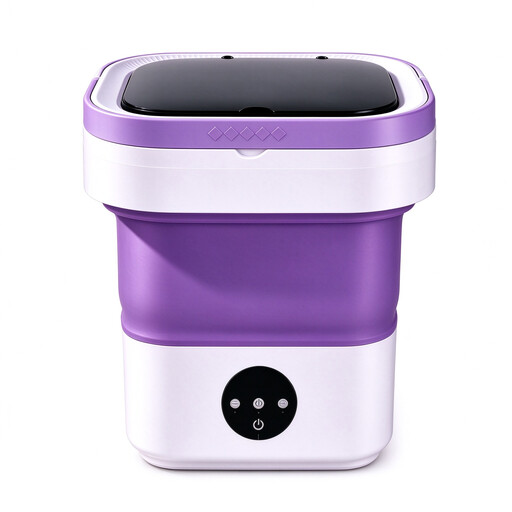 Image unavailable
Foldable mini washing machine 3-in-1, 12 L
Its compact design and stated capacity are worth considering if you want to wash a small amount of laundry.
The product description focuses on small items such as underwear, baby clothes and socks; check that the appliance and permitted load are suitable for towels.
View at Joybuy
 Image unavailable
Midea MF205D80WB/W-NL, 8/6 kg
A washer-dryer to include in your comparison if you want both functions in one appliance.
8 kg washing capacity and 6 kg drying capacity; base your drying load on the lower of these two figures.
View at Joybuy
 Image unavailable
Bosch WNA13400EU, 8/5 kg
This model may be worth considering if you want to weigh up the washing and drying capacities of a washer-dryer separately.
8 kg washing capacity and 5 kg drying capacity; if you wash a larger load, be prepared to split it or use another drying method.
View at Joybuy
 Image unavailable
Hisense WD5I8043BWF, 8/6 kg
A washer-dryer to compare if you want to combine washing and drying in one appliance.
8 kg washing capacity and 6 kg drying capacity; check that your towels fit within the drying load for the programme you choose.
View at Joybuy
Frequently asked questions
Can a full wash load go straight into the dryer automatically after washing?
Only if the load is also within the capacity of the drying programme you choose. For example, Bosch lists capacities of 8 kg for washing and 5 kg for drying on the WNA13400NL; always check the figures for the exact model.
How do I compare the running costs of a washer-dryer?
Compare figures on the same cycle basis, and keep track of how often you wash only and how often you also dry. The EU label includes energy per 100 cycles, water per cycle and programme duration, among other details; your own consumption depends on how you use the appliance.
Do towels always need to be washed at 60 °C?
No. According to Milieu Centraal, that isn’t necessary in most cases. Follow the care label on your towels and take any special hygiene requirements into account.
How much detergent should I use for small loads?
Adjust the dose to the load size, how dirty the laundry is and the water hardness in your area. Milieu Centraal also recommends running a hot maintenance wash from time to time; follow your appliance manual for instructions.
Which details on the EU label are useful when choosing a washer-dryer?
Compare the efficiency class, energy consumption per 100 cycles, water consumption per cycle and programme duration for the way you plan to use it. The European Commission lists these details for washer-dryers; check the figures for the exact model and the relevant cycle.


