Who is this choice relevant to?

Renter with a narrow space for a washing machine

Your main concern is finding a machine that fits the available width and depth, with enough room to open it, without assuming you can make changes to the property. The Consumentenbond also recommends allowing room for the hoses and the door or lid.

Someone who washes small loads of cotton

You mainly wash T-shirts and want to choose a capacity and programmes that suit your usual laundry load and the care labels on your clothes. The Consumentenbond and Milieu Centraal point out that the drum size should match your laundry needs.

Renter with awkward connections

Your choice also depends on having a suitable spot for the water supply, drain and power connection, and on the potential consequences of a leak. Bosch offers connection advice; the Consumentenbond covers water protection, while the Dutch Government distinguishes between small, reversible changes and building work.

What should you look for when buying?

Narrow top-loader

A good fit if: width is limited or there is not enough room in front for a door that swings open, and the lid can open freely above the machine. Whirlpool lists the dimensions of the TW 6521S SENSE WASH BE as 40 × 60 × 90 cm.

Bear in mind: you still need clear space above the machine. The Consumentenbond notes that top-loaders are narrower than front-loaders; this alone says nothing about the washing performance of any particular model.

Shallower front-loader

A good fit if: you have around 60 cm of width, but limited depth, and can open the front door. Haier lists the HW70-BP14357TU1 at 468 mm deep; Beko gives a depth of 49,6 cm for the BM3WFU3741S.

Bear in mind: the stated cabinet depth is not the total space you will need. Allow for the hoses and an open door too, as the Consumentenbond advises.

Concern What should you check? Who is this important to?
Will the machine fit? Measure the width and depth, allowing room for the hoses and the door or lid when open. If the space is tight, I want to be sure the machine fits and that I can open it properly. Around 28% of consumers give the available space top priority.
Drum and cotton programme Choose a load capacity to suit a typical sorted load, and check the care labels and programme instructions. If I mainly wash T-shirts, I want a capacity and programme that suit my usual load. Around 22% of consumers prioritise a cotton wash that meets their needs.
Connections and leaks Check the water supply, drain, socket, hose lengths and model instructions. Assess the water protection in light of the potential consequences of a leak where you live. If connections are difficult to reach or a leak could affect another home, I want to assess the installation carefully in advance. Around 22% of consumers prioritise connections and the risk of leaks.
Energy use and additional costs Compare label values on the same basis and check the figures for the programmes you use. Check separately what delivery and installation include. If I want to estimate my running costs, I want to know how the label values relate to the programmes I usually use. Around 17% of consumers prioritise energy use and additional costs.
Noise and vibration Compare the stated spin noise level on the energy label and follow the instructions for a stable, level installation. If the washing machine is close to my living space, I want to take noise and vibration into account when choosing where to put it and which one to buy. Around 11% of consumers prioritise quiet operation and stable installation.

Common buying mistakes

  • Looking only at whether it is ‘narrow’ or at the stated depth

    A machine may appear to fit on paper but still leave too little room for the hoses or an open door or lid. A poor fit could mean extra installation work or having to buy a different machine.

    Measure the entire space and check the external dimensions and opening direction of the exact model.

  • Confusing the maximum load capacity with a typical T-shirt wash

    The stated load capacity applies to cotton; a larger drum does not automatically mean proportionally greater efficiency for smaller loads.

    Sort and weigh a typical load before choosing a capacity.

  • Assuming the energy label describes every programme

    The washing machine label is based on Eco 40-60 and does not directly show the energy use of other programmes.

    Energielabel.nl recommends comparing machines using the basis shown on the label. For other programmes, consult the model’s manual.

  • Assuming a model code means the exact same version without checking

    A listing for the Beko BM3WFU3741S gives a different colour and energy class from the manufacturer’s information.

    Check the version and product fiche before buying; do not treat a conflicting listing as confirmation that it is the same variant.

Brands to compare

Whirlpool

Whirlpool lists the TW 6521S SENSE WASH BE as a top-loader for spaces where width is limited.

  • The manufacturer lists dimensions of 40 × 60 × 90 cm, energy class A and water protection for this model.
  • Whirlpool gives the maximum capacity as 6,5 kg in its technical information, but the same product information also mentions 7 kg. Check the product fiche before making load capacity a buying requirement, and leave clear space above the lid.

Haier

Haier lists a cabinet depth of 468 mm and a capacity of 7 kg for the freestanding HW70-BP14357TU1 front-loader.

  • The stated depth may be useful if depth is the main constraint in your washing machine space.
  • Allow room for the hoses and the open door as well. The stated dimensions do not confirm that the machine will fit your space.

Beko

Beko lists dimensions of 60 × 49,6 × 84,5 cm, a capacity of 7 kg and a cotton programme for the BM3WFU3741S.

  • The manufacturer gives this model an energy class of A.
  • A Joybuy listing with the same model code gives a different colour and energy class from the manufacturer. Check the exact version and product fiche before comparing these details.

Washing machines and compact laundry options

These Joybuy products include front-loaders for cotton laundry and compact options for small loads. Check the capacity and dimensions of the version you choose against your usual laundry load and the space available.
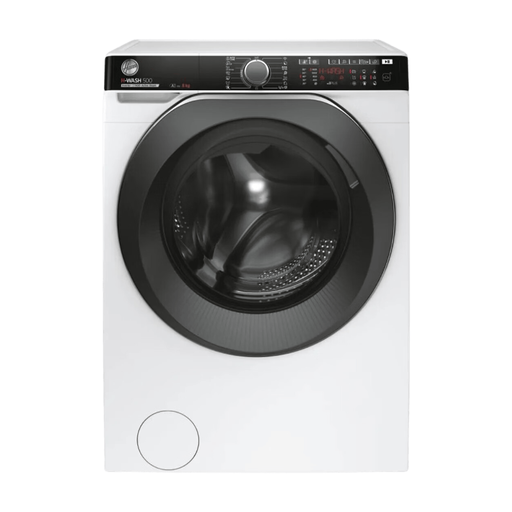
Hoover HWP 48AMBC7/1-S washing machine

Hoover HWP 48AMBC7/1-S

A front-loader with a stated capacity of 8 kg; compare this load capacity with your usual cotton wash.

The product name specifies 1400 rpm and an inverter motor.

View on Joybuy
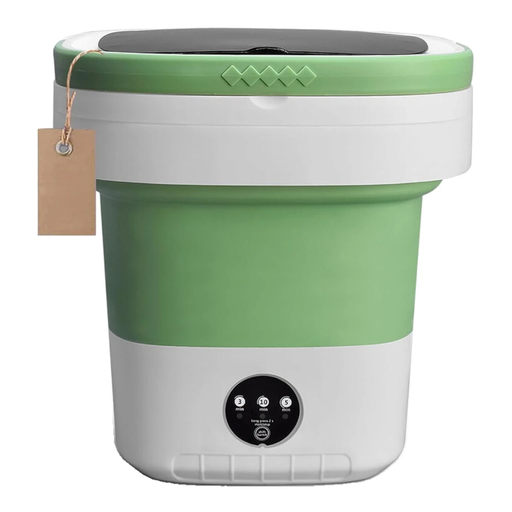
12-litre foldable mini washing machine with spin-dryer basket

Foldable mini washing machine, 12 litres

A compact option to consider if the stated size suits the small loads you wash; the product name mentions a spin-dryer basket.

The product name specifies a capacity of 12 litres.

View on Joybuy
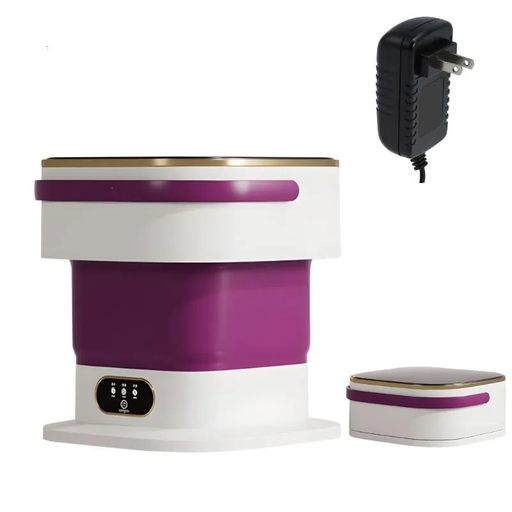
15-litre foldable mini washing machine with spin-dryer basket, purple

Foldable mini washing machine, 15 litres, purple

A compact option for small loads; check that this size is right for the items you want to wash. The product name mentions a spin-dryer basket.

The product name specifies a capacity of 15 litres.

View on Joybuy
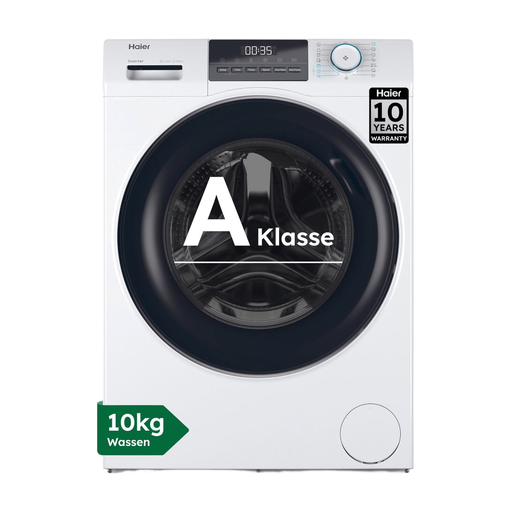
Haier HW100-BP14929A i-Pro 1 front-loader

Haier HW100-BP14929A i-Pro 1

A front-loader with a stated capacity of 10 kg; compare this with the amount of laundry you usually wash.

The product name specifies 1400 rpm and an inverter motor.

View on Joybuy

Comfee CFP01EW70W-JD washing machine, 7 kg

Comfee' CFP01EW70W-JD

The product information describes a freestanding front-loader with cotton programmes; check that its stated dimensions suit your washing machine space.

The product name specifies 7 kg and a design depth of 400 mm.

View on Joybuy

Frequently asked questions

How can you tell whether a washing machine will fit in your small laundry space?

Measure the available width and depth, leaving room for the hoses and the door or lid when open. The Consumentenbond advises checking more than just the cabinet dimensions: remember to allow for the space needed to open the machine too.

Can you always wash cotton T-shirts on Eco 40-60?

No. According to the Consumentenbond, this programme is designed for normally soiled cotton garments whose care labels allow washing at 40 or 60 °C. Check the label and consult the manual if you need a different temperature or programme.

What should you check when connecting a washing machine?

Check that the floor is stable, the water supply and drain are accessible, and the hoses are long enough. Bosch recommends using an earthed socket. Follow the model’s manual for removing transit bolts and checking the connections for leaks.

Do you need to ask your landlord for permission to connect a washing machine?

According to the Dutch Government, you do not need permission for small changes that can be reversed without much expense, but you do for renovation or home improvements. Using an existing suitable connection is different from installing a new one that is difficult to reverse. Before arranging building work, consider the change you plan to make and the terms of your tenancy.

What does the energy label tell you about your washing machine’s energy use?

The label helps you compare washing machines on the stated Eco 40-60 basis, but it does not directly predict the energy use of every other programme. The European Commission says the washing machine label includes details such as energy class, energy use per 100 Eco 40-60 cycles, capacity, water use and spin noise level.
