Who is this guide for?

Renters with a narrow laundry space

You want to know whether the machine will fit, including the space needed for connections and to open the lid or door. The Dutch Consumers’ Association points out that both the appliance dimensions and the installation space matter.

People who wash small loads

You regularly wash cotton socks and other small loads. Milieu Centraal recommends choosing a drum capacity that suits the amount of laundry you usually build up.

Renters concerned about noise or leaks

The machine may be close to a living room or bedroom, or a leak could affect other homes. The Dutch Consumers’ Association explains the differences between types of water protection and notes that spinning can be noisy.

What should you look for when buying?

Narrow top-loader

Choose this option: if width is your main constraint and you can fully open the lid above the machine. According to AEG, the AEG LTR6363A reviewed is 397 mm wide.

Bear in mind: a top-loader won’t fit under a worktop if that prevents the lid from opening. Check the space needed above the machine too.

Shallower front-loader

Choose this option: if you have around 60 cm of width but limited depth. Beko lists the BM3WFU3741W as 60 cm wide and 49.6 cm deep.

Bear in mind: measure the space for hoses and in front of the machine too, so the door can open.

Standard front-loader with a suitable capacity

Choose this option: if there’s enough width and depth, and you can combine small loads with other laundry according to the care labels. Bosch lists the WGE02406NL as having a 7 kg capacity.

Bear in mind: a large drum isn’t necessarily practical if you usually can’t fill it with a suitable load.

Concern What to check when buying Who is this important to?
Will the machine fit? Measure the height, width and depth, including space for hoses and to open the door or lid. If the alcove is tight, I want to know in advance whether the connections and opening will fit too. Around 26% of consumers put available space first.
Is the drum suitable for small loads? Compare the capacity with the total amount of laundry you usually wash, and follow the care label on your socks. I don’t want to choose a drum based on just one pair of socks, but on the laundry I usually wash together. For around 21% of consumers, a suitable capacity for small loads comes first.
Are the connections and water protection suitable? Check the water inlet and drain, the floor surface and the type of water protection fitted to the model. In a rented home, I want to check whether the existing connections are suitable and what would happen if there were a leak. Connections and the risk of leaks are the main concern for around 21% of consumers.
How noisy is the spin cycle? Compare the stated spin noise in dB(A) and check that the machine is stable and level. If the washing machine is close to my living room or bedroom, I pay extra attention to noise and vibrations. Around 16% of consumers put this concern at the top of their list.
What are the total costs? Compare kWh per 100 eco cycles and water consumption on the same label basis. Check the delivery and installation terms too. I want to weigh up the purchase, running and any installation costs together, without treating label figures as a prediction for every small wash. Around 16% of consumers put total costs first.

Common buying mistakes

  • Measuring only the width of the alcove

    Hoses, the open door or lid, and the route to the installation space can mean that a machine that looks like it fits on paper still can’t be installed properly.

    Before buying, measure the width, height and depth, the space needed to open the door or lid, and the route to the installation space.

  • Assuming a top-loader is quieter or washes better

    The Dutch Consumers’ Association reports that the top-loaders it tested washed less effectively than a standard front-loader. That test result doesn’t automatically apply to every model, and a top-loader isn’t necessarily quieter.

    Choose a top-loader for a specific space or ease-of-use requirement, and compare noise and washing results for each model.

  • Assuming water protection always means the same thing

    Hose protection, a base sensor and overflow protection respond to different situations.

    Check which system the specific model has and consider whether it’s suitable for where you plan to put the machine.

  • Not checking the product title or warranty claim

    For the Whirlpool TW 622S FRESHCARE BE reviewed, the title states 6.5 kg, while the product specifications state 6 kg. A manufacturer’s warranty also doesn’t replace your statutory rights.

    Check the product sheet for the exact version and keep the information provided by the seller.

Brands and models to compare

AEG

The LTR6363A reviewed is a top-loader for spaces where width is a major constraint.

  • AEG lists this model as having a 6 kg capacity, a width of 397 mm, energy class A and a consumption of 42 kWh per 100 eco cycles.
  • Leave enough space above the machine to open the lid. These figures are model specifications, not independent washing test results.

Whirlpool

The TW 622S FRESHCARE BE reviewed is a top-loader for a narrow space.

  • Whirlpool lists this model as 40.0 cm wide, with energy class B and a consumption of 48 kWh per 100 eco cycles.
  • The product title states 6.5 kg, while the specifications state 6 kg. Check the product sheet for the exact version before buying.

Beko

The BM3WFU3741W reviewed is a front-loader to consider if depth is limited but there’s around 60 cm of width available.

  • Beko lists this model as having a 7 kg capacity, a width of 60 cm, a depth of 49.6 cm and energy class A.
  • Beko states a spin noise level of 76 dBA. The EnergySpin saving is a manufacturer comparison with another specified Beko model, not an independent comparison with all washing machines.

Bosch

The WGE02406NL reviewed is a standard front-loader to consider if the available width and depth are also sufficient.

  • Bosch lists a 7 kg capacity and dimensions of 848 × 598 × 588 mm.
  • Bosch explicitly states that this model doesn’t have AquaStop. Check water protection for each model rather than assuming it based on the brand name.

Joybuy product picks

Joybuy product picks for small loads and limited space, including standard front-loaders and compact mini washing machines.

AEG LR73S840 7000 Series washing machine

AEG LR73S840 7000 Series, 8 kg, 1400 rpm

The product information describes a front-loader that adjusts to the amount of laundry. Consider this model if a front-loader fits in your available space.

The product name states a capacity of 8 kg and 1400 rpm.

View at Joybuy
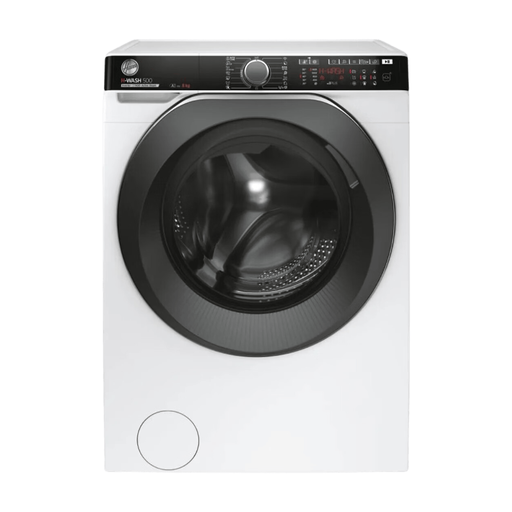
Hoover HWP 48AMBC7/1-S washing machine

Hoover HWP 48AMBC7/1-S, 8 kg, 1400 rpm

The product information describes a front-loader that adapts its programme to the laundry and load. Check that the model suits your installation space.

The product name states a capacity of 8 kg and 1400 rpm.

View at Joybuy
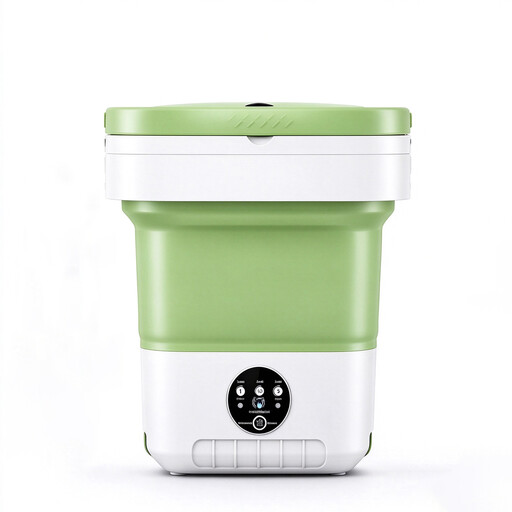
Green 12-litre foldable mini washing machine

Foldable mini washing machine, 12 litres, green

The product information lists socks as suitable laundry. Check the maximum load before deciding whether this size meets your washing needs.

The product name states a capacity of 12 litres. The product description lists a maximum load of 1.5 kg and a spin basket.

View at Joybuy
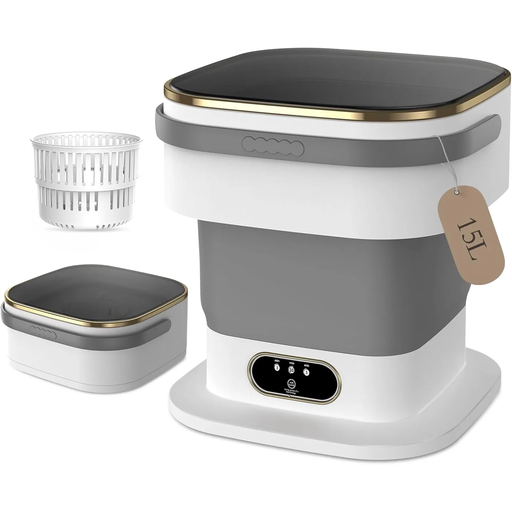
Grey and white 15-litre foldable mini washing machine

Foldable mini washing machine, 15 litres, grey and white

The product information lists socks as suitable laundry. Check the maximum load and whether the capacity suits the amount of laundry you want to wash.

The product name states a capacity of 15 litres. The product description lists a maximum load of 1.9 kg and a spin basket.

View at Joybuy
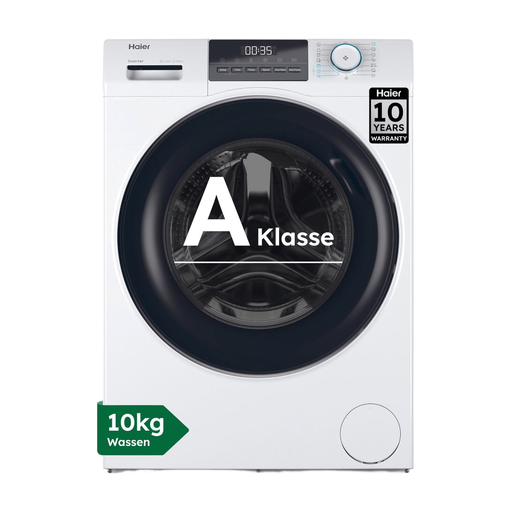
Haier HW100-BP14929A i-Pro 1 washing machine

Haier HW100-BP14929A i-Pro 1, 10 kg, 1400 rpm

The product information describes a front-loader that adjusts its settings to the load. First check that the machine fits in your available space.

The product name states a capacity of 10 kg and 1400 rpm.

View at Joybuy

Frequently asked questions

As a renter, do I need permission to install a washing machine?

Not for every standalone washing machine. According to the Dutch Government, you don’t need permission for a minor alteration that can be undone without significant cost, but you do need permission for a renovation. Consider a new connection or other alteration separately and, if necessary, discuss it with your landlord beforehand.

What temperature should I wash cotton socks at?

Follow the care label on your socks; there’s no single temperature that suits all cotton socks. For normally soiled laundry, Milieu Centraal recommends using a suitable eco programme and notes that lower temperatures use less energy.

What should I check when installing and maintaining the machine?

Check the space needed for hoses and to open the door or lid, make sure the machine is stable and level, and check what type of water protection it has. For maintenance, Milieu Centraal recommends running a wash at 60 °C about once a month to remove detergent and dirt residues.

Do my rights end when the manufacturer’s warranty expires?

No. ACM ConsuWijzer explains that your statutory rights apply alongside the manufacturer’s warranty and depend on what you could reasonably expect from the product during normal use. If the machine develops a fault too soon, discuss it with the seller; there isn’t one fixed time limit that automatically applies to every washing machine.

What does a washing machine’s energy label tell me?

According to the Dutch Government, the energy label provides information about energy and water consumption. Compare figures on the basis of the same programme and don’t treat them as a measurement of your own small sock wash.
