
Cooking a single small portion
You want to know whether your usual amount of uncooked basmati falls within the minimum quantity the appliance is designed to cook, according to its manual.


Before choosing a rice cooker, check whether the manual allows you to cook your smallest quantity of uncooked basmati rice. A stated maximum capacity of a few portions doesn’t prove that it can handle a small amount. A basic model may be all you need if you mainly cook basmati; extra rice settings are most useful if you also cook other types and will use those programmes.
You want to know whether your usual amount of uncooked basmati falls within the minimum quantity the appliance is designed to cook, according to its manual.
You cook small portions but also want to compare suitable settings or instructions for other types of rice.
You want a compact cooker that’s easy to use, clean and store, without extra programmes being a deciding factor.
First, check the minimum quantity for the exact model. Then compare its rice-cooking instructions and controls with what you prepare at home.
| What to consider | What should you check? | Who is this important for? |
|---|---|---|
| Smallest portion | Compare your quantity of uncooked rice with the minimum and maximum amounts specified for the exact model. | If I usually cook one small portion, I want to know in advance whether my quantity falls within the model’s instructions. Around 36% of consumers mainly want a portion size that suits their needs. |
| Basmati instructions | Find the basmati or long-grain instructions for the exact model and follow the specified measuring method. | If I cook basmati, I want water instructions for my appliance, not a ratio copied from another model. Around 29% of consumers mainly want clear instructions for cooking basmati. |
| Controls and cleaning | Check the external dimensions, whether the inner pot is removable and what cleaning instructions apply. | In a small kitchen, I want an appliance that’s easy to use and store, without unnecessary settings. Around 21% of consumers mainly value ease of use. |
| Serving and storage | Check whether the cooker switches to keep-warm mode automatically, and treat storing leftovers as a separate step. | If I like to keep my rice warm while I finish the rest of the meal, I check whether the keep-warm function suits the way I use it. Around 14% of consumers mainly focus on when the rice will be served. |
For the Panda Mini, Yum Asia distinguishes between a 0.6-litre capacity for white rice and a 1.3-litre capacity for multi-cooker use. These are different measurements.
Compare the capacity for uncooked rice and the measuring cup used, and also check the minimum quantity in the manual.
The recommended amount of water can vary from model to model. Reishunger gives its Digital Mini Rice Cooker a specific ratio for basmati; this doesn’t automatically apply to other appliances.
Use the table and measuring method provided for the exact model.
Keeping rice warm ready to serve is not the same as storing leftovers. The Voedingscentrum advises cooling cooked rice quickly, not leaving it out of the fridge for more than two hours, and storing it in the fridge for no longer than two days.
Use the keep-warm setting for serving, and follow the Voedingscentrum’s storage advice for any leftover rice.
Tristar describes the RK-6117 as a compact rice cooker with simple controls.
Russell Hobbs presents the 27020-56 as a small rice cooker with simple controls.
The Digital Mini Rice Cooker is designed for small quantities and offers several rice settings.
The Panda Mini combines rice cooking with separate multi-cooker functions.
These product options are worth considering if you cook rice for a small household or want a choice of rice settings. For the exact model, always check the manual for the smallest quantity of basmati you can cook and the corresponding water instructions.
 No image available
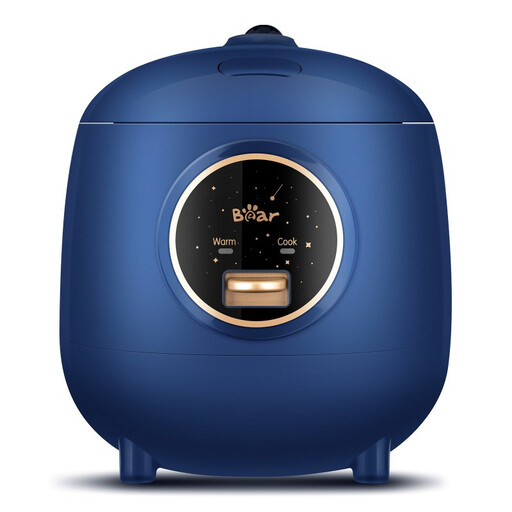
The product information describes this model as suitable for one to two people; check whether the manual also allows you to cook your smallest portion of basmati.
The product name lists 1.2L, 200-238W, a keep-warm function, a non-stick inner pot and one-button operation.
 No image available
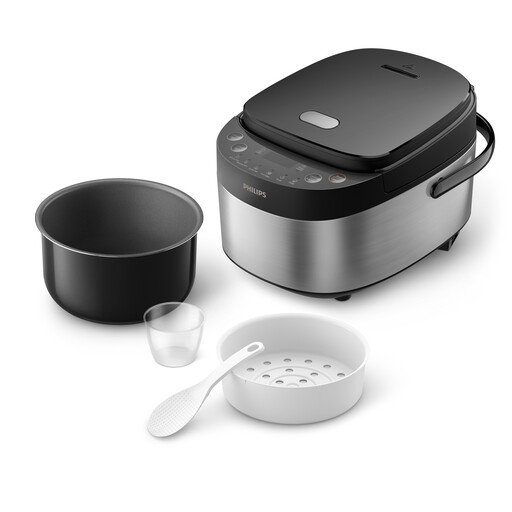
The model name lists eight programmes. Compare the available settings with the types of rice you actually cook, and check the minimum quantity for basmati.
The product name lists a capacity of 0.85 litres. The user instructions say not to leave rice in keep-warm mode for longer than 12 hours. According to the product information, rinse rice in a separate bowl, not in the inner pot.
 No image available
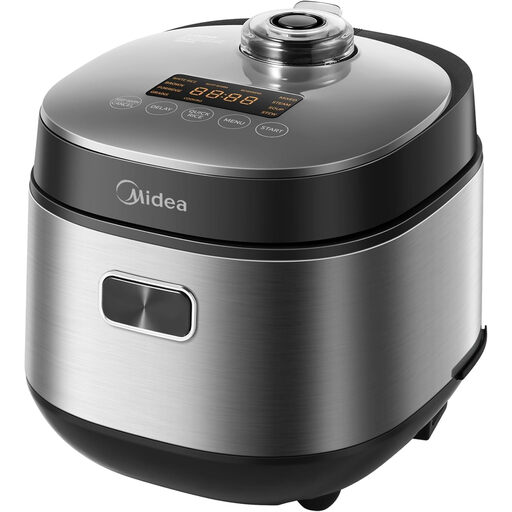
The product name describes a model for one to three people; check whether the minimum quantity suits your usual portion of basmati.
The product name lists 2L, 4 cups and 9 functions, including a steaming tray. Compare the functions with what you’ll actually need.
 No image available
The title lists a maximum rice capacity of 1.6 litres. Check the manual to see how this capacity relates to your small portion of basmati.
The product name lists a rice capacity of 1.6L and a water capacity of 4L.
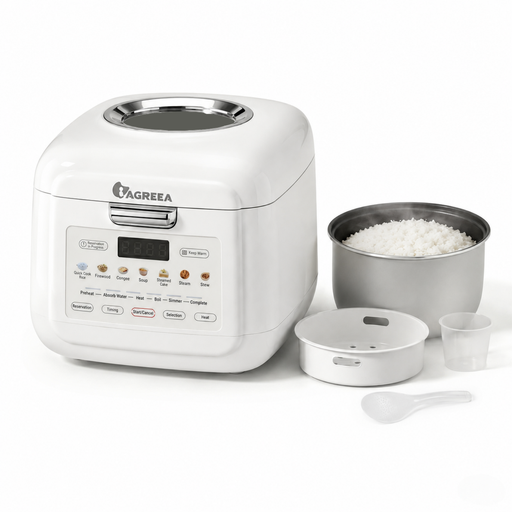 No image available
The product name describes a mini model with a 2L/3 Cups capacity; check the manual for the smallest permitted quantity of basmati.
The title lists a viewing window, steam function, fuzzy logic, a 24-hour timer and automatic keep-warm. Compare the extra features with how you use the cooker every day.
No. For the Panda Mini, Yum Asia lists a rice capacity of 0.6 litres for white rice and a capacity of 1.3 litres for multi-cooker use. Also check the instructions for your type and quantity of rice.
Follow the instructions for your exact model. Reishunger gives its Digital Mini Rice Cooker a ratio of one part basmati to 1.25 parts water; this ratio doesn’t automatically apply to other brands or models.
Don’t use the keep-warm function as a way to store leftovers. The Voedingscentrum advises cooling cooked rice quickly, not leaving it out of the fridge for more than two hours, and storing it in the fridge for no longer than two days.
According to the Netherlands Food and Consumer Product Safety Authority (NVWA), components that come into contact with food must comply with the applicable requirements for food contact materials. Electrical equipment within the scope of the Low Voltage Directive must meet the applicable safety requirements; the NVWA specifies a rated AC voltage of 50 V to 1000 V or a rated DC voltage of 75 V to 1500 V. Meeting the applicable requirements and carrying a CE mark do not, on their own, mean that a specific model has been checked for the quantity you want to cook.