
Cooking for one or two
You’re making a small portion of venison stew and want the complete meal to fit in the pot, following the model’s filling instructions.


For one or two portions of venison stew, a compact traditional slow cooker is a sensible place to start. Compare the capacity of the pot with the volume of your complete recipe, and follow the filling instructions for your chosen model. A larger pot may be a better fit if you’re making extra portions too. A multicooker is worth considering if you’d also like to brown meat or use other cooking functions.
You’re making a small portion of venison stew and want the complete meal to fit in the pot, following the model’s filling instructions.
You want to plan the cooking in advance and understand that a keep-warm setting works differently from a programmable cooking timer.
You want to brown the meat first without using a separate pan, or use the same appliance for other cooking methods.
First, measure the volume of your complete recipe, then consider which features you’ll actually use. This will help you compare pot capacity and controls more effectively.
| What to consider | What should you check? | Who is this important to? |
|---|---|---|
| Capacity for small portions | Compare the pot capacity with the total volume of the meat, vegetables and liquid. Also check the filling instructions for the exact model. As a general guideline, FoodSafety.gov recommends filling a slow cooker between half and two-thirds full. | If I mostly make small quantities, I want to know whether my whole recipe will fit while still following the model’s instructions. About 50% of consumers make suitable capacity their main priority. |
| Planning the cooking time | Check whether the model has a cooking timer and what happens when it ends. A keep-warm setting is not the same as a timer or delayed start. | If I want to plan the cooking in advance, I want to know what the appliance controls itself and when I need to get started. Around 30% of consumers make planning their main priority. |
| Browning and extra functions | Check whether the exact model supports both browning and slow cooking, and whether the pot capacity is right for your recipe. | If I want to brown meat in the same appliance first or use other cooking methods too, these functions matter to me. Around 20% of consumers make multiple cooking functions their main priority. |
The pot capacity on its own doesn’t tell you whether your complete recipe can be added in the right quantity for the model’s instructions. As a general guideline, FoodSafety.gov recommends filling slow cookers between half and two-thirds full.
Measure the volume of your stew with all the ingredients, then check the filling instructions in the manual.
A pot that can’t be filled appropriately for your usual portion may be inconvenient if you want to prepare small quantities.
A keep-warm setting keeps food warm, but it doesn’t control when raw meat starts cooking safely. FoodSafety.gov advises against leaving ingredients in the slow cooker while waiting for it to start later.
Start cooking as soon as you’ve prepared the ingredients, and compare a cooking timer and keep-warm setting as separate functions.
Extra functions such as sautéing don’t remove the need to check whether your quantity of stew will fit in the pot according to the model’s instructions.
Choose extra cooking functions only if you plan to use them, and also check whether the manual allows for your small recipe portion.
Unused functions may come with a pot that’s less suitable for your regular recipe.
According to Russell Hobbs Netherlands, the Compact Home 25570-56 is a compact traditional slow cooker with a 2-litre pot.
According to Tristar, the VS-3915 is a traditional slow cooker with a capacity of 3.5 litres. It’s worth considering if you make extra portions too.
According to its Dutch product page, the Classic Mini 3,8 L is a multicooker with functions including slow cooking, sautéing and pressure cooking.
Princess describes model 263000 as a multicooker that lets you brown meat before cooking it slowly.
These Joybuy products are suited to slow-cooked dishes, with different pot capacities and features to weigh up against your recipe and cooking habits.
 No image available
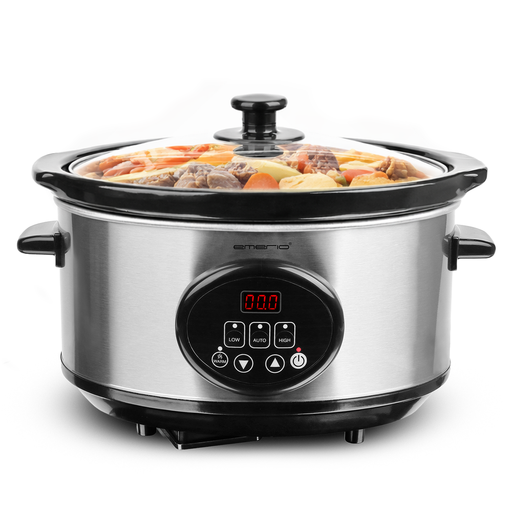
The 3.5-litre capacity is worth considering when deciding whether your small portion will fit in the pot appropriately.
Removable 3.5-litre ceramic pot; digital timer, three settings and keep-warm function according to the product description.
 No image available
The stated capacity of 2.6 litres may be a consideration if you’re looking for a smaller pot. Check the filling instructions for your recipe.
The product description lists a non-stick inner pot and three manual heat settings.
 No image available
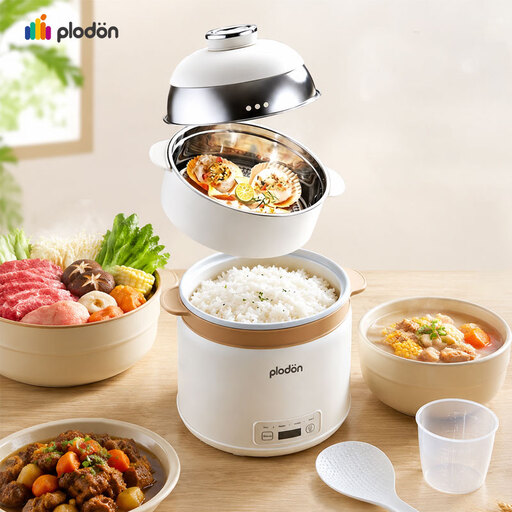
The product title gives a capacity for one to three people. Compare this with the total quantity in your recipe.
The title lists a 2.3-litre capacity. The product description mentions a steamer basket, keep-warm function and preset cooking functions, as well as a rice paddle and measuring cup.
 No image available
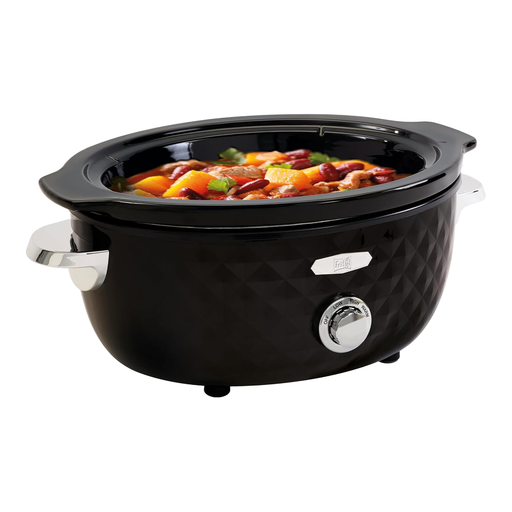
The title says it’s suitable for one to four people. Check whether the capacity and filling instructions are right for your smaller recipe.
3.3-litre ceramic pot, four heat settings and 150 W according to the product title; the product description also mentions a keep-warm function.
 No image available
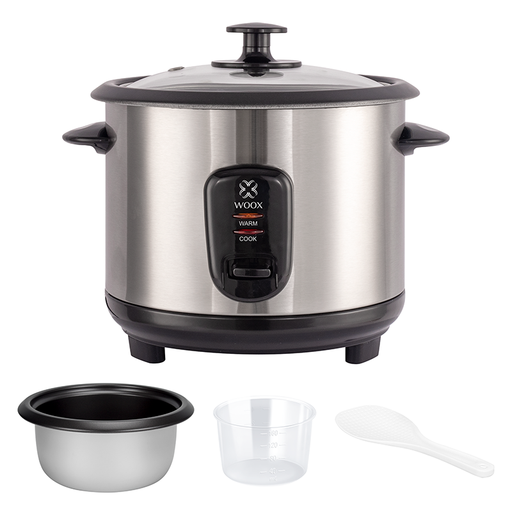
The product description lists a 1-litre capacity for meals for one or two people. Check whether it can hold all the ingredients in your stew.
The title lists 400 W, a glass lid and a non-stick inner pot. The description mentions simmering.
Thaw frozen meat safely before putting it in the slow cooker. FoodSafety.gov advises starting the cooking straight afterwards and not leaving raw meat to wait for a later start.
Don’t rely on the cooking time alone: check that the meat is cooked using a food thermometer. The Netherlands Nutrition Centre recommends cooking cut or otherwise processed meat thoroughly; FoodSafety.gov also recommends using a thermometer to check whether food is cooked. The time and temperature required depend on the recipe.
The Netherlands Nutrition Centre advises storing leftovers covered in the fridge at 4 °C for up to two days, or freezing them in small portions for longer storage. Don’t leave perishable food out of the fridge for more than two hours, and reheat leftovers thoroughly.
According to the Government of the Netherlands, products such as electrical appliances must have a CE marking in the EU. Check the marking and safety instructions for the specific product on offer. If there’s a fault, contact the seller about your right to a product that meets legal requirements. The Netherlands does not have a fixed statutory guarantee period.
Information from the Netherlands Food and Consumer Product Safety Authority about game meat sets out requirements for its origin, inspection and hygienic handling in the supply chain, but doesn’t mention any separate permission to cook shop-bought venison at home. Buy your meat from a reputable supplier and handle it hygienically.