
Cook making small portions
You make one or a few bowls of cooked spinach soup and want to blend it without using a large jug or creating unnecessary washing-up. The Consumers' Association lists small portions as a practical use for a hand blender.


For one small portion of cooked spinach soup, a hand blender is usually a practical choice: you can blend it in the pan and have less washing-up, although the result may not be as smooth as with a jug blender, as the Consumers' Association explains. Choose a jug blender if a smooth texture matters more and the model’s minimum quantity and temperature instructions suit your soup. A soup maker is worth considering if you also want to heat the soup in the same appliance, provided its minimum fill level is suitable for your portion.
You make one or a few bowls of cooked spinach soup and want to blend it without using a large jug or creating unnecessary washing-up. The Consumers' Association lists small portions as a practical use for a hand blender.
You want to blend the soup while it is still warm, so you check the temperature limit for the exact appliance and attachment. Manufacturers such as Cuisinart and Philips provide instructions for hot ingredients that vary by model.
You prioritise a smooth texture or heating and blending in one appliance, as long as its usable capacity suits your portion. The Consumers' Association describes differences in texture between appliance types; Tefal lists heated soup programmes for a specific model.
Choose this when: you want to blend a small portion in a suitable pan or beaker.
The trade-off: you don’t need to transfer the soup, but the texture may not be as smooth as with a jug blender, according to the Consumers' Association.
Choose this when: a smooth texture is your priority and the minimum quantity and temperature limit suit your soup.
The trade-off: you’ll need to transfer the soup; when blending hot ingredients, it’s important to use a suitable jug and follow the model’s instructions.
Choose this when: you also want to heat and blend the soup in the appliance.
The trade-off: the maximum capacity doesn’t tell you whether it will handle one small portion well; check the minimum fill level.
The Consumers' Association lists small portions as an advantage of a hand blender, while noting that the texture can sometimes be less smooth. When blending hot soup, the instructions for the exact model are key.
| What to consider | What should you check? | Who is this important to? |
|---|---|---|
| Small portion | Check the minimum fill level or required depth of liquid, and whether the blending foot fits in your pan or beaker. | If I usually make one bowl, I don’t want to have to fill a large jug. Around 36% of consumers prioritise blending small portions. |
| Hot soup | Check the temperature limit and instructions for hot liquids for the full model number; take care to avoid splashing. | I want to blend the soup while it’s hot without going against the instructions. Around 29% of consumers prioritise suitability for hot ingredients. |
| Texture and preparation | Decide whether you only want to blend cooked soup or also heat it; check the minimum quantity for a jug blender or soup maker. | I want smooth soup or to heat and blend in the same appliance. Around 21% of consumers prioritise texture or integrated cooking. |
| Cleaning and storage | Check which parts are detachable and which can go in the dishwasher according to the manual. | I want fewer parts to wash and an appliance that’s compact to store. Around 14% of consumers prioritise easy cleaning and storage. |
The maximum capacity doesn’t tell you the minimum usable quantity. The Consumers' Association notes that jug blenders may be less suitable for small portions.
Check the minimum fill level for the exact model and compare it with your usual portion size.
If the quantity isn’t suitable, you may need to use a different appliance or make more soup than you planned.
Temperature instructions vary by model. Hot liquids can also splash while being blended.
Check the manual for the full model code before blending hot soup, and follow the guidance to minimise splashing.
Wattage alone doesn’t prove how smooth the soup will be. Attachments are only useful if you’ll use them and the portion size, temperature and cleaning requirements also suit your task.
First choose between a hand blender, jug blender or soup maker, then check the features of the exact model.
The MultiQuick 1 MQ10.201MWH is a straightforward hand blender supplied with a small chopper.
The ErgoMixx MS6CB6110 is designed for anyone looking for variable speed settings and a detachable blending foot.
The Blendforce Cook BL5768F0 is a blender with heated soup programmes.
The cordless RHB100E is an option if you want to work by the pan without a cord.
These product picks are hand blenders for blending small portions of soup; when making hot soup, always check the temperature instructions for the exact model.
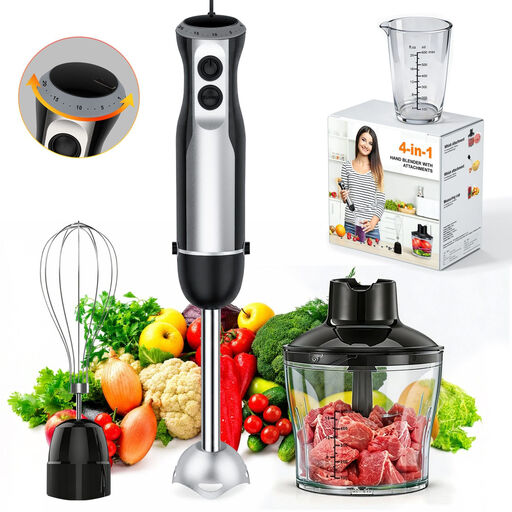 No image available
A hand blender is a practical option for small portions you want to blend in a suitable pan; check the instructions for the exact model when making hot soup.
Power: 1000 W; 20 speeds; turbo function.
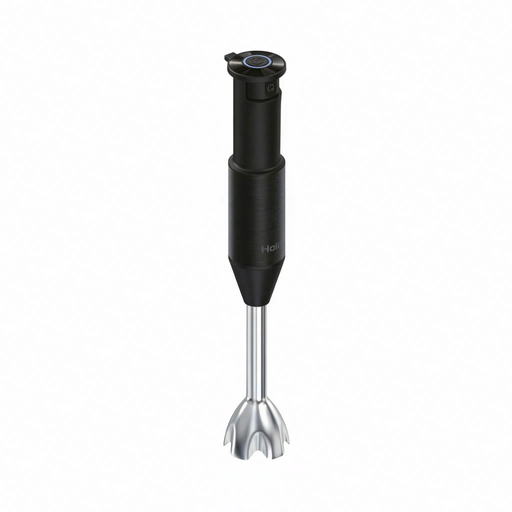 No image available
A hand blender is a good fit for small portions you want to blend in a pan or beaker; check that your quantity is enough to use with the supplied beaker.
According to the product name, this model has 3 blades and a 0,9 l beaker.
 No image available
A hand blender can be handy for a small portion you want to blend directly in a suitable pan; consider which attachments you’ll actually need before buying.
The product name lists 2 speeds, a 500 ml chopper and an 800 ml beaker.
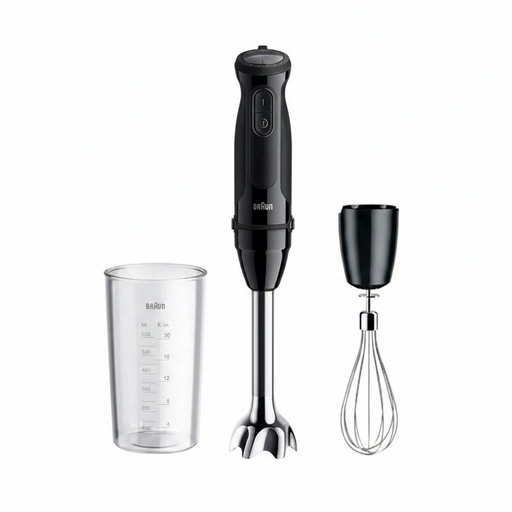 No image available
This hand blender is a good fit if you want to blend small portions in a suitable pan; check the instructions for the exact model before using it with hot soup.
Power: 1000 W; includes a whisk attachment according to the product name.
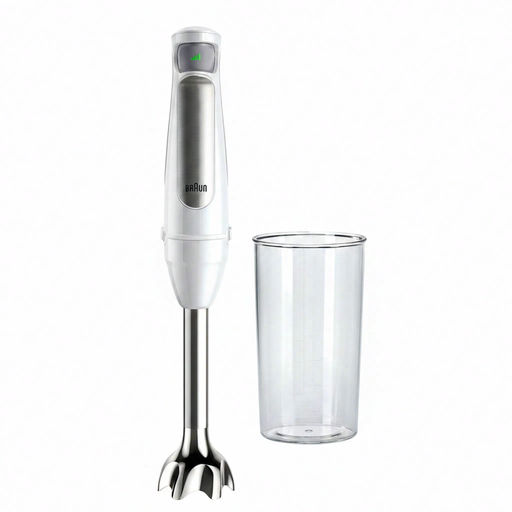 No image available
A hand blender is a suitable option for small portions you want to blend directly in a suitable pan; follow the instructions for this exact model when making hot soup.
No, check the instructions for the exact model. The Consumers' Association says a heat-resistant jug is essential when making soup in a blender. Philips allows ingredients below 60 °C in the HR2512/90, HR2511/90 and HR2510/90 models; for the HR3756/00, HR3752/00 and HR3868/00, Philips specifies cold or room-temperature ingredients. These instructions apply to those models only and shouldn’t be assumed to apply to other appliances.
Use a pan or beaker deep enough for the blending foot to work while submerged, without splashing, and follow the model manual when blending hot ingredients. Check which detachable parts are dishwasher-safe according to the manual; a detachable part isn’t automatically dishwasher-safe.
Not necessarily. According to the Dutch government, a manufacturer’s or seller’s guarantee is in addition to your statutory rights, and the seller must provide a solution if there’s a problem with the product. Compare the terms and any extra rights before taking out additional cover.