For a genuinely small loaf, a bread maker with a supported size of around 400–500 g is a better fit than a model whose smallest standard size is larger. If you also want to bake for other occasions, consider a machine with several loaf sizes, but check both the timer and the duration of your chosen programme. A gluten-free programme alone does not guarantee gluten-free preparation; check the ingredients and guard against cross-contamination too.
Who is a small bread maker suitable for?
Baker of small batches
You want to serve a modest-sized loaf at your gathering without automatically using a large bread pan. Focus on comparing the smallest supported loaf size and whether one baking cycle will be enough. Panasonic Netherlands and Tefal Netherlands provide information about the loaf sizes their models support.
Host with a set serving time
You want the bread to be ready around mealtime. Check both the timer and the duration of your chosen programme; Panasonic Netherlands and Tefal Netherlands list the timer settings for their models.
Baker catering for a guest with dietary requirements
You may be looking for a suitable programme, but if your guest has coeliac disease, you also need to check the ingredients and guard against cross-contamination. The Netherlands Nutrition Centre points out that even a small amount of gluten, such as a bread crumb, can be significant.
What should you look for in a small loaf for a gathering?
The four key considerations are loaf size, serving time, suitability for dietary requirements and cleaning. The percentages show how many consumers consider each of these their main purchase priority.
| Consideration |
What to look for |
Who is this important to? |
| A suitable small loaf size |
Check the smallest supported loaf size and the recipe for it, not just the maximum baking weight. |
For a small gathering, I don’t want to automatically choose a large loaf size; consumers who prioritise a small batch account for around 36%. |
| Serving the bread on time |
Check how the delay-start function works and allow for the duration of the specific programme. |
If the bread needs to be ready around mealtime, I want to work backwards from serving time; consumers who prioritise timing account for around 29%. |
| Suitability for guests’ dietary requirements |
Check the programme and recipe, the ingredients, and how to prevent cross-contamination through the bread pan and utensils. |
When a guest has dietary requirements, I want to check more than just the programme name; consumers who prioritise suitability for dietary requirements account for around 21%. |
| Cleaning and aftercare |
Read the cleaning instructions for the specific model; Inventum recommends hand-washing the BM55. |
After a gathering, I want to know how to clean the bread pan; consumers who prioritise cleaning and aftercare account for around 14%. |
Which pitfalls can you avoid?
-
A 500 g bread mix doesn’t automatically make a 500 g loaf
The weight of the mix and the liquid you add can affect which loaf size you should choose. Rommelsbacher Support gives the example of 500 g of mix with 350 ml of water when choosing a size.
Follow the recipe and check your manual to see how the manufacturer defines loaf size.
Choosing the wrong size or recipe can waste ingredients and a whole baking cycle.
-
A gluten-free programme doesn’t guarantee gluten-free preparation
A programme name alone says nothing about gluten in the ingredients or cross-contamination during preparation. The Netherlands Nutrition Centre warns that even a small amount of gluten can be significant for someone with coeliac disease.
Check the ingredients and prevent cross-contamination from the bread pan, kneading blade and other utensils.
-
A small batch isn’t the same as an adjustable mini loaf size
The Rommelsbacher BA 550 has standard sizes of 700 and 900 g. Rommelsbacher says you can make smaller loaves only if there is enough dough for proper kneading; Panasonic specifies that the SD-PN100 is for loaves of around 400 g.
Compare the supported size and instructions for small batches before choosing a larger model.
Which brands are worth comparing?
Panasonic
The SD-PN100 is designed for a small loaf of around 400 g, making it a good fit if you want to bake a modest-sized loaf.
- Panasonic lists 18 programmes and a timer of up to 13 hours for this model.
- Its stated small loaf size gives you less to serve if you want to cater for more guests in one baking cycle.
Princess
According to Princess, the 152008 offers two size settings: 544,3 g and 680,4 g.
- Princess lists 19 programmes, including a gluten-free programme.
- Its smallest stated size is larger than the approximately 400 g Panasonic SD-PN100; check which recipe is intended for your chosen size.
Tefal
The Dutch product page for the Pain & Délice PF240E38 describes three loaf sizes, from 500 g to 1 kg.
- Tefal lists 20 programmes, including three gluten-free programmes, and a 15-hour timer.
- The smallest stated size is 500 g. If you’re looking at a version from another region, check that the model number matches.
Inventum
According to Inventum, the BM55 offers loaf sizes of 650 and 800 g, making it worth considering if you also want to bake larger loaves.
- Inventum lists 12 programmes and a timer of up to 13 hours for the BM55.
- Its smallest stated size is larger than the mini and 500 g options; Inventum recommends hand-washing the bread pan.
Rommelsbacher
The BA 550 has standard settings of 700 and 900 g, so it could be a good choice if you usually bake larger loaves.
- Rommelsbacher says you can make smaller loaves if there is enough dough for proper kneading.
- This conditional option isn’t the same as a standard adjustable loaf size of around 400 g.
Bread makers at Joybuy
These models are for anyone who wants to bake their own bread and weigh up loaf size, serving time or both. Before planning a recipe for a gathering, check the smallest supported size and programme duration for each model.
 Image unavailable
Tefal Pain Doré PF2101 bread maker
An option if you want to choose a smaller loaf size and plan your baking in advance.
12 programmes; loaf sizes of 500, 750 and 1000 g; timer of up to 15 hours.
View at Joybuy
 Image unavailable
Tefal PF250135 bread maker
An option if you want to choose a loaf size from 500 g and have a range of programmes to choose from.
20 programmes, including three gluten-free options; smallest loaf size 500 g; timer of up to 15 hours; removable non-stick bread pan.
View at Joybuy
 Image unavailable
Tefal PF251835 bread maker
An option if you want to make dough as well as bread and plan your baking in advance.
12 programmes; bread and dough programmes; delay-start timer.
View at Joybuy
 Image unavailable
Tefal PF610138 bread maker
This larger option is a better fit if a loaf of 750 g or more is suitable for your gathering.
16 automatic programmes; smallest stated loaf size 750 g; viewing window; delay-start timer.
View at Joybuy
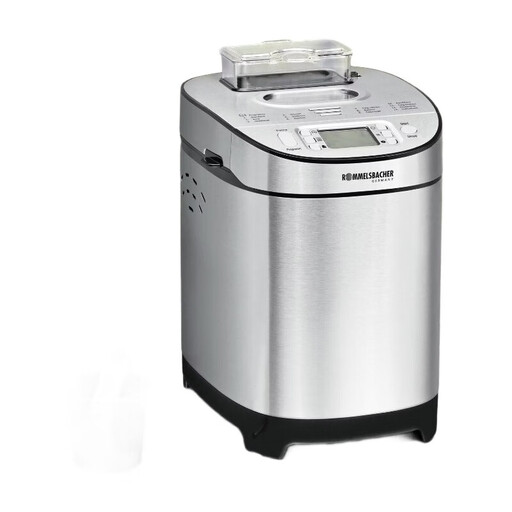 Image unavailable
Rommelsbacher BA 550 bread maker
An option if you usually bake larger loaves and occasionally want to try a smaller batch.
Standard sizes of 700 and 900 g; 13 programmes, including gluten-free; timer of up to 13 hours. Rommelsbacher says smaller batches are suitable only if there is enough dough for proper kneading.
View at Joybuy
Frequently asked questions
Can I simply halve a recipe for a large loaf?
Don’t assume so: check the smallest supported size and use a suitable recipe. Rommelsbacher says smaller batches in the BA 550 are suitable only if there is enough dough for proper kneading.
How should I plan the baking and cleaning around the gathering?
Choose a recipe and programme that suit the loaf size, and work backwards from serving time. Follow the cleaning instructions for your exact model; Inventum recommends hand-washing the BM55 to protect its non-stick coating.
Is a gluten-free programme enough for a guest with coeliac disease?
No. The Netherlands Nutrition Centre recommends checking the ingredients and guarding against cross-contamination; a machine programme alone doesn’t prove that the finished bread is gluten-free.


