
Baking one small loaf to share
You want to bake one modest loaf for a coffee morning, so the first thing to check is the smallest loaf size the manufacturer specifies for the model.


Choose based on the smallest loaf size specified by the manufacturer for the exact model: Panasonic Netherlands lists around 400 g for the SD-PN100, while Princess and DOMO Elektro specify a 500 g setting for the models mentioned. Also make sure the baking programme finishes well before serving, so you have time to remove the loaf from the tin and let it cool before slicing. A gluten-free programme alone does not make bread safe for someone with coeliac disease; the Netherlands Nutrition Centre also stresses the importance of preventing cross-contamination.
You want to bake one modest loaf for a coffee morning, so the first thing to check is the smallest loaf size the manufacturer specifies for the model.
You want to plan your baking in advance, while allowing time to remove the loaf from the tin, let it cool and slice it.
You compare different loaf sizes for gatherings with varying numbers of guests. If anyone has dietary requirements, you also check the ingredients and the risk of cross-contamination.
| What to consider | What should you check? | Who is this important for? |
|---|---|---|
| Smallest loaf size | Compare the smallest setting specified for the exact model with the amount you want to bake. Panasonic Netherlands lists around 400 g for the SD-PN100; Princess lists 500 g for the 152007, and DOMO Elektro lists 500 g for the B3971. | If I want to bake one modest loaf for a small group, I first check whether the machine can handle that portion. Around 31% of consumers prioritise the smallest loaf size. |
| Serving time | Check the timer and the duration of the chosen programme for the exact model. Panasonic Netherlands lists a timer of up to 13 hours for the SD-PN100; remember to allow time for the loaf to cool, too. | If you want to serve the loaf at a set time, you need to allow for baking, cooling and slicing. Around 25% of consumers give top priority to having it ready on time. |
| Varying quantities | Check which loaf weights the manufacturer specifies for the model. DOMO Elektro lists 500, 750 and 1000 g for the B3971; Inventum lists 650 and 800 g for the BM55. | If the number of guests varies from one gathering to another, having several specified loaf sizes can be useful. For one small loaf, a higher minimum size may be less suitable. Around 19% of consumers prioritise flexibility in loaf size. |
| Ingredients and dietary requirements | Check the ingredients and preparation method separately. A gluten-free programme does not automatically prevent cross-contamination from crumbs or equipment; the Netherlands Nutrition Centre explains that this matters for people with coeliac disease. | If a guest has a dietary requirement, I want to know in advance which ingredients will be used and how contact with other products will be avoided. Around 13% of consumers put dietary safety first. |
| Space and care | Check the dimensions of the exact model, the space needed to open the lid and the care instructions. | If you have limited worktop space or want to put the machine away after use, pay extra attention to the space it needs and how to clean it. Around 12% of consumers give these practical considerations top priority. |
The smallest loaf setting varies between models. A generous maximum capacity does not tell you whether the machine can also bake one small loaf.
Before buying, compare the smallest loaf setting for the exact model with the portion you need for your gathering.
A timer can help you plan when to bake, but after baking, the loaf still needs to be removed from the tin and cooled before you slice it.
Check the duration of the chosen programme and set it to finish before serving, leaving time for cooling and slicing.
Gluten can come into contact with the bread through ingredients, crumbs or equipment. A programme name alone does not mean that cross-contamination has been prevented.
Discuss dietary requirements in advance, check the ingredients and prevent contact with other products through the equipment and serving utensils you use.
The SD-PN100 is worth considering if a loaf of around 400 g is your main requirement.
The 152007 may suit you if a setting from 500 g is enough and you sometimes want to bake a larger loaf.
The B3971 is an option if you want a 500 g setting as well as larger loaf sizes.
The BM55 is worth considering if a loaf from 650 g upwards suits your gathering.
The BA 550 is more suited to a larger loaf than to the smallest possible portion.
With these bread makers, it is important to check the smallest loaf size for each exact model. Match the chosen setting and programme duration to the portion you need and your serving time.
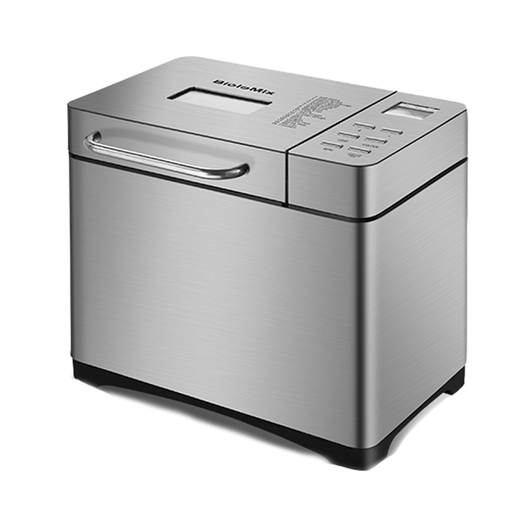 No image available
The 15-hour start timer can help you plan your baking in advance; remember to leave time for the loaf to cool, too.
The product name lists 17 menus, a fruit and nut dispenser and a 1-hour keep-warm function. Check the smallest loaf size for this model before planning a small portion.
 No image available
If you want to choose between different baking options, the product name lists 12 programmes; also check which loaf weight the chosen programme supports.
The product name lists a capacity of 1 L. Do not assume this is the same as a 1 kg loaf setting.
 No image available
The product name lists 20 programmes and a removable, non-stick baking tin. Check whether the smallest loaf size suits your portion.
The name mentions gluten-free options. This is no guarantee against cross-contamination; if a guest has coeliac disease, check the ingredients and preparation method separately.
 No image available
If you want to plan when to bake, check the timer settings and the duration of the chosen programme against your serving time.
The product name lists 12 programmes and a power rating of 610 W. This information does not tell you the smallest loaf weight the machine supports.
 No image available
If you want to bake a loaf for a larger group, check that the loaf size and programme duration suit your gathering.
The product name lists a power rating of 1600 W and a non-stick coating. Check the manual for the loaf weights supported by this model.
No. The weight of the flour is not the same as the stated loaf weight. Follow the recipe and settings in the manual for the exact model.
No, allow time to remove the loaf from the tin and leave it to cool on a wire rack before slicing. Include this in your plans, even if you are using a timer.
Not automatically. Check all the ingredients and prevent contact with gluten from crumbs, the baking tin, kneading paddle or serving equipment. The Netherlands Nutrition Centre warns that even a small amount of gluten can cause symptoms in someone with coeliac disease.
If bread is sold at a market or event, the Netherlands Food and Consumer Product Safety Authority (NVWA) says it must be prepared, stored and sold safely and hygienically, whether the seller is a business or a private individual. Rules on allergen information apply to unpackaged foods in settings including hospitality and catering. The information that is relevant depends on whether the bread is sold at your coffee morning or simply shared.
For a purchase by a consumer in the Netherlands, the legal guarantee is not limited to a fixed two-year period. ACM ConsuWijzer explains that the retailer is your point of contact if a product breaks down sooner than you could reasonably expect with normal use; the appropriate solution depends on the circumstances.