What should you consider when choosing?
First measure the space, then decide which cheese you’ll keep chilled and which portions you really want to freeze. This will help you choose between a low compact model with a small freezer compartment and a taller combination with more separate freezer space.
Compact model with freezer compartment
Best for: limited height and a small stock of cheese portions that are suitable for freezing.
Worth noting: the freezer compartment takes up space in a compact appliance, so check that its capacity suits your needs.
Narrow, taller fridge-freezer combination
Best for: limited floor width but enough height, and a need for more fridge and freezer space.
Worth noting: a taller appliance won’t fit everywhere; also check the depth, door swing and installation instructions for the exact model.
Larger combination
Best for: a stock that needs more freezer space, if there’s room for a wider and taller appliance.
Worth noting: extra capacity takes up more space and won’t necessarily be useful if you don’t use it.
| Consideration |
What should you check? |
Who is this important for? |
| Will the appliance fit? |
Measure the height, width and depth of the exact model. Also check the door swing and installation instructions. |
If my kitchen has limited space, I want to know whether the appliance will fit and whether the door can open properly. Around 36% of consumers prioritise fit. |
| Fridge temperature |
The Netherlands Nutrition Centre recommends 4 °C. Check the temperature with a fridge thermometer once the appliance is in place. |
If you mainly keep cheese chilled, you’ll want to be able to check the temperature and store portions neatly. Around 29% of consumers prioritise chilled storage. |
| Freezer space for cheese |
Decide which types of cheese and how many portions you’ll freeze. The Netherlands Nutrition Centre lists hard 40+ cheese and grated cheese as suitable options; soft cream cheese is less suitable for the freezer. |
If I want to freeze suitable portions of cheese, the freezer compartment needs to offer enough space. Around 21% of consumers choose mainly based on the freezer space they need. |
| Energy use and maintenance |
Compare the stated energy use in kWh per year for appliances with suitable capacity. Also check the defrosting method for the exact model; Milieu Centraal recommends taking annual energy use into account. |
Once the size and capacity are right, I also want to know how much energy the appliance uses each year and how much maintenance the freezer section needs. Around 14% of consumers prioritise energy use and maintenance. |
Fridge-freezers at Joybuy
This selection ranges from compact models with freezer compartments to taller fridge-freezer combinations. Compare the stated capacity and external dimensions with your cheese stock and the space available.
 No image available
Exquisit KS16-4-051CW under-counter fridge-freezer
A compact model with separate fridge and freezer space, ideal if you keep a small stock in the freezer.
107 l of fridge space and 13 l of freezer space; external dimensions 84,50 × 54,90 × 55,70 cm. Stated annual energy use: 87 kWh. Energy class C.
View at Joybuy
 No image available
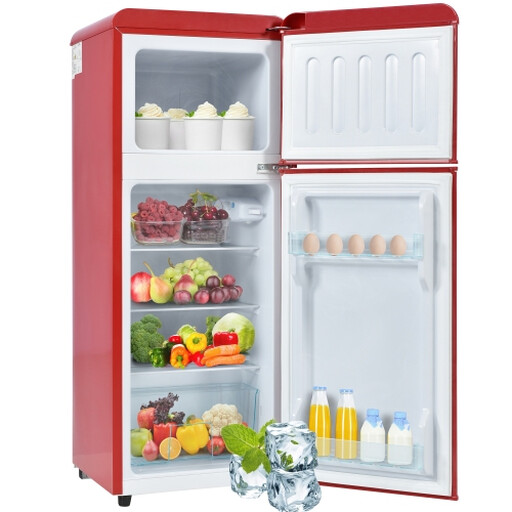
Retro mini fridge, 92 l, red
A compact fridge with a separate freezer compartment for anyone who wants to freeze portions as well as keep food chilled.
92 l total capacity: 64 l of fridge space and 28 l of freezer space. The freezer compartment is rated 4-star; the temperature can be adjusted using seven settings.
View at Joybuy
 No image available
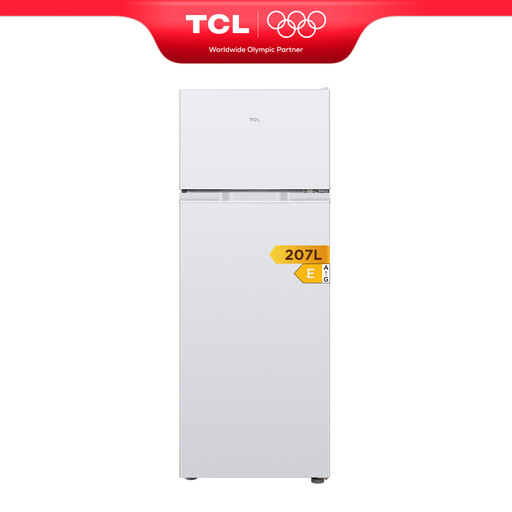
TCL RF207TWE1 fridge-freezer combination
A 55 cm-wide combination for anyone who wants to freeze suitable portions as well as keep cheese chilled.
167 l of fridge space and 40 l of freezer space. Features adjustable shelves and feet. Energy class E.
View at Joybuy
 No image available
CHiQ JR205LSE fridge-freezer combination
A narrow, taller combination with separate fridge and freezer space for anyone with room for a full-height model.
153 l of fridge space and 52 l of freezer space; dimensions 54 × 55 × 144 cm. Reversible door. Low Frost reduces ice build-up, but you may still need to defrost it occasionally. Energy class E.
View at Joybuy
 No image available
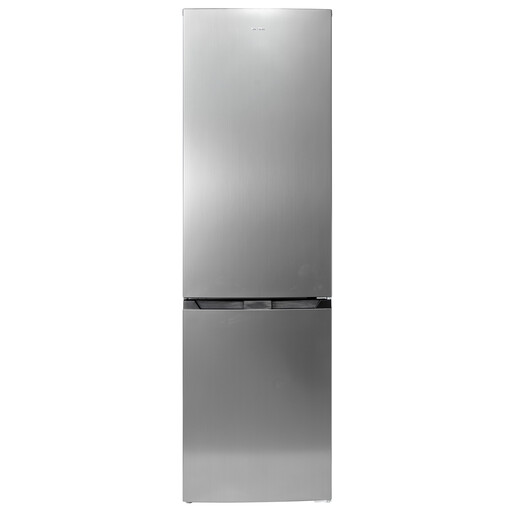
Salora CFC2530G freestanding fridge-freezer combination
A larger freestanding combination for anyone who needs more separate freezer space and has room for a tall appliance.
182 l of fridge space and 71 l of freezer space; external dimensions 545 × 610 × 1810 mm. No Frost is listed for both compartments and the door is reversible. Pay particular attention to the height and depth of the space available.
View at Joybuy
Frequently asked questions
Should I keep portions of cheese in the fridge or the freezer?
For sealed packaging, check the label first, and keep cheese chilled and covered. The Netherlands Nutrition Centre lists freezing as an option for opened hard 40+ cheese and grated cheese; soft cream cheese is less suitable for the freezer. So check the type of cheese before choosing how much freezer space you need.
How can I check that my fridge is cold enough once it’s in place?
Set your fridge to 4 °C, as recommended by the Netherlands Nutrition Centre, and check the actual temperature with a fridge thermometer. Place the thermometer in the middle of the bottom shelf, leave it there for half a day or overnight, and adjust the appliance if the reading is higher.
Can I simply put a freestanding compact model in an existing kitchen cupboard?
Don’t assume so: compare the installation instructions for the exact appliance with the space available. For an appliance designed to be built in, ETNA also highlights the niche dimensions and type of door fixing as important considerations.
What should I do if the appliance develops a fault?
For a faulty product, the seller is responsible for providing a product that works properly and is your point of contact for a solution, according to the Dutch Government. So contact the seller; the right solution will depend on the situation.
How do I compare energy labels for fridge-freezers?
Compare the current energy label and stated energy use in kWh per year for the exact model, alongside the fridge and freezer capacity you need. EU rules set requirements for energy labels and additional product information for appliances within their scope. Milieu Centraal points out that the current scale runs from A to G, so an old A+++ rating doesn’t indicate the same class.


