
Vandaag of morgen in huis

Kwaliteit gegarandeerd

Welkomstaanbiedingen ontgrendelen: GRATIS bezorging | Tot 80% korting | Gratis 30 dagen JoyPlus-proefperiode
Download de app
A compact kitchen seems convenient until an appliance is too large for the worktop, turns out to be difficult to clean or can do less than its product title suggests. When choosing small kitchen appliances, a good purchase is about more than just price or appearance. Capacity, energy use, safety and everyday practicality all determine whether an appliance is right for you.
That applies to students living in studio flats, people living alone, couples, small families and anyone looking for an extra appliance for the office, travelling or camping.
An electric cooking pot with several settings may be suitable for noodles, soup and steaming. That doesn’t automatically mean it’s also suitable for deep-frying or prolonged frying. Check which functions are actually listed in the product specifications and manual.
The same applies to a food processor or stand mixer. An appliance with a large bowl isn’t necessarily suitable for heavy dough. Check the maximum dough capacity, not just the bowl volume.
A 1.6-litre mini cooking pot is practical for one or two people, but less suitable for a family. A 20-litre microwave takes up little space, but check that your plates and dishes will fit inside. Also measure the clear space around the appliance: ventilation openings must not be blocked.
A non-stick coating can make cleaning easier, but you’ll need soft sponges and wooden or silicone utensils. A chopper’s sharp blades are efficient, but you’ll need to take care when dismantling it. An appliance with an automatic cleaning function saves you a few steps, but removable parts still need to be cleaned according to the manual.
Use these practical guidelines:
For a stand mixer, note the difference between bowl capacity and the maximum quantity of ingredients. According to the product information, the Bear Intelligent Dough Maker has a 5-litre bowl and a maximum dough capacity of 2.5 kg. Don’t exceed that limit, even if there still seems to be room in the bowl.
A higher wattage can mean faster heating or mixing, but it also affects energy use. Compare the wattage with the type of task:
Also check that the appliance is suitable for 220-240 V and has a Dutch plug. Listed safety features, such as boil-dry protection, automatic shut-off or overheating protection, are useful, but they’re no substitute for supervision while the appliance is in use.
Pay attention to the parts that come into contact with food. Stainless steel, glass and food-grade materials are often clearly listed in the specifications. With a non-stick coating, proper care matters more than the marketing claims.
Also check:
The following selection matches these points to different uses.
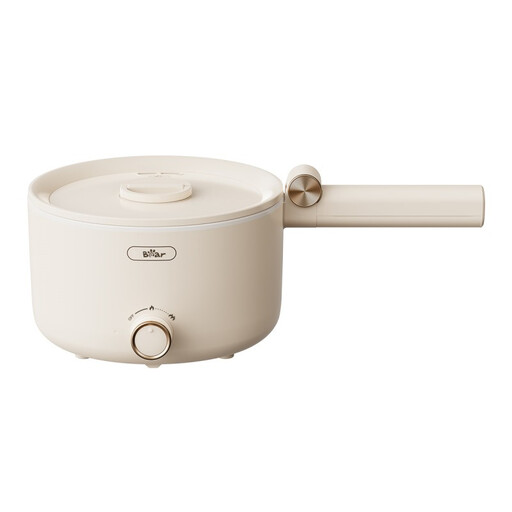
Why it suits this profile: The 1.6-litre capacity is designed for one or two people. According to the product description, the pot is intended for cooking, stewing and steaming, making it a good fit for simple meals in a small kitchen.
The capacity is clearly stated, so you won’t end up buying a large pot for small portions. Avoid metal utensils to protect the non-stick coating.
1.6 litres, 800-950 W, two power settings, boil-dry protection and a folding handle.

Why it suits this profile: This stand mixer has a 6-litre bowl and three attachments: a whisk, dough hook and beater. It’s a good choice if you regularly make bread, cakes, pizza or sauces.
The product information states a maximum running time of six minutes without a break. This means you can factor the load on the motor into your buying decision.
6 speeds plus pulse setting, metal gears according to the product description, tilt-head design and non-slip feet.

Why it suits this profile: If you make dough often, automatic kneading and resting functions can come in handy. According to the product description, the appliance is designed for 3 to 5 people and can handle up to 2.5 kg of dough.
The maximum dough capacity is clearly stated. Also bear in mind the recommended running time of 15-20 minutes, and allow the motor to cool down.
5-litre family capacity, touch controls, automatic kneading, a resting function and a metal housing.
We’ve put together a full, up-to-date list of products that meet these strict selection criteria and the applicable European safety requirements.
An appliance with a low purchase price can end up costing more if it uses a lot of electricity or is difficult to maintain. So consider its wattage, running time and how often you expect to use it. A 2,200 W kettle, for example, is only used for short periods, while an electric cooking pot may stay switched on for longer.
Follow these basic rules for every appliance:
A mini cooking pot, compact kettle, microwave, contact grill or small chopper takes up relatively little space. Choose a capacity of around 0.3 to 1.6 litres if you usually cook for one person. Check the accommodation’s rules on cooking and make sure there’s a suitable socket available.
Lifespan depends on how often you use the appliance, how you clean it, whether you overload it and how you store it. Don’t run a stand mixer for longer than its stated maximum time, don’t fill a pot or chopper above the marked level, and let the motor cool down between cycles. A clear manual and readily available replacement parts can also be important.
Energy use depends on wattage and running time. A 1,000 W appliance running for ten minutes uses less energy than the same appliance running for a long time. So compare not only the wattage, but also how long you use the appliance each time.
