
Raw vegetable prepper
You chop carrots in advance and want an organised place to store sealed portions. The Netherlands Nutrition Centre recommends keeping cut vegetables in the fridge and checking that the temperature is set to 4 °C.


Start with a fridge-freezer that fits your kitchen and has enough accessible fridge space for a sealed container of carrot sticks. The Netherlands Nutrition Centre recommends keeping cut vegetables sealed in the fridge and setting the temperature to 4 °C. Then compare the fridge and freezer capacities, annual energy consumption and the maintenance required for the exact model.
You chop carrots in advance and want an organised place to store sealed portions. The Netherlands Nutrition Centre recommends keeping cut vegetables in the fridge and checking that the temperature is set to 4 °C.
You want to keep food chilled and frozen, but the space available in your kitchen and the appliance layout will determine which model is right for you. The Consumers' Association highlights the choice between freestanding and built-in models as one factor to consider.
Alongside fresh snacks, you store frozen food and want to weigh up the freezer capacity and the defrosting needed. Manufacturer specifications for individual models show that these features vary from one model to another.
First, measure the space available and work out how much room you need for chilled groceries and frozen food. Then compare the annual energy consumption and defrosting technology of models that fit your space and preferred layout.
| Factor to consider | What should you look for? | Who is this important for? |
|---|---|---|
| Space for sealed containers | Check that a sealed container fits easily within reach in the fridge compartment and that you can check the temperature. | If I chop carrot sticks in advance, I want to be able to store them chilled in a sealed container. Around 33% of consumers put this first. |
| Size and fridge capacity | Measure the space or built-in opening and compare the fridge and freezer capacities separately. | In a small kitchen, the appliance needs to fit while still offering enough usable fridge space. Around 27% of consumers focus mainly on size and fridge layout. |
| Energy consumption | Compare the stated annual consumption in kWh of models with a suitable capacity. The EU label uses a scale from A to G. | If I choose an appliance that runs all the time, I want to take its annual energy consumption into account as well as its layout. Around 20% of consumers put energy consumption first. |
| Freezer space and maintenance | Compare the freezer capacity, the position of the freezer compartment and the defrosting technology of the exact model. | Anyone who also stores frozen food will want enough freezer space and to know how much defrosting is involved. Around 20% of consumers put frozen food storage and maintenance first. |
The Netherlands Nutrition Centre recommends keeping your fridge at 4 °C. A separate thermometer can help you check whether your fridge is at this temperature. Don’t rely on the temperature setting alone.
According to the European Commission, the EU energy label for household fridges and freezers has used a scale from A to G since 1 March 2021. Also compare annual consumption in kWh: the letter rating alone doesn’t show the absolute energy consumption.
The Netherlands Nutrition Centre’s Storage Guide treats whole raw carrots and pre-cut vegetables as different categories. For vegetables you’ve cut yourself, it recommends storing them sealed in the fridge.
Follow the advice for the way you’re storing the vegetables and check the actual temperature inside your fridge.
Having the right fridge and freezer capacities is still important, and annual consumption in kWh helps you compare models. A larger fridge may use more energy overall, even if it has a good energy rating.
For models that fit your space, compare the fridge and freezer capacities separately, as well as the annual consumption shown on the energy label.
Liebherr describes SmartFrost on the CUele 2831 as technology that reduces frost build-up. This doesn’t mean you’ll never need to defrost it.
Check the defrosting technology of the exact model and choose one that suits the level of maintenance you’re happy to do.
The freestanding Inventum KV1430 is a relatively low model with a top-mounted freezer. The manufacturer lists its dimensions as 143 cm high and 55 cm wide.
The freestanding Bosch KGN33NLEB has a bottom-mounted freezer and No Frost. It’s an option if you want to consider the freezer layout and maintenance.
The freestanding Beko RDSA240K40WN is 54 cm wide and has a top-mounted freezer.
The freestanding Liebherr CUele 2831 is 55 cm wide and features SmartFrost. The separate Liebherr ICBbi 5152 is a built-in model.
These models are for anyone looking for a place to store sealed containers of cut vegetables, as well as needing fridge and freezer space. Capacity and layout vary by model.
 No image available
A tabletop model to consider if you have limited space and mainly need fridge storage for everyday groceries.
109 l total capacity; C energy rating. Check that the individual fridge and freezer capacities suit the food you store.
 No image available
An option if you need more freezer space as well as room in the fridge, and are happy to defrost it manually.
260 l total capacity: 187 l of fridge space and 73 l of freezer space. The product name lists a width of 55 cm, a reversible door, adjustable feet and an E energy rating.
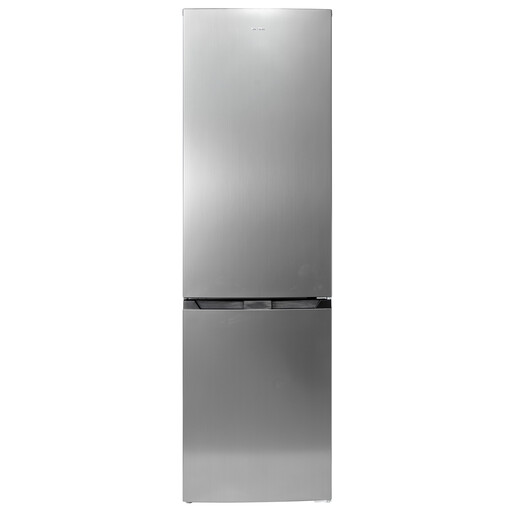 No image available
A freestanding model to compare if you’re looking for a fridge-freezer with Frost Free technology.
The product name lists a net capacity of 253 l, adjustable shelves, a reversible door and Frost Free. Check the individual fridge and freezer capacities and the external dimensions to make sure it suits your kitchen.
 No image available
A compact layout to consider if you want to combine fridge and freezer space and Low Frost suits your maintenance preferences.
205 l total capacity: 153 l of fridge space and 52 l of freezer space. The product name lists Low Frost, a reversible door and an E energy rating. Low Frost doesn’t eliminate the need for defrosting.
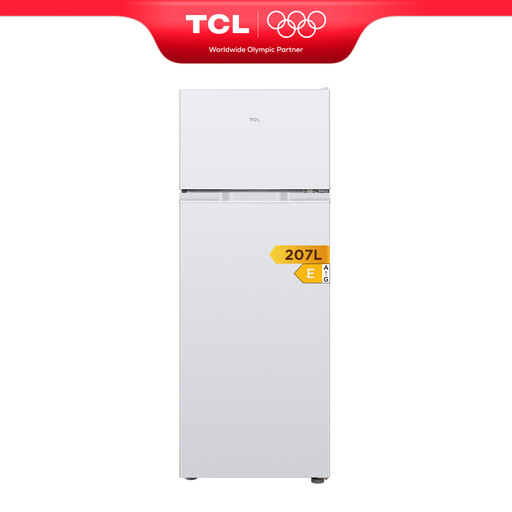 No image available
A model to compare if you’re looking for a fridge-freezer with a vegetable drawer and separate fridge and freezer compartments.
The product name lists a total capacity of 207 l, with 167 l of fridge space, 40 l of freezer space and an E energy rating.
Store vegetables you’ve cut yourself in a well-sealed container in the fridge. The Netherlands Nutrition Centre recommends a fridge temperature of 4 °C; check it with a separate thermometer if needed. Use the Storage Guide for the recommended storage time for cut vegetables, not for whole raw carrots.
Yes. According to the European Commission, the EU energy label for household fridges and freezers has used a scale from A to G since 1 March 2021. As well as the rating, compare the stated annual consumption in kWh.
No. Compare the niche dimensions and the required door installation with the specifications for the exact model. For example, the Liebherr ICBbi 5152 lists a niche height of 177,2–178,8 cm and door-on-door installation.
Yes. According to the Dutch Government, under the like-for-like take-back scheme, the shop must take back a similar old appliance. If you order online, ask how the take-back will be arranged.
No. The Dutch Government states that there is no fixed legal guarantee period in the Netherlands; what matters is what you can reasonably expect from the product. If an appliance is faulty, contact the seller, even if it also comes with a manufacturer’s guarantee.