First, choose a fridge compartment that suits your everyday shopping and lets you store wrapped cheese neatly at 4 °C. The Netherlands Nutrition Centre recommends this temperature and keeping cheese in closed packaging. A compact model takes up less space, while extra freezer space or No Frost is mainly worth considering if you regularly freeze suitable foods. Not every type of cheese is suitable for freezing, and the Consumers’ Association points out that No Frost can reduce freezer capacity and use more energy.
Who is this relevant to?
Small household that eats cheese every day
You want to keep opened cheese chilled, neatly stored in suitable packaging, and be able to check the fridge temperature. The Netherlands Nutrition Centre recommends keeping cheese in closed packaging and setting your fridge to 4 °C.
Someone with limited kitchen space
You’re looking for one appliance for chilling and occasional freezing. Compare the external dimensions and the separate fridge and freezer capacities before choosing a spot. Even a narrow appliance may be taller or deeper than the space available.
Household that regularly freezes food
You want to freeze suitable portions or other groceries as well as keeping cheese chilled. Freezer capacity, the defrosting system and energy consumption may all be factors; according to the Consumers’ Association, No Frost also has drawbacks.
What should you look for when choosing?
Start with the fridge capacity you need and the space available; then work out how much freezer space you’ll actually use before comparing ease of defrosting, energy consumption and noise levels.
| What to consider |
What to look for |
Who it matters most to |
| Keeping cheese chilled |
Check the temperature setting and whether wrapped portions fit neatly. The Netherlands Nutrition Centre recommends 4 °C and keeping cheese in closed packaging. |
If I want to store cheese portions in suitable packaging at the right temperature, the layout and temperature setting matter; around 33% of consumers say keeping cheese chilled is their main reason for buying. |
| Size and layout |
Measure the height, width and depth of the space, and compare fridge and freezer capacities separately. |
If my kitchen has limited space, I want an appliance that fits without taking up more room than necessary; around 27% of consumers say saving space is their main reason for buying. |
| Freezer space and defrosting |
Compare freezer capacity and Low Frost or No Frost. The Netherlands Nutrition Centre suggests freezing grated cheese, but soft cream cheese is less suitable. |
If I regularly freeze suitable portions or other groceries, usable freezer space matters; around 20% of consumers say regularly freezing food is their main reason for buying. |
| Energy use and noise |
For an appliance with the right capacity, compare the energy label, annual energy consumption and stated noise level. |
If the appliance is close to my living space, I want to weigh up energy use and noise; around 20% of consumers say energy use and noise are their main reasons for buying. |
Common pitfalls
-
Assuming a special drawer means you don’t need to store cheese properly
A drawer is no substitute for wrapping cheese in closed packaging or setting the fridge to the right temperature. The Netherlands Nutrition Centre recommends setting your fridge to 4 °C and keeping cheese in closed packaging.
Check the temperature after setting up your fridge, and make sure the shelf layout has room for your wrapped portions.
-
Choosing No Frost without weighing up the trade-offs
No Frost helps prevent ice build-up, but according to the Consumers’ Association it can reduce freezer capacity and use more energy. So compare the complete appliances, not just this feature.
Check the freezer capacity, energy label and stated noise level before you choose.
-
Measuring the width only
Height and depth also determine whether a fridge freezer will fit in the space you have in mind. Dimensions vary between models.
Measure the available height, width and depth, and check the installation instructions for the appliance you choose.
Brands to compare
The models listed have different dimensions, layouts and freezer features. Compare each model’s specifications with your own space and needs.
Inventum
Inventum’s freestanding KV1500S combines 115 litres of fridge space with 59 litres of freezer space.
- According to Inventum, the KV1500S has a D energy rating, a noise level of 38 dB and Low Frost.
- Low Frost isn’t the same as No Frost, and the freezer capacity may be limiting if you freeze a lot of food.
Beko
The freestanding Beko B3RCNO256W is 54 cm wide and 180 cm tall.
- Beko lists No Frost and a C energy rating for this model.
- It’s 57,6 cm deep, so check the height and depth of the available space as well as the width.
Bosch
The freestanding Bosch KGN33NLEB has 193 litres of fridge space and 89 litres of freezer space.
- Bosch lists No Frost and dimensions of 1760 × 600 × 660 mm for this model.
- According to Bosch, the model has an E energy rating and a noise level of 42 dB. Its capacity and dimensions are no guarantee of better cheese storage.
Liebherr
Liebherr offers freestanding and built-in fridge freezers, including models with BioFresh and No Frost.
- The manufacturer describes BioFresh as a freshness-preserving technology.
- This brand description doesn’t prove that cheese portions will keep for longer. Also check that the dimensions suit a compact kitchen.
Fridge freezers at Joybuy
These compact fridge freezers are for households that mainly need fridge space, along with a freezer compartment. Compare the capacity and dimensions with your own shopping and the space available.
 No image available
TCL RF338BSE0 fridge freezer
Suited to a small household that mainly needs fridge space, with some freezer space too.
260 litres in total: 187 litres of fridge space and 73 litres of freezer space; 55 cm wide; E energy rating.
Features Fresh Zone, a reversible door and adjustable feet. According to the product description, the freezer compartment needs to be defrosted manually.
View at Joybuy
 No image available
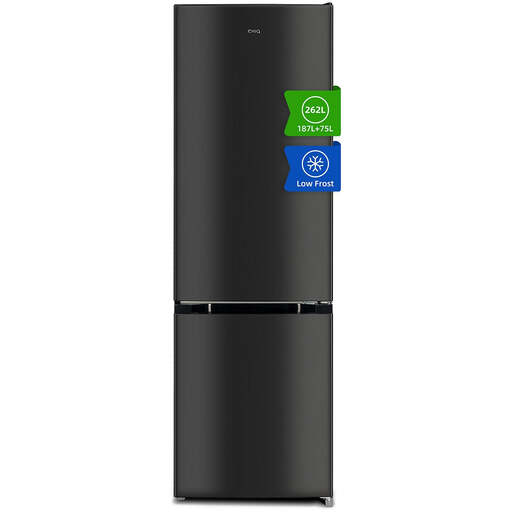
CHiQ FBM260L fridge freezer
An option for anyone looking for fridge and freezer space in one appliance.
262 litres of capacity; 39 dB; Low Frost; dimensions 55 × 54 × 176 cm.
Low Frost isn’t the same as No Frost. The product name states that the compressor has a 12-year warranty.
View at Joybuy
 No image available
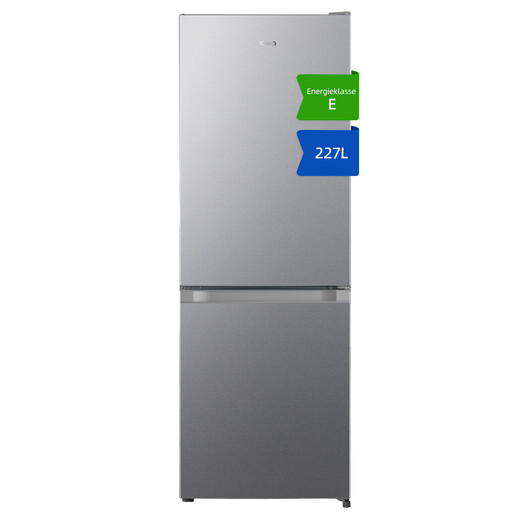
CHiQ JR227LSE fridge freezer
Suited to anyone comparing separate fridge and freezer space for a smaller kitchen.
153 litres of fridge space and 74 litres of freezer space; 54 cm wide and 55 cm deep; E energy rating.
Features Low Frost, a reversible door and adjustable feet. It is listed as Low Frost, not No Frost.
View at Joybuy
 No image available
CHiQ JR205LSE fridge freezer
An option to compare if you mainly need fridge space but also want a smaller freezer compartment.
153 litres of fridge space and 52 litres of freezer space; dimensions 540 × 550 × 1440 mm; E energy rating.
Features five fridge settings, Low Frost and a reversible door. It is listed as Low Frost, not No Frost.
View at Joybuy
 No image available
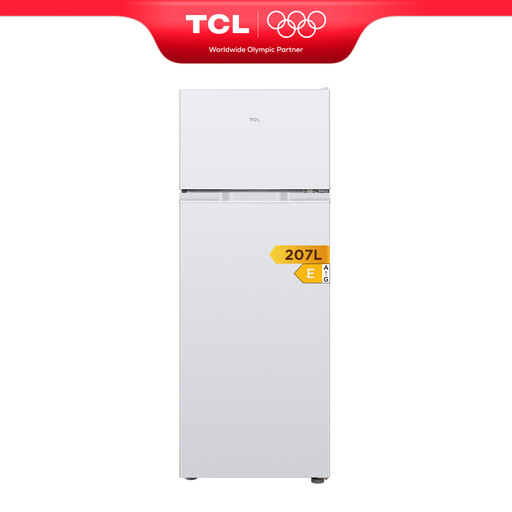
TCL RF207TWE1 fridge freezer
Suited to a small household that stores chilled cheese portions and needs a little freezer space.
167 litres of fridge space and 40 litres of freezer space; 55 cm wide; E energy rating.
The product name lists Power Cool & Freeze and adjustable shelves; the product description mentions a vegetable drawer.
View at Joybuy
Frequently asked questions
How can you check that your cheese is cold enough after setting up your fridge?
Set your fridge to 4 °C, as recommended by the Netherlands Nutrition Centre. Place a fridge thermometer in the middle of the bottom shelf and check it after the fridge has been closed for half a day or overnight.
Can you freeze all leftover portions of cheese?
No. Check the storage advice for each type of cheese. The Netherlands Nutrition Centre suggests freezing grated cheese to keep it for longer, but soft cream cheese is less suitable for the freezer.
How do you compare the energy consumption of fridge freezers?
Compare both the energy label and the stated annual energy consumption of models with a suitable capacity. According to the Dutch government, fridges must have an energy label; the label rating alone isn’t a substitute for comparing energy consumption.


