
Vandaag of morgen in huis

Kwaliteit gegarandeerd

Welkomstaanbiedingen ontgrendelen: GRATIS bezorging | Tot 80% korting | Gratis 30 dagen JoyPlus-proefperiode
Download de app
A small fridge may seem easy to choose until you realise that not every compact model is suitable for everyday use. A mini fridge can be ideal for drinks, while an under-counter fridge with a capacity of 88 or 126 litres may be a better fit for a student room, office or studio apartment.
Most disappointing purchases come down to three common pitfalls:
Read on to find out which specifications matter and which models suit different needs.
For a fridge in a student room or a one-person household, a capacity of around 43 to 68 litres may be enough for drinks, breakfast items and a few fresh groceries. A fridge with a capacity of 88 to 109 litres offers more room for everyday use, while a 126-litre model is a better choice if you want to store several days’ worth of shopping or need extra fridge space.
As well as the capacity, look out for:
A fridge with a freezer compartment is handy, but check its capacity and star rating. For example, the Salora CFB4300WH is described as having a small freezer compartment intended for temporarily storing frozen food, rather than freezing food from fresh. Knowing the difference helps you avoid unrealistic expectations.
Measure the space before you order. Check the width, depth and height, and leave room around the appliance too. Several product descriptions recommend leaving around 10 cm of clearance for ventilation. Don’t place a freestanding fridge right against a wall or in an enclosed cupboard without air circulation.
A fridge with a reversible door gives you more flexibility in a small kitchen. You can set the door to open in the direction that works best for your kitchen, office or bedroom layout. Check the manual to see whether you can reverse the door yourself and whether the appliance needs to be empty and switched off first.
An under-counter fridge is usually around 82 to 88 cm high. A 43-litre model is considerably shorter and can be placed on or beneath a suitable worktop, provided it is stable and properly ventilated.
Since the European energy label system was revised, fridges have been rated on a scale from A to G. So compare not only the letter rating, but also the stated annual energy consumption in kWh. This figure is more useful when comparing expected running costs.
Noise levels matter if you’re placing the fridge in a bedroom, studio apartment or open-plan office. The compact models in this selection have noise levels of around 39 to 41 dB. This is a product specification measured under defined conditions; the noise you hear may vary depending on the surface, placement and ambient temperature.
Check the climate class too. Some models are not designed for cold outbuildings. For example, the Salora CFB4300WH specifies a minimum ambient temperature of 10 °C. This may make it less suitable for an unheated shed than a model with a wider climate class.
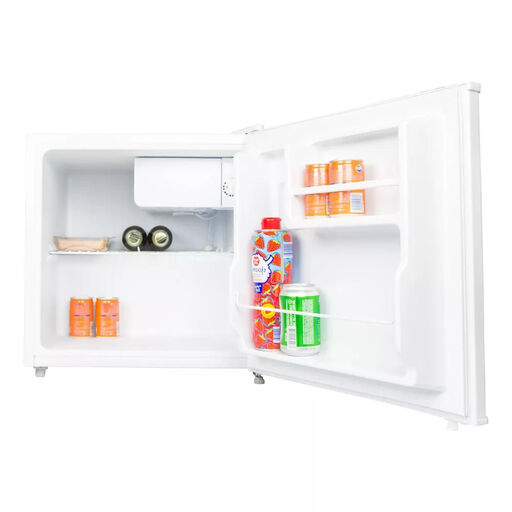
Why it suits this buyer: This compact mini fridge is ideal for drinks, snacks and a limited amount of fresh food in a student room, bedroom or minibar.
The product information makes it clear that the freezer compartment is mainly intended for temporary storage. That way, you know what to expect from this small compartment.
43-litre capacity, freestanding design, reversible door, metal shelf and a noise level of 41 dB.

Why it suits this buyer: This model combines a width of 47.4 cm with a well-organised interior, making it suitable for a small kitchen, office or hotel room.
The stated dimensions, E energy rating and annual consumption of 85 kWh make it easier to compare than relying on marketing terms alone.
92-litre capacity, 39 dB, seven temperature settings, adjustable glass shelves and a reversible door.
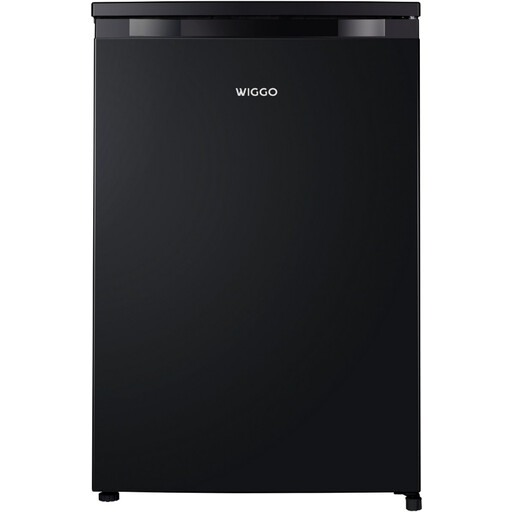
Why it suits this buyer: Its spacious layout makes it suitable for families, offices, holiday homes or households that need a second fridge.
The product specifications list the 126-litre fridge compartment and 17-litre freezer compartment separately. Ventilation clearance and placement are also clearly explained.
126 litres, 17-litre freezer compartment, D energy rating, 72 kWh per year, 39 dB and a reversible door.
We’ve put together a complete, up-to-date list of products that meet these strict selection criteria and the applicable European safety regulations.
43 litres may be enough for drinks or snacks alone. For everyday use by one person, 88 to 109 litres is often more practical. If you’re storing shopping for several people or need extra fridge space, consider a 126-litre model.
Yes, but check the stated noise level, ventilation requirements and ambient temperature. A model rated at around 39 to 41 dB may suit many people, but how loud it seems is subjective. Make sure the appliance is stable and don’t place it right next to the bed if you’re sensitive to the compressor switching on.
That depends on its annual consumption in kWh, your electricity tariff, the ambient temperature and how often you open the door. Use the energy label and stated annual consumption to compare models. A higher energy rating doesn’t automatically mean the appliance will cost less to run in every situation; its size and actual energy consumption matter too.
Lifespan varies depending on the model, how it’s used and how well it’s maintained. Make sure the fridge is level, keep the ventilation openings clear, clean the door seal and follow the defrosting instructions. Before buying, also check the warranty terms and your statutory rights.
