
Vandaag of morgen in huis

Kwaliteit gegarandeerd

Welkomstaanbiedingen ontgrendelen: GRATIS bezorging | Tot 80% korting | Gratis 30 dagen JoyPlus-proefperiode
Download de app
A small fridge seems like a simple purchase. It's perfect for a dorm room, a small apartment, or as extra cooling in the garage. Yet, in practice, the choice is often more difficult than it appears. Many models look fine at first glance but hide pitfalls that only become apparent after you buy them. Before you make a decision, it's wise to know what to look for to avoid buyer's remorse.
We often see buyers fall into three common traps:
To avoid these pitfalls, it's best to focus on a few objective specifications. These will determine if a compact fridge is truly the right fit for your needs.
The capacity of a counter-top fridge is expressed in litres, but its usability depends on the layout. Pay attention to the following points:
Always measure the available space accurately (height, width, depth) and account for the necessary ventilation space at the back and sides (usually 5-10 cm).
The noise level, expressed in decibels (dB), is crucial if the fridge will be placed in your living or sleeping area.
A difference of a few decibels might seem small, but the decibel scale is logarithmic. An increase of just 3 dB is a doubling of the sound intensity.
Since 2021, refrigerators have a new energy label ranging from A (very efficient) to G (very inefficient). An energy-efficient fridge with a better rating (e.g., C or D) might be slightly more expensive upfront, but it often pays for itself through a lower energy bill. Look at the estimated annual energy consumption in kilowatt-hours (kWh) on the label to make a fair comparison.
Based on these criteria, we have selected a few models that suit different user profiles.
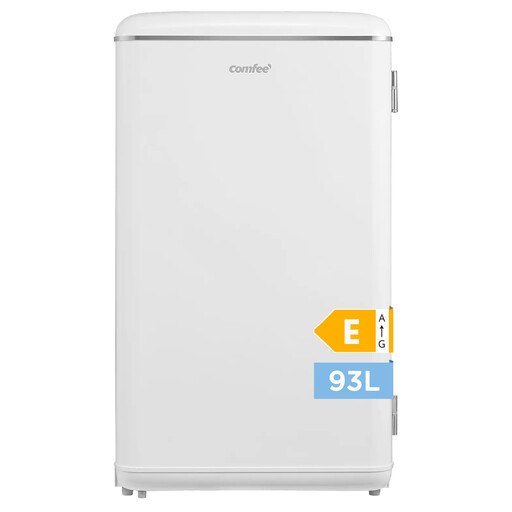
Why This Fits Their Persona: Perfect for a dorm room or studio where design matters. The retro aesthetic adds a fun touch to the interior, while its 93L capacity is sufficient for one person's groceries.
At 41 dB, it's relatively quiet for a living space. The removable shelves make the interior more flexible than many other models in this price range, allowing you to better utilise the capacity.
Stylish retro design: Adds character to any room.
Flexible layout: Removable shelves allow you to customise the space.
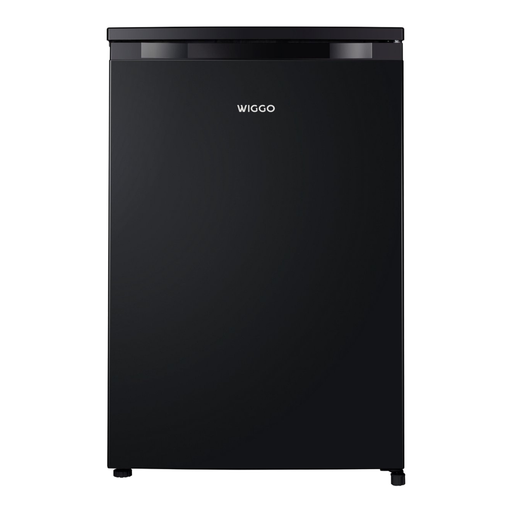
Why This Fits Their Persona: Ideal as a second fridge in the utility room, garage, or for a small household. It focuses on functionality, efficiency, and great value for money.
With an energy class of D and a noise level of 39 dB, this model tackles the two biggest pitfalls: high energy costs and noise pollution. It's a quiet and relatively energy-efficient fridge.
Energy-efficient (Class D): Saves money in the long run.
Quiet (39 dB): Suitable for placement near living areas.
4-star freezer: Can properly freeze and store products long-term.
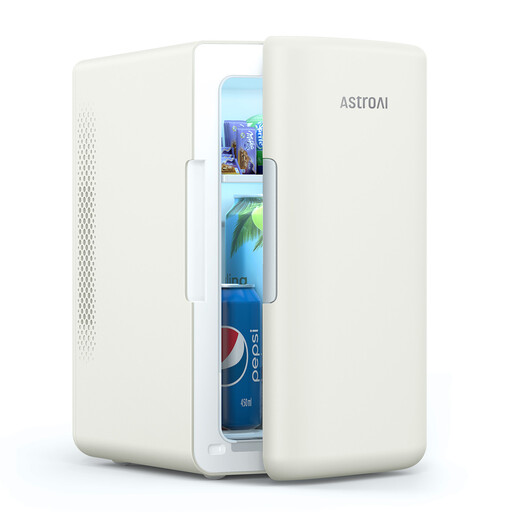
Why This Fits Their Persona: For those seeking an ultra-compact solution for the car, office, or for cooling skincare products. This isn't a traditional refrigerator, but a thermoelectric cooler.
This model is designed for a specific niche. It avoids the 'mismatched expectations' trap by being clear about what it is: a cooler (not a freezer) with a capacity meant for cans or small items, not for a week's worth of groceries.
Portable: Works on both AC (mains) and DC (car) power.
Cooling and warming function: Can cool to about 18-22°C below ambient temperature and heat up to 66°C.
Sometimes, you simply don't need a freezer compartment. We've compiled an up-to-date list of models that meet strict selection criteria and local regulations.
Power consumption depends heavily on the energy class. An energy-efficient fridge with a C or D rating typically uses between 70 and 110 kWh per year. An older or cheaper model with an F rating can use 150 kWh or more. This difference can add up to a significant amount on your annual energy bill.
For a bedroom, studio, or other quiet space, a noise level of 39 dB or lower is recommended. This is generally perceived as very quiet. Models around 41 dB are audible but not disruptive for most people. Above 42 dB, the risk of annoyance, especially at night, becomes significantly higher.
That depends entirely on your needs. If you only want to cool drinks and fresh produce, a fridge without a freezer is a better choice. You'll get more usable cooling space, and the appliance is often slightly more energy-efficient. If you regularly use frozen products like pizzas, ice cream, or bread, then a small fridge with a 4-star freezer is a practical solution. A simple 'chiller compartment' is not suitable for freezing products long-term.
