
Freezing bread when space is limited
You want to store bread in portions but have little room for an extra appliance. So measure the external dimensions and ventilation clearance before considering the capacity.


First, measure a space that will fit the freezer, including the required ventilation clearance. Then choose the layout and capacity based on the number of bread portions and any other frozen food you want to store. A slim table-top model may suit you if width is limited, while a model with more usable drawer space may be more convenient if you also want to store other groceries. The Voedingscentrum advises setting your freezer to −18 °C or colder when freezing food yourself; also compare the stated annual energy consumption.
You want to store bread in portions but have little room for an extra appliance. So measure the external dimensions and ventilation clearance before considering the capacity.
You freeze other groceries as well as bread and want to keep them accessible and separate. Check the layout and the usable dimensions of the compartments or drawers.
You want to weigh up the freezer space you need against the energy use of an appliance that runs constantly. To do this, compare the stated annual energy consumption of models that fit in the space available.
The Voedingscentrum advises freezing bread in portions as soon as you buy it. So measure the space first, then check the usable compartment space and stated annual energy consumption.
| What to consider | What to look for | Who is this most important for? |
|---|---|---|
| Will the freezer fit in the space? | Measure the width, height and depth, allow for the ventilation clearance specified in the manual, and check that the door can open fully. | If my kitchen has little spare space, I want to know whether the appliance will fit with the ventilation clearance included. Around 36% of consumers prioritise the space available. |
| Room for bread portions | Compare the internal dimensions of the drawers or compartments with your wrapped portions; the capacity in litres alone won’t tell you whether a pack will fit. | I want to store slices separately and find them easily. Around 29% of consumers prioritise bread portions and a practical layout. |
| Energy consumption | Compare the stated annual consumption in kWh of models that fit, and calculate the cost using your own electricity tariff. | If the freezer runs constantly, I want to take its annual energy use into account. Around 21% of consumers prioritise extra energy costs. |
| Noise and maintenance | Check the stated noise level, cooling system and maintenance instructions for the exact model. | If the freezer is near my living area, I want to know in advance what noise and maintenance to expect. Around 14% of consumers prioritise noise and maintenance. |
A freezer may still not fit properly in the intended space if there isn’t enough room for ventilation. For example, the Inventum VR550 manual specifies 10 cm of clearance all around.
Measure the space, including the clearance specified in the manual for the exact model.
According to the Voedingscentrum, one- and two-star compartments do not reach the recommended temperature of −18 °C.
Before choosing, check the star rating and whether the appliance can be set to −18 °C or colder.
The total capacity won’t tell you whether your bread portions will fit in a drawer. An energy label won’t tell you how much usable space you’ll get, either.
Compare the internal dimensions with your portions, and also check the stated annual energy consumption of models that fit in the space available.
According to Tomado, the Tomado TFT4702W is a freestanding table-top model with a 60-litre capacity and three freezer compartments.
According to Inventum, the Inventum VR550 has an 88-litre capacity and three transparent drawers for bread and other frozen food.
According to Beko’s product specifications, the freestanding Beko FS166020 is a 65-litre table-top model measuring 47.5 cm wide.
According to the product specification sheet, the ETNA VV856WIT is a freestanding table-top model with an 85-litre capacity and three drawers.
Joybuy picks for storing bread portions in the space available, from compact models to freezers with more room for your groceries.
 No image available
An option to consider if you’re looking for a table-top model to store bread portions alongside other frozen food; measure the space and check the ventilation clearance first.
No Frost; energy class D.
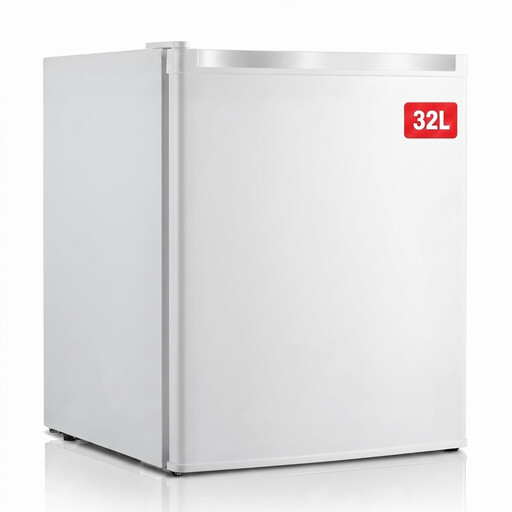 No image available
A compact option to consider if you’re short on space and want to store small quantities; check whether 32 litres is enough for your portions.
32 litres; seven temperature settings; reversible door; stated noise level 43 dB.
 No image available
A model to consider if you want to store other frozen food alongside bread; check that the external dimensions will fit in the space available.
87 litres; energy label B.
 No image available
A chest freezer to consider if you want to store bread alongside other frozen food; also measure the space needed to open the lid.
95 litres; energy label E; seven-setting thermostat; removable basket.
 No image available
A freestanding model to consider if its external dimensions suit the space available; check the ventilation clearance for your chosen position.
60 litres; reversible door.
Yes. The Voedingscentrum advises freezing bread in portions as soon as you buy it and taking out only what you need each day. Storing it for a long time can make the bread drier.
The Voedingscentrum advises a temperature of −18 °C or colder for freezing food. According to the Voedingscentrum, a one- or two-star compartment cannot reach this temperature.
Don’t assume it can without checking the model’s manual. For example, the Inventum VR550 manual specifies 10 cm of clearance all around; for another model, check its own installation instructions.
For an annual estimate, multiply the stated energy consumption in kWh per year by your own price per kWh. Milieu Centraal advises taking energy consumption into account when choosing; actual consumption also depends on use and positioning.
Yes. According to the NVWA, manufacturers and suppliers must provide an energy label for electrical household appliances, and retailers must display it clearly. This labelling requirement does not in itself prove that every individual listing meets all the requirements.