
Voice-over artist with a studio microphone
You regularly record documentary scripts and want to position an XLR microphone separately from the recorder. Zoom and Tascam list XLR/TRS connections on the H4essential and DR-40XP respectively.


Choose a recorder with XLR inputs if you use a separate studio microphone or may want to connect one later. For a straightforward solo recording, a compact recorder with built-in microphones may be enough. Reflections and background noise can affect recordings in a small booth, and a higher recording bit depth won’t fix acoustic problems. Also check your microphone’s connection and power requirements, and whether you can listen back during or after recording.
You regularly record documentary scripts and want to position an XLR microphone separately from the recorder. Zoom and Tascam list XLR/TRS connections on the H4essential and DR-40XP respectively.
You want to record one voice without a separate microphone, and can position the recorder carefully and monitor with headphones. Zoom lists built-in microphones for the H1essential, while OM SYSTEM lists them for the LS-P5.
You combine voice-over with other sound sources or computer and film production work, so separate tracks and additional features may be useful. Sound Devices lists production features of this kind for the MixPre-3 II.
Choose this if: you’re recording one voice, don’t need a separate XLR microphone and can position the recorder well.
Trade-off: the position of the microphone is determined by the recorder as a whole, so check a test recording in your booth.
Choose this if: you use a separate microphone or want to position the microphone independently of the recorder.
Trade-off: a separate microphone and cable make your setup more involved. Also check whether your microphone needs phantom power.
First decide how you’ll connect and position the microphone. Then consider the controls, monitoring and tracks or connections your editing workflow actually requires.
| What to consider | What to look for | Who it matters to |
|---|---|---|
| Microphone connection | Check the input, whether phantom power is available and the preamp requirements of your specific microphone. | If you want to connect an existing or future XLR studio microphone, make sure the recorder and microphone are compatible. Around 36% of consumers give this connection top priority. |
| Booth sound and positioning | Make a test recording in your intended position and listen back for reflections, ventilation noise and plosives. | If you’re recording in a small booth, listen to how the room and microphone position affect your voice before recording the full script. Around 29% of consumers prioritise checking their booth recording. |
| Simple solo recording | Check the controls, mounting options, headphone output and storage available on the exact model. | For one voice-over artist without a separate microphone, an all-in-one setup can reduce the number of components. Around 21% of consumers make simplicity their top priority. |
| Tracks and workflow | Check how many sources you’ll record at once and which computer, file or synchronisation features you need. | If you work with multiple sound sources or a separate editing and film workflow, separate tracks and suitable connections may matter. Around 14% of consumers give this workflow top priority. |
The recording format won’t change the reflections and background noise picked up by the microphone. Shure explains why microphone placement matters when recording speech in a room.
Make a short test recording in the booth where you’ll be working, and adjust the microphone position if necessary before recording the full script.
Having to redo a recording can mean extra time spent on retakes or adjusting your recording space.
Features vary by model. Zoom lists two XLR/TRS inputs with phantom power for the H4essential, and Tascam lists the same for the DR-40XP. Don’t assume another model has these connections.
Compare your specific microphone’s connection and power requirements with the specifications of the recorder you’re considering.
The practical value of production features depends on the number of sources and your editing workflow. The features of the Sound Devices MixPre-3 II aren’t automatically necessary for a single voice-over artist.
Decide in advance how many separate tracks you’ll use and which computer or synchronisation connections you actually need.
The H1essential offers a compact option with built-in microphones, while the H4essential adds two XLR/TRS inputs and four tracks.
The DR-40XP combines built-in adjustable microphones with inputs for external sources.
The LS-P5 is a compact standalone recorder with built-in microphones and internal memory.
The MixPre-3 II is designed for a more advanced voice-over and film sound setup.
These Joybuy picks are digital voice recorders for spoken recordings. Check each model’s microphone setup, connections, playback options and file workflow to make sure they suit your documentary voice-over.
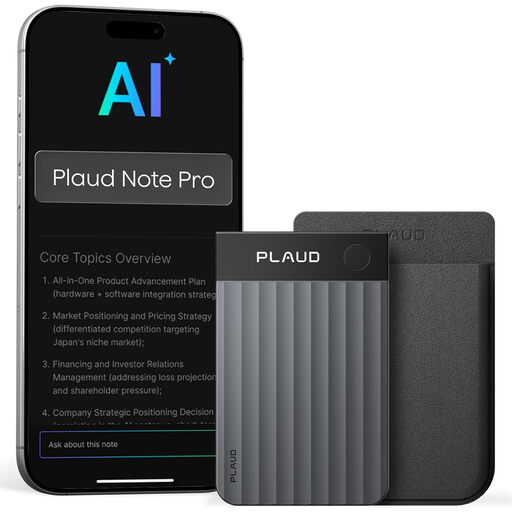 No image available
The product title mentions recording for notes and summaries. Check whether you can listen back to and use the original audio in your voice-over workflow.
 No image available
The title mentions a transcription function. For documentary recording, also check that the microphone you want to use and your preferred playback method suit your setup.
Storage listed in the product title: 64 GB.
 No image available
The title mentions transcription and summarisation. Check that the audio recording and playback options suit the way you record and edit.
Storage and details listed in the title: 64 GB and 118 languages.
 No image available
The title describes a portable digital voice recorder. Check that the microphone positioning, connections and file output are suitable for your booth and editing workflow.
Storage listed in the product title: 128 GB.
 No image available
The product title mentions one-touch operation. For voice-over, check that you can use the recorder with your preferred microphone and headphones.
Storage listed in the product title: 64 GB.
No, not if you’re using built-in microphones and can position the recorder well. If you use a separate XLR microphone, check that the recorder has the right input and, if needed, phantom power.
Make a short test recording from the planned microphone position and listen back for reflections and background noise. Shure explains that a microphone can’t distinguish unwanted reverberation from direct speech. If necessary, try a different position before recording the full script.
Check whether you need a microphone, cable, headphones, power supply or memory card. Which items are suitable depends on your recorder and the equipment you already use.
This partly depends on the content and the people featured in the recording. You may need usage rights for other people’s copyright-protected text, music or films. If you publish personal data about other identifiable people, consider which GDPR lawful basis applies; consent is one possible basis.