
Presenter recording in a noisy booth
You record bulletins in a small booth where ventilation, equipment or reflections are still audible. Pay attention to speaking distance, microphone direction and the space available to position it correctly.


If you can hear ventilation or reflections, a dynamic microphone used close to you is a practical option. In a quiet, acoustically controlled booth, a cardioid condenser microphone may also be suitable. Choose USB for a direct computer setup, or check that your equipment provides the power and gain required for an XLR model. Neither type removes background noise on its own.
You record bulletins in a small booth where ventilation, equipment or reflections are still audible. Pay attention to speaking distance, microphone direction and the space available to position it correctly.
You want a straightforward recording setup and need to decide whether USB is enough or whether to connect your microphone to an existing XLR mixer.
You can control the acoustics and microphone placement, and want to assess your voice recordings carefully without assuming from the outset that a condenser microphone is the better choice.
Suitable when: you can still hear ventilation noise or reflections and can keep to a fixed speaking position.
Bear in mind: distance and pop protection still matter. For voice-over work with the SM7B, Shure recommends a preamp with at least 60 dB of gain.
Suitable when: you can keep the booth quiet and control the microphone placement.
Bear in mind: with an XLR model, check that your recording setup provides the required power. The Audio-Technica AT2020 XLR requires 48 V phantom power.
| What to consider | What should you check? | Who is this important for? |
|---|---|---|
| Booth noise and reflections | Make a test recording with the ventilation on. Consider the polar pattern, speaking distance and available space for positioning. | If I can hear ventilation or reflections, I first want to know whether my speaking position and the microphone direction suit the booth. Around 33% of consumers say booth noise is their main concern when buying. |
| Connection to your recording setup | Check the USB connection and computer compatibility, or the XLR input and the model-specific power and gain requirements. | If I want to record directly to a computer or use my existing mixer, the connection needs to work with my equipment. Around 27% of consumers prioritise compatibility with their recording setup. |
| Consistent, clear voice recordings | Check the pop protection, mounting and monitoring. Listen to a test recording from your usual speaking distance. | When recording a series of bulletins, I want to be able to position the microphone the same way each time and listen back to my recording. Around 27% of consumers prioritise repeatable voice recordings. |
| Complete recording setup | Compare what’s included with the version you’ve chosen against the cables, interface, power supply and mount you already have. | If I need a complete working setup, I want to know which parts I already own and which I still need. Around 13% of consumers say a complete setup is their main concern when buying. |
A microphone won’t automatically remove unwanted sounds. RØDE warns that sitting too far from the microphone can make your voice sound more distant and reverberant, while making background noise more noticeable.
Make a test recording in your usual booth setup, with the ventilation on.
The XLR version of the AT2020 requires 48 V phantom power. For voice-over work with the SM7B, Shure recommends a preamp with at least 60 dB of gain; this requirement does not automatically apply to every dynamic microphone.
Check that your existing interface or mixer meets the requirements of the exact model you’ve chosen.
The XLR AT2020 and the AT2020-USB differ in their connection and recording setup.
Check the full model name and connection type of the version you’re considering.
The SM7B and MV7+ represent different dynamic microphone options for close-talk recording and computer or XLR setups.
According to RØDE, the NT1 5th Generation and PodMic USB offer different microphone types with USB and XLR connection options.
The AT2020 is a cardioid condenser microphone with an XLR connection, for use with a compatible recording setup.
This selection includes wireless microphones for interviews and recording, as well as USB microphones for computer use. Check that the connection and version suit the way you record news bulletins.
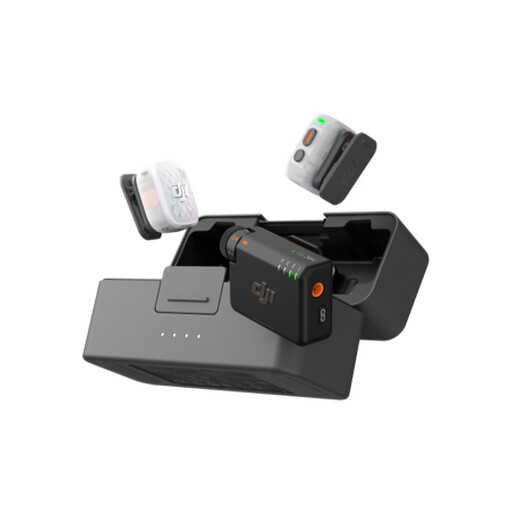 No image available
Most relevant if you also record interviews with multiple speakers, as well as bulletins.
According to the product name, the set includes 2 TX, 1 RX and a Charging Case.
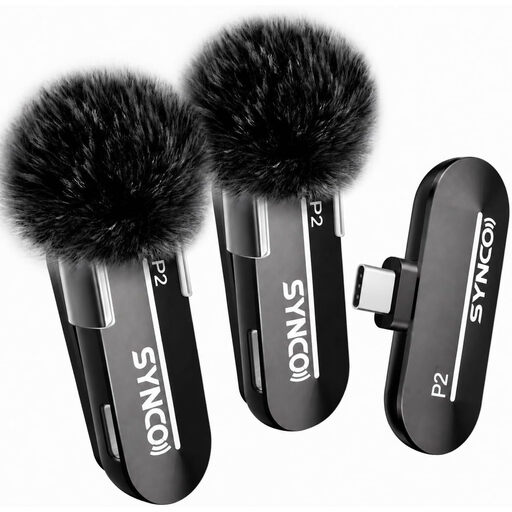 No image available
The USB-C receiver and monitoring are useful if you want to listen in while recording interviews or other speech.
The product description lists Android devices with Type-C and OTG enabled as a compatible option.
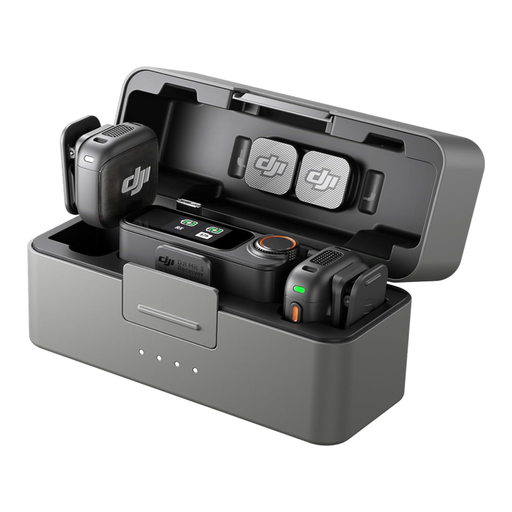 No image available
May be useful if you also make recordings or broadcasts using multiple microphones.
The product name lists 2 TX, 1 RX and a Charging Case; the description mentions a Type-C interface.
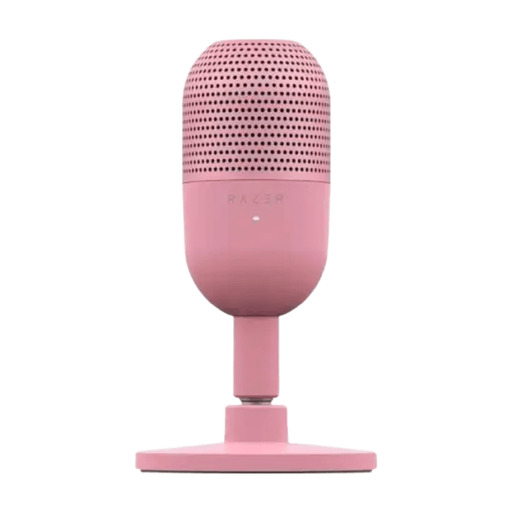 No image available
A USB microphone for recording speech on a computer. Check that the stated compatibility suits your recording equipment.
The product description lists a supercardioid polar pattern and compatibility with PC and Mac.
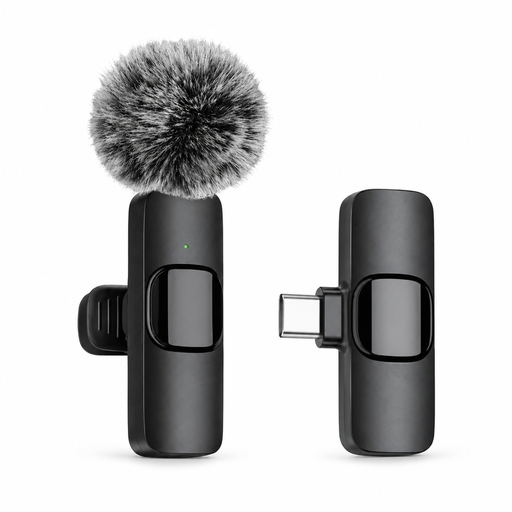 No image available
According to the product description, it is designed for uses including recording, interviews and broadcasting.
The product name lists a Type-C interface; check that it works with your equipment.
No. Acoustics, microphone placement and your recording setup all play a part. Speaking close to a dynamic microphone can be practical when you can hear noise in the room; a condenser microphone may suit a quiet, controlled booth. Neither type removes background noise on its own.
Make a test recording from your usual speaking position and use a pop filter if needed. A shock mount can reduce vibrations travelling through the microphone mount; check what protection is included with your chosen model.
Check that your chosen version, existing equipment and required connections will work together as a complete recording setup. Depending on the model, consider the cable, mount, audio interface, phantom power and preamp gain required.
According to ACM ConsuWijzer, when you buy as a consumer, you have a statutory guarantee in addition to any seller’s or manufacturer’s warranty. If a product breaks during normal use sooner than you could reasonably expect, the seller must offer an appropriate solution; there is no single statutory guarantee period that applies to every microphone.
This depends on how you use identifiable personal data and on the circumstances of the processing. The Dutch Data Protection Authority describes consent as one possible legal basis under the GDPR, not automatically the only one. You should also consider whether a journalistic exemption may apply.