
Home blender user with limited worktop space
You make peach lassi in a small kitchen and want to know where the blender will fit, both when in use and when stored away. Compare the dimensions of the whole appliance, not just the cup.


For peach lassi in a small kitchen, choose a blender based on its capacity, the size of the whole appliance and how you clean its parts. A jug with a lid can prevent spills when pouring; a rechargeable model is especially useful if you want to blend without a socket, but it may have a smaller cup. The Consumentenbond highlights that wattage alone doesn’t tell you everything about blending results.
You make peach lassi in a small kitchen and want to know where the blender will fit, both when in use and when stored away. Compare the dimensions of the whole appliance, not just the cup.
You often make one lassi and want a suitably sized cup that’s easy to clean. A travel lid can be useful if you’d rather not pour the drink into another container.
You want to blend away from your usual spot and are happy to accept a potentially smaller cup and the need to charge the appliance.
Choose this if: you pour your lassi at home and a compact set-up is important. Philips describes the HR2510/90 as compact.
Bear in mind: you’ll need to pour the drink into another container if you want to take it with you; check that the whole appliance will fit in your kitchen.
Choose this if: you like to drink your lassi straight from the blending cup. The stated capacity varies by model: according to nutribullet, the nutribullet Original NB603DG has a 700 ml cup, while the Bosch VitaPower MMB2111S has a 0,6 l cup.
Bear in mind: these models need a socket; also check the lid and cleaning instructions for the exact set.
Choose this if: blending without a socket matters more to you than having a larger cup.
Bear in mind: Tefal lists a 300 ml cup for the Lightmix BL1C04; you’ll need to charge the appliance and check whether the capacity is suitable for peach and yoghurt.
| What to consider | What to look for | Who is this most important for? |
|---|---|---|
| Space and storage | Compare the height, width and depth of the whole appliance with the available space on your worktop and in your cupboard. | If I have limited worktop space, I want to know whether the blender will fit without having to store loose parts somewhere else; around 36% of consumers prioritise the space an appliance takes up and how it can be stored. |
| Portion size and smooth blending | Check the capacity and any maximum fill mark for the exact model. Don’t judge how smooth the result will be on wattage alone; the Consumentenbond also assesses smoothie results. | I want to blend the right amount of peach and yoghurt in one go, so I look at both portion size and texture; around 29% of consumers give highest priority to suitable portions and smooth blending. |
| Cleaning | Check which parts can be removed for each model and which ones the manufacturer says are dishwasher-safe. | After making a lassi, I don’t want to have to guess which parts are safe to clean; around 21% of consumers prioritise ease of cleaning. |
| Blending without a socket | Distinguish between a cup you can take with you after blending and a blender that can blend without being plugged in. Check the capacity and how it is charged. | If I want to blend somewhere without a socket, I’m happy to charge the appliance in return for the possibility of a smaller cup; around 14% of consumers prioritise blending without a socket. |
Motor power on its own doesn’t tell you how smoothly a particular model will blend peach and yoghurt.
Compare the portion size you need and, if available, independent blending results for the exact model.
A cup can be handy for taking your lassi with you, but a mains-powered blender still needs a socket while blending.
Decide whether you only want to take the drink with you or also want to blend without a socket. For the latter, check the battery and charging method.
The stated capacity doesn’t automatically tell you how much peach and yoghurt you can blend at once according to the instructions.
Check the fill mark and the instructions for the exact model before planning a larger portion.
Philips offers, among other models, the compact 3000 Series Mini HR2510/90 with a jug and the Blend & Go HR2670/01 with a drinking cup.
The Original NB603DG is designed for small portions prepared in the blending cup supplied with it.
The VitaPower Serie 2 MMB2111S is a mains-powered mini blender with a blending cup for single servings.
The Lightmix BL1C04 is a rechargeable blender with a 300 ml cup.
This selection includes small blenders with a jug, a blending cup or a rechargeable design, for making an individual smoothie portion.
 No image available
This mini blender suits anyone who makes peach lassi at home and pours it from the jug afterwards.
Capacity: 0,6 l. Power: 350 W.
 No image available
The glass jug makes this a good option for blending and pouring an individual portion at home.
Capacity: 500 ml. Power: 250 W. Jug: glass.
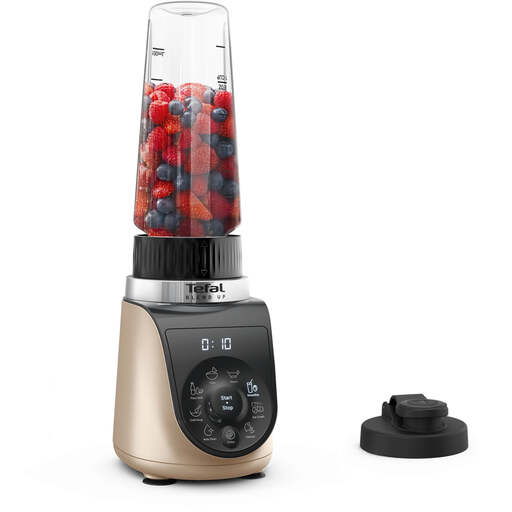 No image available
This model is described as a personal smoothie blender; check the capacity and cleaning instructions for this version before deciding on portion size.
 No image available
This rechargeable model is designed for anyone who wants to use a personal smoothie blender without being tied to a socket.
Capacity: 475 ml. Rechargeable via USB-C. The battery must be charged for cordless blending.
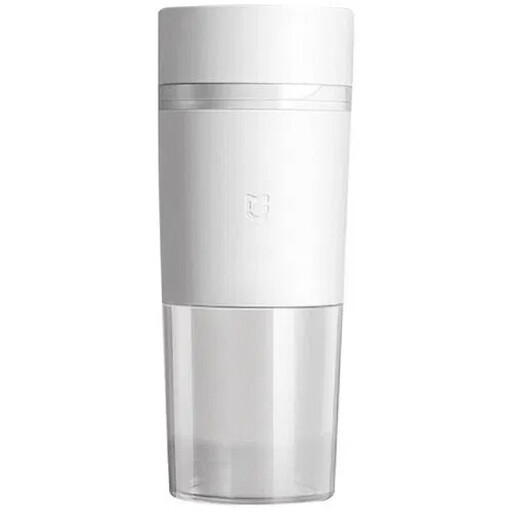 No image available
The product name identifies this as a portable blender. Check the capacity and the instructions for use and charging to see whether it suits your portion of peach lassi.
No, wattage alone doesn’t predict how smooth your lassi will be. The Consumentenbond also assesses blenders on how well they make smoothies; check too whether the cup is large enough for the amount you need.
Don’t assume so. Philips lists dishwasher-safe parts for the HR2510/90; Tefal says the cup of the Lightmix BL1C04 is dishwasher-safe. For other parts, follow the cleaning instructions for your exact model.
Put any lassi you’re not drinking straight away in the fridge as soon as possible. The Voedingscentrum advises not leaving perishable foods, including dairy products, out of the fridge for more than 2 hours.
ACM ConsuWijzer explains the statutory cooling-off period for online purchases; check which time limit and exceptions apply to your purchase. If a product is faulty, the seller may need to offer an appropriate solution when it has been used normally, such as a repair, replacement or refund.
The Rijksoverheid states that electronic appliances placed on the market in the EU must have a CE mark. Check the product marking and safety information; a CE mark doesn’t tell you how smoothly the blender will blend your lassi.