
For cooks who blend in the pan
You cook a small amount of soup on the hob and want to blend it without transferring it to another container.


If you’re already cooking your carrots in a pan and want to keep washing-up to a minimum, a stick blender is an obvious choice: you can blend the soup right in the pan. A jug blender is a better fit if you also want to blend other ingredients in a lidded jug, but check first that the specific model is suitable for hot soup. A soup maker heats and blends automatically; for small batches, check that your quantity falls between the MIN and MAX markings.
You cook a small amount of soup on the hob and want to blend it without transferring it to another container.
You also want to blend other liquid ingredients, and check whether each model’s jug is suitable for hot contents.
You want to leave the heating and blending to a programme, provided your portion falls within the fill markings.
| What to consider | What to look for | Who is this important for? |
|---|---|---|
| Portion size | Compare your usual quantity with the MIN and MAX markings on the specific model. | I don’t want to make more soup than I need, so I look at the minimum fill level. Around 34% of consumers say portion size is their main consideration. |
| Hot soup | Check the instructions for hot contents for the specific model; guidance for one model doesn’t automatically apply to another. | I want to blend cooked soup without using the jug incorrectly. Around 33% of consumers are most concerned with blending hot soup. |
| Blending and cleaning | Check whether the blending foot is detachable and which parts the manual says can be cleaned. | I want a smooth soup without cleaning up after a small pan becoming an unnecessary chore. Around 20% of consumers prioritise blending and cleaning. |
| Automatic cooking | Check whether the appliance heats the soup itself and whether your portion fits between the fill markings. | I want one appliance to take care of the heating and blending. Around 13% of consumers give automatic cooking the highest priority. |
Philips lists a 1.2-litre jug for the SoupMaker HR2204/80R1, but the liquid level must stay above MIN and below MAX. So the total capacity alone doesn’t tell you whether a small portion will fall within the fill range.
Before buying, compare the markings on the specific model with the amount of soup you usually make.
Otherwise, you may have to make more soup than you had planned.
Suitability for hot contents varies by model. For the Philips models HR2512/90, HR2511/90 and HR2510/90, Philips says ingredients must first be cooled to below 60 °C; this guidance doesn’t automatically apply to other blenders.
Read the hot-content instructions for the specific model before pouring cooked soup into the jug.
Using a jug in a way that goes against the model-specific instructions could cause damage.
Blending and heating are separate functions. Philips and Tefal describe heating soup programmes for specific models; that doesn’t mean every jug blender can heat soup too.
If you’re specifically looking for an appliance that heats soup, check that the model you choose does this itself.
Without a heating function, you’ll still need to cook the soup separately.
MultiQuick stick blenders are designed for blending in the pan; the MQ50201M is one specific model to compare.
The ErgoMixx MSM66110 is a stick blender with a detachable metal blending foot.
The Viva SoupMaker HR2204/80R1 is for anyone who wants automatic cooking and whose portion fits within the fill markings.
The Perfectmix Cook BL83SD30 is a heated jug blender for hot and cold recipes.
These products are aimed at blending soup: mainly stick blenders to use with a separate pan, plus a jug blender for anyone who wants to make other recipes too.
 No image available
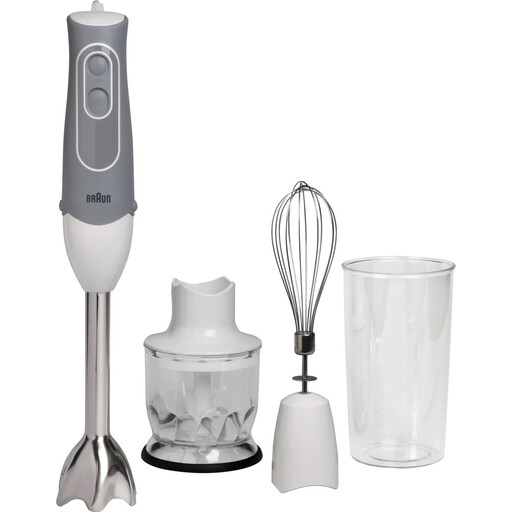
A set for anyone who wants to blend soup and use the included accessories for other tasks. The product instructions say to blend hot ingredients in a heat-resistant bowl and in small batches.
 No image available
A stick blender for anyone who wants to blend soup in the pan. The product name lists 220V, 600W and two speeds; check the model-specific instructions before using it with hot food.
 No image available
A stick blender option for anyone who wants to blend a small portion. Check which parts are included with this version and follow the instructions for using it with soup.
 No image available
The product name describes a stick blender with a whisk and accessories for blending and chopping. According to the user instructions, continuous use is limited to 1 minute, followed by a 1-minute rest.
 No image available
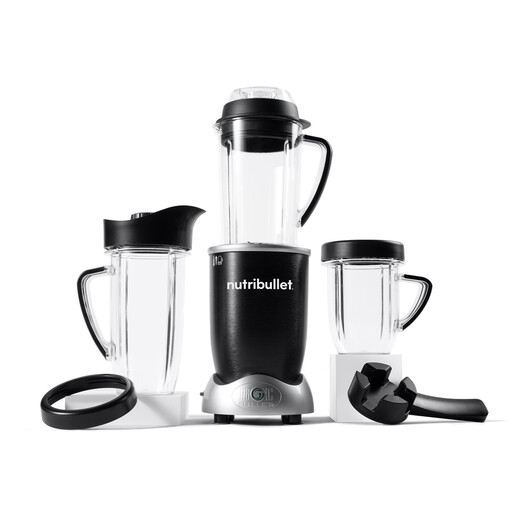
A jug blender option for anyone who wants to make both soup and cold recipes. The product information mentions a vented lid for hot ingredients; follow the instructions for the jug and lid when using hot contents.
No. Check the instructions for the specific model. Philips says that, for the HR2512/90, HR2511/90 and HR2510/90, ingredients must first be cooled to below 60 °C; this limit doesn’t automatically apply to all blenders.
With the Philips HR2204/80R1, the liquid must stay above MIN and below MAX. Compare the markings on your model with the amount you want to make, and stay within the stated fill range.
Check the manual to see which parts can be detached and cleaned. The Consumentenbond says a detachable stick blender foot is easier to clean; this doesn’t mean you should immerse the motor unit.
According to ACM ConsuWijzer, statutory guarantee rights may apply alongside any commercial guarantee. If a product doesn’t meet the expectations you’re entitled to have of it, the seller must resolve the issue free of charge in line with the applicable conditions, for example by repairing or replacing it. This doesn’t mean every blender has a fixed guarantee period.
Voedingscentrum advises putting leftovers in the fridge or freezer within two hours. You can keep them in the fridge for up to two days; freeze them if you want to store them for longer.