
Cooking for one or two
You don’t want to make more soup than you need. Check the minimum fill level for the exact model: Philips says the liquid level must sit between the MIN and MAX markings.


A soup maker that heats and blends is handy if you want to cook and purée leek and potato in one appliance. However, only choose one if your portion falls between the MIN and MAX markings for that exact model. If you want to make smaller quantities, or you already cook the vegetables in a pan, a pan and hand blender may be more practical. A standard blender will purée the ingredients, but it won’t cook them for you.
You don’t want to make more soup than you need. Check the minimum fill level for the exact model: Philips says the liquid level must sit between the MIN and MAX markings.
You want to add the ingredients and leave the cooking and blending to a programme. Compare the soup settings and the preparation instructions, not just the power rating.
You prefer to cook the vegetables yourself and mainly need something to purée them. A standard blender mixes and purées; check separately whether its jug is suitable for hot soup.
Choose this if: your portion fits within the fill markings and you want the appliance to cook and blend automatically.
Bear in mind: a small portion may fall below the minimum fill level; programmes and permitted ingredients vary by model.
Choose this if: you want to control the quantity in the pan yourself, or already use a pan to cook leek and potato.
Bear in mind: you’ll need to keep an eye on the cooking yourself and will generally use two appliances; check that the hand blender is suitable for hot soup.
Choose this if: the ingredients are already cooked and you mainly need something to purée the soup.
Bear in mind: a standard blender won’t cook the vegetables; check whether the jug can handle hot soup and whether the model can heat ingredients itself.
| What to consider | What should you check? | Who is this important for? |
|---|---|---|
| Small portions | Compare the total quantity of ingredients and liquid with the MIN and MAX markings in the manual for the exact model. | If I’m making one or two portions, I don’t want to prepare more soup than I need, and the quantity must fall within the fill limits. Around 39% of consumers prioritise portion size. |
| Automatic cooking and blending | Check whether the model has a programme for smooth or chunky hot soup, and what preparation it requires. | If I’d rather let one appliance cook and blend the chopped leek and potato, I look for a suitable soup setting. Around 23% of consumers prioritise automatic cooking. |
| Texture and cleaning | Check the soup settings, cleaning instructions and how easy it is to reach the base and blades. | If I want smooth soup and easy cleaning afterwards, I consider both the cooking setting and the maintenance requirements. Around 23% of consumers prioritise texture and cleaning. |
| Appliances you already own | Check what your pan, hand blender or blender jug can handle according to its own manual, especially when it comes to hot soup. | If I already have a pan or blender, I want to know whether it’s suitable for the way I cook before choosing another appliance. Around 15% of consumers prioritise making use of appliances they already own. |
The stated capacity tells you how much the jug can hold; it doesn’t automatically tell you the smallest quantity the appliance can handle. For the SoupMaker models mentioned, Philips requires the liquid level to sit between MIN and MAX.
Before planning a small recipe, check the minimum and maximum fill levels for the exact model.
A standard blender is designed to mix and purée; only some soup blenders can heat ingredients too.
Check whether the specific appliance actually heats ingredients and whether its jug is suitable for hot contents.
Cleaning requirements vary by model. Moulinex lists a cleaning programme for the Easy Soup LM841810; for the DO727BL, DOMO includes a cleaning brush and specifies that the blades are not removable.
Read the cleaning instructions for the model you’re considering.
The manufacturer describes the DO727BL My Soup Express as a heated soup maker with a 1.2-litre jug.
The Dutch product page describes the refurbished Viva SoupMaker HR2204/80R1 as having a 1.2-litre jug.
The Belgian manufacturer’s page describes the Easy Soup LM841810 as having a 1.2-litre jug.
The manufacturer describes the 214001 Soup Maker XL as a heated soup maker with a 1.6-litre jug.
These products suit two ways of making small batches of leek and potato soup: using a heated soup maker or a pan and hand blender.
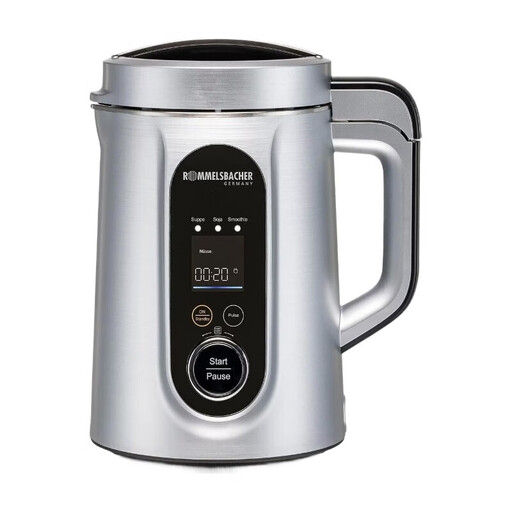 No image available
Suitable if you want the appliance to heat and blend your soup automatically.
The inner container and its contents get hot during and after use; take care to avoid burns.
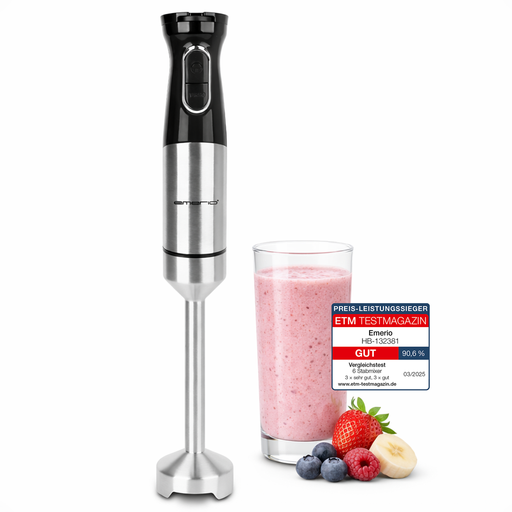 No image available
Suitable if you cook the vegetables in a pan and want to purée the soup with a hand blender afterwards.
The product name lists variable speed and a black and stainless steel finish.
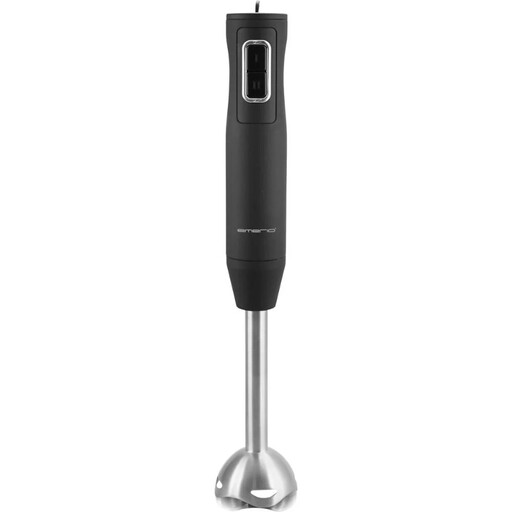 No image available
Suitable if you cook the vegetables separately and want to purée the soup afterwards.
 No image available
Suitable if you cook soup in a pan and want to purée it afterwards.
The product name lists a maximum of 1200W, a 700ml mixing beaker and a 500ml chopper. Don’t use the blender for more than 1 minute at a time, and let it rest for 1 minute afterwards.
 No image available
Suitable if you cook soup in a pan and want to use a hand blender to purée it afterwards.
The product name lists 800W and a stainless steel finish with variable speed.
Only if the smaller quantity falls within the fill limits for your model. For models including the HR2204/80R1, Philips requires the liquid level to sit between MIN and MAX; also check the instructions for the other ingredients.
For the SoupMaker models mentioned, Philips recommends cutting the ingredients into smaller pieces, fully defrosting them and staying within the fill markings. Only use a manual blending programme if your model has one; this isn’t a guarantee for every recipe or appliance.
Cool the soup quickly and put it in a sealed container in the fridge or freezer within two hours. According to the Voedingscentrum, leftovers can be kept covered in the fridge for up to two days.
Under the statutory guarantee, the retailer must provide a solution. The Rijksoverheid states that there is no fixed statutory guarantee period in the Netherlands; what you can expect depends, among other things, on the product and the information you were given with it.
The NVWA classifies kitchen appliances as electrical equipment subject to statutory safety requirements and states that CE marking is compulsory for electrical products. Check the marking and product information for the appliance being offered; a CE logo is not an independent safety test.