
If you make one smoothie
You want to make a small portion without getting out or washing up a large blender. The Consumers’ Association considers small blending cups suitable for making small quantities of smoothies.


If you usually make one small banana smoothie, start by looking at a mini blender with a suitably sized jug, or a smoothie blender that lets you blend straight into a drinking cup. A hand blender can also work well for small portions, while a standard blender may be more practical if you regularly make larger quantities. Also compare how easy each option is to clean, and check the instructions if you want to use frozen fruit.
You want to make a small portion without getting out or washing up a large blender. The Consumers’ Association considers small blending cups suitable for making small quantities of smoothies.
You’re mainly interested in which parts can be removed and how to clean them after use. Philips, nutribullet and Tefal describe different cleaning options for each model.
You want to blend in a cup and take it with you afterwards. The cup’s capacity and the lid supplied with it are key; the Consumers’ Association describes this use for smoothie blenders with a small blending cup.
Best for: making a small smoothie at home in a separate jug.
Bear in mind: a small jug limits how much you can make at once, so check its usable capacity.
Best for: blending straight into a cup and taking your smoothie with you.
Bear in mind: the cup’s capacity isn’t necessarily the recommended filling quantity; also check which lid comes with the pack.
Best for: blending small portions in a suitable tall cup, and potentially for other blending tasks too.
Bear in mind: the Consumers’ Association notes that results may sometimes be less smooth and hard ingredients can be more challenging.
Best for: anyone who regularly makes several portions or other liquid blends as well as a smoothie for themselves.
Bear in mind: a larger jug can take up more space and create more washing-up if you only make small portions.
Start with the portion size and how you want to drink your smoothie, then consider how easy it is to clean and whether you’ll be adding other ingredients.
| What to consider | What should you check? | Who should pay particular attention? |
|---|---|---|
| Suitable portion size | Compare the cup’s capacity with your usual portion and check the stated maximum fill level. | If I’m making one smoothie, I don’t want to use an awkwardly large jug. Around 36% of consumers prioritise a cup that’s suitable for one small portion. |
| Less washing-up | Check which parts can be removed for each model and which the manufacturer says are dishwasher-safe. | If you make smoothies regularly, you’ll want to know how many parts need cleaning after use. Around 29% of consumers put easy cleaning first. |
| Taking it with you | Check whether the blending cup is designed to be used as a drinking cup and whether the right lid is included with that version. | If I want to drink my smoothie on the go, I don’t want to have to pour it into another cup first. Around 21% of consumers prioritise blending in a cup they can take with them. |
| Other ingredients | Check the instructions for permitted ingredients and quantities, especially when using frozen fruit. | If you want to use frozen or harder ingredients as well as banana, follow the instructions for the specific model. Around 14% of consumers are mainly looking for these extra capabilities. |
Capacity and accessories vary by version. For example, Bosch lists a 0.6 l blending and to-go cup for the MMB2111S; nutribullet lists a 700 ml cup and a 500 ml cup for the NB606DG. These details apply to those specific models and aren’t recommended filling quantities for every smoothie.
The stated power rating on its own won’t tell you how well a particular model will make your smoothie. The Consumers’ Association recommends considering how blenders perform in use too.
First compare the portion size, the ingredients you want to use and how easy the blender is to clean. If blending performance is a priority, look for a test of the exact model you’re considering.
The nutribullet NB603DG and NB606DG are different packs. According to nutribullet, the NB603DG comes with a 700 ml cup, while the NB606DG also includes a 500 ml cup.
Before buying, check the full model number and what’s in the box. Otherwise, you may find an extra cup or lid is missing and need to buy it separately later.
The Consumers’ Association points out that a large blender can be less practical for small portions, partly because it takes up more space and creates more washing-up.
Compare a small jug, a blending and drinking cup, and a hand blender based on the portion size you usually make.
The HR2510/90 is a compact mini blender with a jug, designed for making smoothies at home.
The Original 600 models NB603DG and NB606DG are personal blenders; compare what’s included in each pack.
According to Bosch, the VitaPower Serie 2 MMB2111S comes with a 0.6 l to-go cup.
The compact Blend Up BL19H4F0 is available with programmes and two bottles for taking your drink with you.
These product picks are suited to small smoothies, from compact blenders with a jug to models with a cup you can take with you and a hand blender.
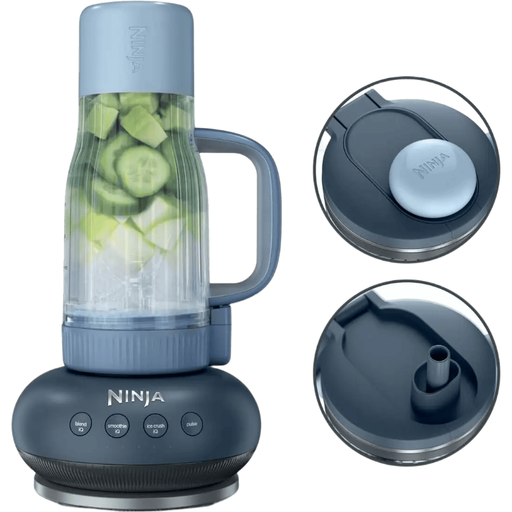 No image available
An option to consider if you want to blend straight into a travel cup and take your smoothie with you.
The product description lists a 710 ml cup, three automatic settings and removable, dishwasher-safe parts.
 No image available
A compact jug is a good fit if you make a small smoothie at home and want to clean the parts in the dishwasher afterwards.
The product title lists a capacity of 0.6 l and a power rating of 350 W; the product description mentions removable, dishwasher-safe parts.
 No image available
Worth considering if you want to make a small smoothie and use the cup as a drinking cup too.
The product title lists 250 W and 500 ml. The product description mentions a replaceable drinking lid and removable, dishwasher-safe parts.
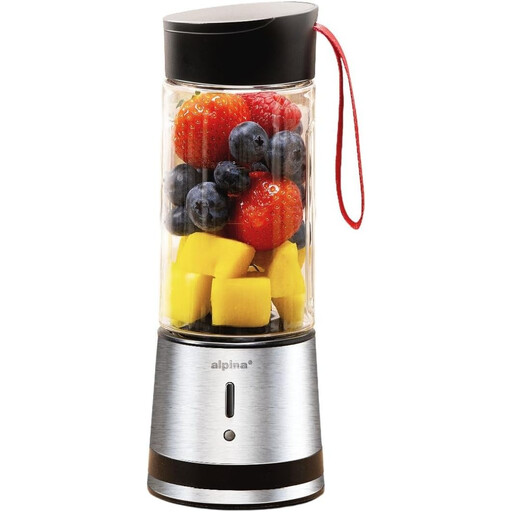 No image available
A portable option to consider if you want to make a small smoothie and take the cup with you.
The product title lists a capacity of 300 ml, 125 W and a battery capacity of 1500 mAh. The product description mentions rechargeable operation and a cup that doubles as a drinking cup.
 No image available
A hand blender may suit small portions in a suitable cup; the Consumers’ Association notes that results may sometimes be less smooth.
The product title lists two speeds and a 500 ml chopper bowl. The product description mentions an 800 ml blending cup and removable attachments.
Yes, a hand blender can work well for small portions in a suitable cup. The Consumers’ Association notes that the result may sometimes be less smooth than with a blender.
It varies by model. Philips lists dishwasher-safe parts for the HR2510/90; for the NB606DG, nutribullet says the cups can go on the top rack and the blade should be cleaned with soap and water. Follow the instructions for the version you choose.
Check the instructions for the specific model. Bosch mentions frozen fruit for the MMB2111S; this manufacturer’s statement doesn’t automatically apply to other blenders.
Keep perishable smoothies chilled and take the ingredients into account. The Nutrition Centre recommends a fridge temperature of 4 °C and gives a storage time of 1–2 days for an opened fruit smoothie and 3–7 days for an opened smoothie containing fruit and dairy. These timeframes don’t necessarily apply to every homemade recipe.