
Vandaag of morgen in huis

Kwaliteit gegarandeerd

Welkomstaanbiedingen ontgrendelen: GRATIS bezorging | Tot 80% korting | Gratis 30 dagen JoyPlus-proefperiode
Download de app
A slow juicer can be a handy way to enjoy fresh fruit and vegetable juice every day, but product pages sometimes use terms that promise more than the specifications support. Families in particular can run into three problems: a juice jug that’s too small, a feed chute that means everything has to be chopped first, and parts that are difficult to clean after use.
A slow juicer, centrifugal juicer, cold press juicer and electric juicer aren’t always clearly distinguished either. If you only look at the power rating or an attractive product photo, you could end up buying a machine that doesn’t suit the way you’ll use it.
An XL feed chute sounds practical, but always check the exact diameter. A wide opening can cut down on preparation time, but a small juice jug may still mean you have to stop frequently to pour out the juice.
Check the combination of:
A large chamber isn’t the same as a large collection jug. These two measurements are sometimes confused.
A 150W slow juicer uses a rotating auger instead of a fast-spinning blade. The lower power rating may be enough for many fruits and soft vegetables, but hard or fibrous ingredients need a suitable feeding method.
Also check whether:
According to WOOX product information, the MX0289 can be used continuously for up to ten minutes, followed by a 20-minute rest period. This is worth bearing in mind if you’re making juice for several people one after another.
A machine with several filters, an auger and narrow channels may take more effort to clean than you expect. Check in advance which parts can be removed and whether they can be washed with warm water and a soft brush.
Also look for:
The motor base must not be submerged in water. The same applies to the cord and plug.
A juice jug of around 600 ml may be enough for one person. Families will benefit more from a large pulp container and a chamber with greater capacity. A slow juicer with a large juice jug means you won’t have to keep stopping during a single juicing session.
Do check the maximum marking on the jug. The WOOX MX0289 is listed with a 726 ml jug and a maximum marking of 600 ml. Use the stated marking as a practical guide.
A quiet slow juicer is more pleasant in an open-plan kitchen or at breakfast, but check the measured noise level rather than relying on words such as “quiet”. The WOOX MX0289 has a stated noise level of less than 72 dB. Your experience may vary depending on the ingredients, the surface and how the machine is positioned.
Place the juicer on a flat, stable worktop and make sure loose parts don’t vibrate against one another.
A BPA-free slow juicer may be worth considering if you want to limit contact with certain plastics. Check whether BPA-free applies to all parts that come into contact with food or only to specific components.
Also look for clear European product information, a suitable voltage of 220–240 V and safety instructions about moving parts. Certification and material claims should be supported by information from the brand or seller. Don’t automatically treat marketing claims as an independent guarantee.
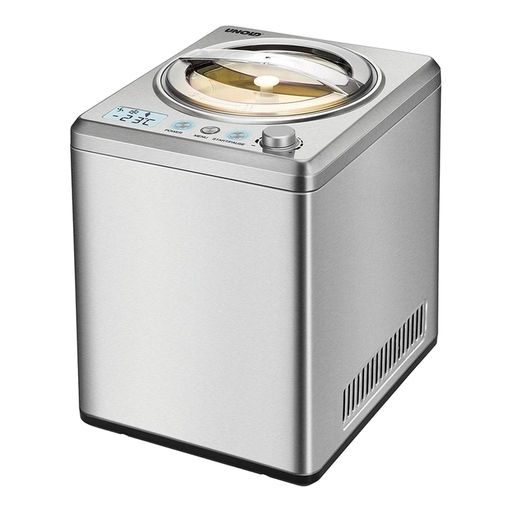
Why it suits this type of buyer: The product title appeals to anyone looking for a 150W model, but check the current specifications carefully before ordering. The description provided is about an ice cream maker, not a juicer.
This listing shows exactly why you should check the title, photos and technical description together. Confirm that it is a juicer, and check the accessories and juice capacity before buying.
The title states 150W and easy cleaning. The different product description is an important point to check, not confirmation of how the machine works.

Why it suits this type of buyer: This model combines a 150W motor, a 1.8-litre chamber, a 130 mm XL feed chute and motor overheat protection.
The capacity measurements and maximum operating time are stated, making it easier to judge what the machine can handle than if the listing only used a marketing term such as “family size”.
A 600 ml marking on the juice jug, an 836 ml pulp container, removable parts listed as dishwasher-safe and a noise level of less than 72 dB according to the manufacturer.
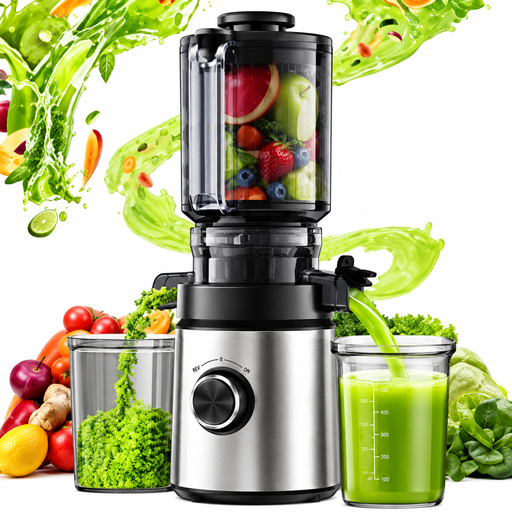
Why it suits this type of buyer: The stated 2-litre capacity and 130 mm feed chute make this a good option for households that want to prepare several portions of fruit and vegetable juice.
The listing gives both the total capacity and the diameter of the XL opening. Before ordering, check the details on cleaning, operating time and materials.
2-litre capacity, 130 mm XL feed chute and two glasses included, according to the product title.
We’ve put together a complete, up-to-date list of products that meet these strict selection criteria and the applicable European safety requirements.
Cut long, fibrous vegetables such as celery into pieces of around 3 to 4 cm. Remove hard stones and any skins that aren’t suitable for juicing. Add ingredients to the feed chute gradually and only use the pusher as instructed in the manual.
After juicing:
Don’t use abrasive cleaning products, and only put parts in the dishwasher if the product information explicitly says they’re dishwasher-safe.
That depends on the maximum operating time and how much juice you’re making. A model with overheat protection offers an extra safety feature, but it doesn’t replace the rest period specified in the manual. For a family, the combination of juice jug, pulp container and feed chute is particularly important.
A centrifugal juicer typically uses a fast-spinning grating or blade system. A slow juicer presses ingredients more slowly using an auger. This can affect preparation time, the texture of the juice, the amount of pulp and the cleaning involved. Choose a machine to suit your daily routine, not just its name.
Energy use depends on the power rating and how long you use the machine. A 150W appliance theoretically uses 0.15 kWh per hour when running continuously at full power. In practice, a juicer is usually used for shorter periods. So the total cost depends mainly on how often and for how long you use it.
